Global

Technology for Continuous Assessment of Reading Instruction

Submitted by admin on
Description/Abstract
This is a presentation about Tangerine:Class, which was delivered at the 2016 Pacific Circle Consortium in Saipan.
Assoc. Photo (Port.)
TanClass PPC pres.jpg
Resource (File)
Country
Resource Type
Resource Language
Month and Year
Publisher Or Client
RTI International

What works in early grade literacy instruction

Submitted by admin on
Description/Abstract
Over the past decade, RTI International has pursued the goal of quality, inclusive, differentiated early grade literacy instruction in nearly 30 early grade reading or early grade literacy programs in low- and middle-income (LMI) countries. Across our diverse portfolio, we have supported Ministries of Education (Ministries) in diverse contexts in their development and implementation of research-based early grade literacy programs and have learned important lessons based on our experience working with Ministries to design, develop, and implement early grade literacy programs. This paper describes the core elements that we have found to improve early grade literacy instruction and learner outcomes: the approach to teaching (Teach), the availability of quality, relevant learner materials (Text), the effective use of instructional time (Time), the use of formative assessment to guide instruction (Test), and provision of instruction in the most effective language (Tongue). This paper focuses on the acquisition of literacy in alphabetic and alphasyllabic languages in the early primary years (most typically, academic levels 1 through 3) and the kinds of exposures, instruction, and support learners need to become fully literate. These are the elements of a literacy program that can be taught, that should be present in teaching and learning materials and in teacher trainings, and that relate specifically to what happens in a classroom.
Assoc. Photo (Port.)
what works literacy portrait.png
Country
Resource Type
Month and Year

Weakest Part of Poorly-Performing Educational Systems: An Argument for Focus on “Teaching at the Right Level” and Improved Foundation-Year Performance

Submitted by admin on
Author
Description/Abstract
n roughly thirty-five to forty countries that are expanding education very quickly, experts have noticed that learning problems originating in the earliest grades are showing as a massive over-enrolment. In Grade 1, it is not unheard of for ratios of enrolment to population of appropriate age to be as high as 150 percent. This problem is not typical of upper-middle or high-income countries, where the issue has been resolved. Nor, does it seem to affect the very poorest countries where massive enrolment expansions have not yet taken place, and so “don’t even have the problem yet.” Instead, the typical countries showing over-enrolment tend to be those that have received a great deal of funding and attention from development agencies and have expanded enrolment quickly in the last decade or two. This piece looks at the evidence of the enrolment bulge starting in Grade 1. It shows there is a set of inter-related problems occuring, including the lack of "Teaching at the Right Level," that is leading to high enrolment figures, but low levels of learning. The Insight concludes by stating that given the inefficiency signified by the foundation-years over-enrolment, “Teaching at the Right Level” could be an investment that, if tied to proper accountability measures, could essentially pay for itself, and lead to improved foundations for learning in the later grades, and (meaningful) completion of primary school.
Assoc. Photo (Port.)
RISE Crouch.png
Resource (File)
Country
Resource Type
Resource Language
Month and Year
Publisher Or Client
RISE Programme

A Practical Approach to In-Country Systems Research

Submitted by admin on
Description/Abstract
This background paper was written for the RISE Program. This paper was written to contribute to the discussio of how RISE approaches the challenge of research into systems change. Drawing on years of experience and research dealing with the complexities of education reform to consider how to link changes in system-level capacity to appreciable improvements in learning outcomes. It also describes a basic notion of how a system adds value to schools, namely by performing three bare-bones functions: • Setting expectations for the outcomes of education • Monitoring and holding schools accountable for meeting those expectations • Intervening to support the students and schools that are struggling, and holding the system accountable for delivering that support
Assoc. Photo (Port.)
crouch destef.png
Resource (File)
Country
Resource Type
Resource Language
Month and Year
Publisher Or Client
RISE Programme

Moving from pilot to scale in education: What does it take?

Submitted by admin on
Description/Abstract
Presentation delivered at the ICT4D 2017 Conference in Hyderabad. Taking successful pilot projects to scale should be the goal of any pilot program; yet often projects address scale only as an afterthought. The challenges of realizing large-scale impact, and of seeing that impact sustained, are not new to development. However, they are being approached with renewed interest and attention in the education sector. This presentation examines the issue of scale up in basic education programs in seven countries where interventions to improve early grade reading are being taken to scale--some with project support, some through government initiative. Management Systems International's framework for taking projects to scale, and the framework defined in the Brookings Institute's Millions Learning report are used to examine how scale has been and is occurring in selected countries, and we look at how scale is achieved in ICT projects. The presenter invites participants to be active discussants in this presentation, sharing their experiences and providing feedback on the relevancy of the proposed frameworks for ICT at scale

Assoc. Photo (Port.)
ict4d.png
Resource (File)
Country
Resource Type
Resource Language
Month and Year

Special Issue--Working to improve: seven approaches to quality improvement in education

Submitted by admin on
Description/Abstract
A collection of articles on Improvement Science, published in a special issue (Volume 25 Issue 1) of the journal "Quality Assurance in Education". Each article describes one of seven improvement methods, presents its history, and gives at least one example of it employed in the education sector. The seven improvement methods covered by these articles are: - Networked improvement communities - Design-based implementation research - Implementation science - Lean - Six Sigma - Positive Deviants - Deliverology
Assoc. Photo (Port.)
publications icon purchased sm.png
Country
Resource Type
Resource Language
Month and Year
Publisher Or Client
Quality Assurance in Education (Emerald Insight)

Revisiting the "M" in m-learning: Making the most of mobile environments for teaching and learning

Submitted by admin on
Description/Abstract
Published in the conference proceedings for E-Learn 2015 - October 19-22, 2015 (Kona, Hawaii). A version of this paper was also presented at the mobile learning conference in Helsinki, 2013. Educational innovations in developing countries are expanding due to pressure to achieve quality outcomes at scale and changing markets, where mobile devices are increasingly affordable. m-Learning as a concept has existed prior to the acceleration of these forces, but has gained increasing attention because of them. Growth in mobile phone ownership in developing countries has made mobile-phone enabled education (a form of e-learning) commonplace in formal and informal education. This paper draws on a broad review of existing m-learning programs to illustrate how instructional strategies are being employed, and explore whether these strategies are appropriate for learners in these contexts. It urges thinking differently about the ‘m’ in m-learning, and moving the conversation away from broad notions of mobile learning for any and all purposes to more detailed guidance on how to implement mobile learning from an informed pedagogical perspective that includes attention to local cultures
Assoc. Photo (Port.)
mlearning.png
Country
Resource Type
Resource Language
Month and Year

Platforms to Reach Children in Early Childhood

Submitted by admin on
Author
Description/Abstract
Presentation at CIES March 2017 (Atlanta).
Assoc. Photo (Port.)
Studying under a tree.JPG
Country
Resource Type
Resource Language
Month and Year

CIES 2017 Presentation: Measurement of early reading under the SDGs

Submitted by admin on
Description/Abstract
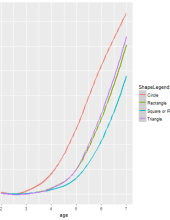
Measurement of learning is central to the Sustainable Development Goals for education, both in early primary (grade 2/3) and in early childhood (under the age of 5) (IAEG 2016). Of particular concern is the ability of global measurement approaches to reflect the social and linguistic differences of a diverse range of societies, including traditionally marginalized groups. This presentation relies on literacy assessment data to answer the following question: can results from non-equated national assessments be used to report against global goals?
Assoc. Photo (Port.)
ShapeName Laos.png
Resource (File)
Gove CIES March 2017.pptx
Country
Resource Type
Resource Language
Month and Year