Global

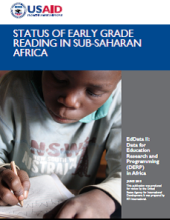
Status of Early Grade Reading in Sub-Saharan Africa

Submitted by admin on
Description/Abstract
Student literacy assessments contribute to identifying the U.S. Agency for International Development’s (USAID’s) progress toward Goal 1: improving reading skills for 100 million children by 2015. Tracking progress toward this goal is challenging, and information regarding literacy assessments across sub-Saharan Africa has yet to be fully coordinated. Accordingly, the purpose of this study is to advance knowledge of which select countries in sub-Saharan Africa have and have not conducted early grade reading assessments, while also providing information regarding where literacy issues remain critical and where improvement is underway. Twenty countries were selected because of USAID’s presence and continued interest in working to improve educational opportunities within these countries. The 20 countries are as follows: Benin, Côte d’Ivoire (Ivory Coast), Democratic Republic of the Congo (DRC), Djibouti, Ethiopia, Ghana, Kenya, Liberia, Malawi, Mali, Mozambique, Nigeria, Rwanda, Senegal, Somalia, South Africa, South Sudan, Tanzania, Uganda, and Zambia.

Assoc. Photo (Port.)
literacy.png
Resource (File)
Country
Resource Type
Resource Language
Month and Year

International education is a broken field: Can ubuntu education bring solutions?

Submitted by admin on
Author
Description/Abstract
Article published in the International Review of Education. February 2016, Volume 62, Issue 1, pp 101–111. Published abstract: "Ubuntu is an African philosophy of human kindness; applying it in the Global South would fundamentally alter the design of the education sector. This essay argues, however, that the field of international educational development is not, in fact, structured to support an education influenced by ubuntu ideals. Specifically, the educational development milieu includes donors, implementers and academicians who do not sufficiently question the power dynamics which underpin education development. This creates a field where the power imbalances between donors and host governments are not interrogated, where development workers place too much faith in their own knowledge rather than that of local education experts, and where development practitioners rarely appreciate the privilege of working in countries which are not their own. An ubuntu education would alter the educational development field in myriad critical ways, a few of which are suggested in this essay. Educational development programmes in universities and intake programmes for implementers and donors should teach officers humility, appreciating existing local talent and expertise. Donor programmes should incentivise reflective practice which formally embeds appreciation for local culture and expertise, thereby supporting structures which help educational development experts to review their metacognitive processes. The field should also dramatically increase the numbers of local, minority and female educational development practitioners and provide more avenues for advancement for those groups. These are activities which are critical to supporting the education development field, but require a fundamental change of attitude by practitioners to ensure the right kind of relationships between the West and the Global South."
Assoc. Photo (Port.)
ubuntu.jpeg
Country
Sub-topic
Resource Type
Resource Language
Month and Year
Publisher Or Client
International Review of Education

Setting and Using Benchmarks for Reading Performance

Submitted by admin on
Description/Abstract
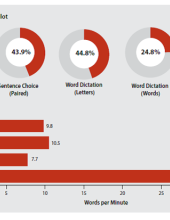
The spread of the Early Grade Reading Assessment (EGRA) has yielded a wealth of country-specific evidence on students’ literacy skills. Those data were then used to help a dozen countries set meaningful benchmarks for student reading performance. This brief summarizes the approach used, shares the results of the benchmarking workshops, and draws some lessons from our experience.
Assoc. Photo (Port.)
Benchmarking Pakistan1_2015-06-11 11.34.24.jpg
Resource (File)
Country
Resource Type
Month and Year

Complements to the Early Grade Reading Assessment: Spelling, Reading Comprehension, and Oral Language Subtasks

Submitted by admin on
Description/Abstract
The EGRA has been a useful tool to understand students’ progress toward fluent reading. However, users are often left wanting additional information about reading comprehension, writing, and language. The subtasks that we piloted in the research activity described in this brief can give researchers and practitioners more detailed information to understand the early literacy abilities of students in low-income contexts.

Assoc. Photo (Port.)
egra 2.0.png
Resource (File)
Country
Resource Type
Month and Year

An Addition to the Toolbox for Measuring Literacy Skills of the Youngest Students: The Group Administered Literacy Assessment (GALA)

Submitted by admin on
Author
Description/Abstract
The GALA was designed to maximize the benefits of a group-administered instrument, while also taking advantage of lessons learned from the individually administered Early Grade Reading Assessment (EGRA). It limits administration time; can be administered with minimal training; has a simplified scoring system; is based on a previously validated tool; assesses a full range of early grade literacy skills; does not rely on passage reading; and can be adapted for new contexts and languages.
Assoc. Photo (Port.)
GALA_2016-08-04 08.56.22.jpg
Resource (File)
Country
Resource Type
Month and Year

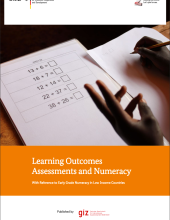
Learning Outcomes Assessments and Numeracy With Reference to Early Grade Numeracy in Low Income Countries

Submitted by admin on
Description/Abstract
The focus of this desk study is to provide information on the assessment of early numeracy learning outcomes as an integral part of efforts aimed at increasing education quality in low income countries. In order to provide focus for the study, GIZ identified three assessment-related challenges, which are crosscutting for each of the sections of the study: Using assessment to support children in mastering foundational concepts and competencies, such as number sense and computation. 2. Relating or adapting assessment to the environments of children in low income countries. 3. Applying assessment to understand the strengths and weaknesses of the informal mathematics that children bring to school.

Assoc. Photo (Port.)
giz.png
Country
Resource Type
Resource Language
Month and Year
Publisher Or Client
Deutsche Gesellschaft für Internationale Zusammenarbeit (GIZ) GmbH

Learning Outcomes Assessments and Numeracy With Reference to Early Grade Numeracy in Low Income Countries (Presentation)

Submitted by admin on
Description/Abstract
The focus of this desk study is to provide information on the assessment of early numeracy learning outcomes as an integral part of efforts aimed at increasing education quality in low income countries. In order to provide focus for the study, GIZ identified three assessment-related challenges, which are crosscutting for each of the sections of the study: Using assessment to support children in mastering foundational concepts and competencies, such as number sense and computation. 2. Relating or adapting assessment to the environments of children in low income countries. 3. Applying assessment to understand the strengths and weaknesses of the informal mathematics that children bring to school.

Assoc. Photo (Port.)
math pres.png
Country
Resource Type
Resource Language
Month and Year
Publisher Or Client
Deutsche Gesellschaft für Internationale Zusammenarbeit (GIZ) GmbH

Using an Assessment of Early Mathematical Knowledge and Skills to Inform Policy and Practice: Examples from the Early Grade Mathematics Assessment

Submitted by admin on
Description/Abstract
Article published in the International Journal of Education in Math, Science and Technology, Volume 4, Number 3. (Open Access). Published abstract: "This paper describes the development and intended uses of the Early Grades Mathematics Assessment (EGMA), which measures essential early mathematical knowledge and skills that are foundational to more sophisticated mathematical abilities, predictive of later achievement, and teachable. Administering the EGMA can provide policy makers, practitioners, and researchers with information about whether existing educational policies, curricular reforms or programs, and instructional interventions are supporting students in reaching important goals in mathematics. We highlight the utility of the EGMA results in three abbreviated illustrations of implementation studies in low-income countries. Recommendations for policy makers, practitioners, and researchers are provided."
Assoc. Photo (Port.)
publications icon purchased sm.png
Country
Resource Type
Resource Language
Month and Year
Publisher Or Client
International Journal of Education in Mathematics, Science and Technology

Early Grade Mathematics Assessment (EGMA) Toolkit

Submitted by admin on
Description/Abstract
The EGMA Toolkit provides detailed information about the Early Grade Mathematics Assessment. The first chapter provides an introduction to the instrument and summarizes the purposes of the assessment. Chapter 2 discusses the development of the EGMA, including the theoretical foundations of the instrument. Chapter 3 details the technical adequacy of the EGMA. Chapter 4 provides information on adaptation and training.
Assoc. Photo (Port.)
Screen Shot 2017-02-21 at 10.17.05 AM.png
Resource (File)
EGMA Toolkit_Nov 2022.pdf
Country
Resource Type
Resource Language
Month and Year
Publisher Or Client
RTI

Local Education Monitoring Approach (LEMA) Toolkit

Submitted by admin on
Description/Abstract
This manual was created at the request of the United States Agency for International Development (USAID). It is a tool to guide individuals who are implementing a pilot application in locations that have not previously tested it. The assumption is that they will be gauging the appropriateness and effectiveness of using the method within that context as a routine monitoring tool. LEMA is an adaptation of a monitoring approach known as Lot Quality Assurance Sampling. (LQAS). LQAS uses small sample sizes and binary indicators to classify local areas as meeting or not meeting minimum performance standards. This approach was first developed in the 1920s as a way to monitor the quality of manufacturing production. A small sample of items would be randomly selected from a production lot and examined for any imperfections. If the number of defective items within the lot was greater than a pre-set threshold level, then the entire lot was rejected (Robertson et al., 1997, p. 199). Rejected lots were then “examined more closely and either repaired or discarded” (MEASURE Evaluation Project 1998, p. 5). The downloads link to the toolkit (3000 kb) and a related presentation (7000 kb).
Assoc. Photo (Port.)
Cover photo_Ethiopia_LQA_April2016 (61).jpg
Resource (File)
Country
Resource Type
Month and Year