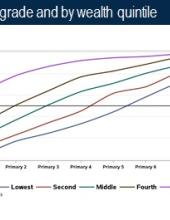
Presentations | 20 March 2017
The Equity Implications of Household Contributions to Education: Evidence from Nigeria's Education Household Survey 2015
Presentation delivered at CIES 2017 (Atlanta.) In 2004, the Federal Government of Nigeria passed the Universal Basic Education Act.
Reports | 6 March 2017
Using Data for Accountability and Transparency in Schools: Big Data Report
The Kenya Big Data Activity is an operations research study to help the Kenya Ministry of Education, Science, and Technology (MoEST) identify the challenges, opportunities, and capacity requirements for implementing a school-based digital Education Management Information System (EMIS) at scale and s
Reports | 3 March 2017
Information for Education Policy, Planning, Management, and Accountability in West Bank and Gaza: Final Report of Findings of the Data Gap Analysis of the Palestinian Ministry of Education and Higher Education
The purpose of the data gap analysis is to help the Palestinian Ministry of Education and Higher Education to identify ways to improve the integration and utilization of its data systems for policy, planning, and management, as well as reporting and feedback to the public and stakeholders.

Reports | 23 February 2017
Lot Quality Assurance Sampling (LQAS) Pilot Activities in Amhara and Tigray, Ethiopia: Final Report
This report summarizes main findings and lessons learned from the piloting of the lot quality assurance sampling (LQAS) methodology in the education sector in Ethiopia. It also suggests next steps for applying the LQAS methodology more broadly for education program monitoring.
Toolkits and Manuals | 17 February 2017
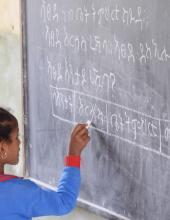
Local Education Monitoring Approach (LEMA) Toolkit
This manual was created at the request of the United States Agency for International Development (USAID). It is a tool to guide individuals who are implementing a pilot application in locations that have not previously tested it.
Reports | 15 December 2016
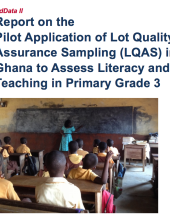
Report on the Pilot Application of Lot Quality Assurance Sampling (LQAS) in Ghana to Assess Literacy and Teaching in Primary Grade 3
This report summarizes main findings and lessons learned from the piloting of lot quality assurance sampling (LQAS) in the education sector in Ghana. It also suggests next steps for applying LQAS more broadly for education program monitoring.
Literature Reviews and Desk Studies | 7 December 2016
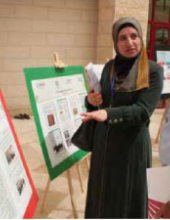
West Bank Case Study Report
The purpose of this case study is to illuminate how and why US Agency for International Development (USAID) education programs in the West Bank and Gaza were able to achieve the lasting impact in basic, higher, and non-formal education despite the considerable political and environmental challenges.
Reports | 30 November 2016
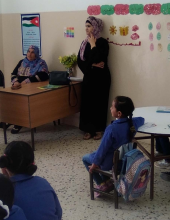
Incentives to teach, incentives to read: A pilot of symbolic incentives for teachers and students in Jordan
Motivation is key to behavior change in teaching and learning processes. Motivated teachers are thought to be more likely to be willing to experiment with different instructional approaches in the classroom. Motivated students are hypothesized to put forth extra effort during learning activities.

Reports | 14 November 2016
2015 Nigeria Education Data Survey (NEDS) Education Profile
This document is based on the structure of previous education profiles that traditionally use Demographic and Household Survey (DHS) data to characterize children’s participation in primary and secondary schooling and adults’ schooling attainment and literacy.

Reports | 28 September 2016
Learning Outcomes Research and Assessment -Related Projects
EdData II, sponsored by the United States Agency for International Development (USAID), provided survey expertise to help national and local governments as well as the donor community assess education status in low income countries.