Jordan

Country Code
JOR

RAMP Field Directorates Indicators Guide Community Mobilization Tool

Submitted by admin on
Description/Abstract
RAMP Field Directorates Indicators Guide Community Mobilization Tool.
Assoc. Photo (Port.)
Capture.PNG
Resource (File)
Country
Featured projects
Resource Language
Month and Year

Updated Electronic System Manual (2022)

Submitted by admin on
Description/Abstract
Independent classroom observation- updated electronic system manual (2022).
Assoc. Photo (Port.)
Capture.PNG
Resource (File)
Country
Featured projects
Resource Language
Month and Year

Lot Quality Assurance Sampling (LQAS) Guide

Submitted by admin on
Description/Abstract
The LQAS methodology has a number of objectives in the education sector, including: Holding schools greater accountability; Increasing implementation fidelity and credibility; Identifying schools or regions (field directorates) that needs extra support to assist them; Identifying areas for improvement to conduct reforms contributing to increase the effectiveness of the initiative; Providing an assessment methodology that enables the ministry to assess the students’ outcomes with high credibility and is used at all administrative levels in the ministry; and Providing relevant, reliable, and timely data.
Assoc. Photo (Port.)
Capture.PNG
Resource (File)
LQAS SOP 2022.pdf
Country
Resource Type
Featured projects
Resource Language
Month and Year

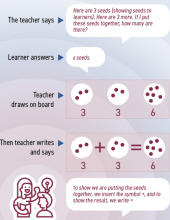
Learning from Successful Early-Grade Math Programs: Lessons from the Numeracy at Scale study [CIES 2024 Presentation]

Submitted by admin on
Description/Abstract
The Numeracy at Scale study was designed to identify and examine aspects of successful numeracy programs, to provide policy makers and development practitioners with evidence-based strategies for improving numeracy instruction and learning outcomes across contexts. To this end, the study team identified and analyzed six programs across five countries that had rigorous evidence of impact on numeracy learning outcomes and which were operating at scale or which showed the potential for scale in an entire region or country. In each country, the study teams carried out a mixed-methods study including quantitative observations and interviews conducted in 80 to 130 schools per country; as well as qualitative observations and interviews in ten schools per country. The Numeracy at Scale study investigated two research questions addressed in this presentation: 1) What classroom ingredients (such as teaching practices and classroom environment) lead to learning in programs that are effective at scale? 2) What methods of training and support lead to teachers adopting effective classroom practices? The programs involved in this study are based in India, Jordan, El Salvador, Madagascar and South Africa. Two of the programs are government-led. The six Numeracy at Scale programs represent a variety of designs, from providing instruction to at-risk girls via interactive software to a national-scale numeracy initiative integrated into all public primary schools. Despite their differences, these programs share a large number of common elements. This presentation will provide an overview of the common pedagogical strategies found across these successful numeracy programs, such as use of multiple representations, discussion about mathematical concepts, and targeted support for students, as well as the approaches these programs used to support the development of these practices among teachers. Drawing from qualitative data, the paper will then discuss details of how these common elements were executed differently under different program models. Both the common, key elements and “differences in the details” that are found across these programs can generate helpful guidelines and ideas for how practitioners and governments can strengthen their own numeracy professional development approaches, across different operating contexts and program designs.
Assoc. Photo (Port.)
numeracy port.PNG
Resource (File)
Resource Type
Resource Language
Month and Year

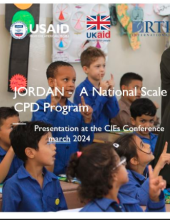
Jordan - Arriving at a National Scale CPD Program [CIES 2024 Presentation]

Submitted by admin on
Description/Abstract
It was only over a decade ago that data on dismal learning outcomes in low- and middle-income countries (LMICs) shook the international education field out of its complacency with rising enrollment rates. The organizations and researchers that led this protest catalyzed a global shift toward prioritizing effective learning as the ultimate goal of education. However, acts of protest or disruption occur in a single point in time, whereas the transformations they advocate for are the labor of many years. Such is the case of the call to action to address the learning crisis. In the past decade, donor agencies like USAID have partnered with ministries of education in LMICs to design and implement programs at scale based on evidence of what works to improve foundational skills. A recent retrospective on the past ten years of USAID early grade reading programming (EnCompass LLC & MCI [2021]. Ten Years of USAID Early Grade Reading Programming: A Retrospective) estimates that USAID programs have improved reading outcomes for more than 7 million children and acknowledges tangible progress in the agency and its partners’ understanding of effective early reading instruction. The study also found that despite significant accomplishments, even the best-designed programs were hindered in their effectiveness by factors related to education systems’ low capacity to implement best practices at scale. Similarly, the Learning at Scale study, funded by the Bill & Melinda Gates Foundation, is examining some of the most effective large-scale early learning programs of the last ten years to understand the elements of their success. Learning at Scale researchers point out that improving learning at scale is hard because it usually requires working through the complex realities of government systems. Therefore, while the first chapter of the “learning crusade” yielded important lessons on what works to improve learning, there is still a lot to be learned about how to apply this knowledge to build effective government systems that ensure learning for all children. Case in point are government systems for continuous teacher professional development (TPD). It is well-known that better teaching is one of the fundamental interventions for improved learning outcomes. There is also a growing evidence base on the characteristics of effective TPD programs, as curated through initiatives like Learning at Scale and The Science of Teaching, also funded by the Gates Foundation. Among these characteristics are trainings that emphasize practice over theory and coaching programs based on structured coaching tools and frequent interaction with teachers. Another teacher support element that can be important to program success is school-based teacher communities-of-practice, which enable peer-to-peer feedback and opportunities to reflect on the ongoing application of instructional approaches. Both Learning at Scale and the retrospective study on USAID early reading programming observe a trend toward shorter but more frequent teacher training events that take place at the local level, in contrast to the massive national trainings of the past. The use of online content for teacher training is also on the rise, though preliminary findings from Learning at Scale suggest that an initial face-to-face training event continues to be essential. However, being able to identify the ingredients of effective teacher support does not automatically equate with an understanding of how to build a continuous TPD system that incorporates them. Neither does it mean that a TPD system built entirely on evidence-based best practices is guaranteed to succeed in improving learning outcomes. As more LMICs advance toward instituting standards and structured career ladders for the teaching profession, and toward developing mechanisms to increase the equity and efficiency of teacher training and support, it becomes increasingly important to identify effective models for implementing continuous TPD at scale. the panel will feature a USAID program in Jordan that exemplifies the desired result: a national-scale, comprehensive TPD model that is aligned with a broader policy on the teacher career path and is linked to a robust assessment data system that reinforces accountability for learning. It is the only program with solid evidence of positive changes in teaching practices that led to significant improvements in student outcomes.
Assoc. Photo (Port.)
jordan port.PNG
Resource (File)
RAMP 2024 CIES Jordan.pptx
Country
Resource Type
Featured projects
Month and Year

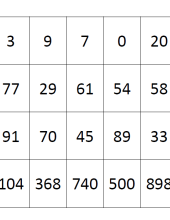
Primary Mathematics Skills Assessment Tool: 2021 Stimulus Sheet

Submitted by admin on
Description/Abstract
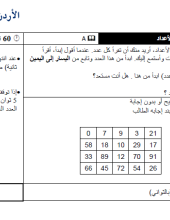
Primary Mathematics Skills Assessment Tool: 2021 Stimulus Sheet.
Assoc. Photo (Port.)
Capture.PNG
Resource (File)
Country
Featured projects
Resource Language
Month and Year
Publisher Or Client
USAID, UKAID

Primary Mathematics Skills Assessment Tool: 2021 Assessor Protocol

Submitted by admin on
Description/Abstract
Primary Mathematics Skills Assessment Tool: 2021 Assessor Protocol.
Assoc. Photo (Port.)
Capture.PNG
Resource (File)
Country
Featured projects
Resource Language
Month and Year
Publisher Or Client
USAID, UKAID

Primary Reading Skills Assessment Tool: 2021 Stimulus Sheet

Submitted by admin on
Description/Abstract
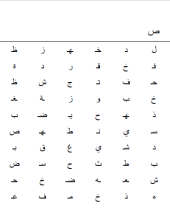
Primary Reading Skills Assessment Tool: 2021 stimulus sheet.
Assoc. Photo (Port.)
Capture.PNG
Resource (File)
Country
Featured projects
Resource Language
Month and Year
Publisher Or Client
USAID, UKAID

Primary Reading Skills Assessment Tool: 2021 Assessor Instructions Form

Submitted by admin on
Description/Abstract
Primary Reading Skills Assessment Tool: 2021 Assessor Instructions Form.
Assoc. Photo (Port.)
Capture.PNG
Resource (File)
Country
Featured projects
Resource Language
Month and Year
Publisher Or Client
USAID, UKAID

A Classroom Observation Tool for a Kindergarten Teacher in Distance Education

Submitted by admin on
Description/Abstract
A classroom observation tool for a kindergarten teacher in distance education.
Assoc. Photo (Port.)
Capture.PNG
Resource (File)
Country
Resource Type
Featured projects
Resource Language
Month and Year
Publisher Or Client
USAID, UKAID