Early Mathematics Development

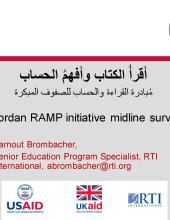
Jordan RAMP initiative midline survey- CIES 2018 presentation

Submitted by admin on
Description/Abstract
Jordan RAMP, funded by USAID and UKAID, is a nationwide initiative of the Jordanian Ministry of Education (MoE) designed to improve the reading and mathematics skills of students in kindergarten 2 through grade 3 (K2–G3). RAMP, which is being carried out over five years (2015 to 2019), expects to deliver improved reading and mathematics instruction to all public school students in Jordan in grades K2–G3—about 400,000 students. This CIES 2018 presentation, given by Aarnout Brombacher, Senior Technical Advisor on the RAMP initiative, shares findings from the midline study of the project, which was conducted at the end of the 2016–2017 academic year (May 2017). The study included the EGRA and EGMA assessments as well as a range of teacher and pupil questionnaires.
Assoc. Photo (Port.)
Pages from Brombacher, Aarnout_CIES2018_Jordan RAMP midline survey.jpg
Country
Resource Type
Featured projects
Resource Language
Month and Year

How problem solving is being implemented by RAMP trained teachers- CIES 2018 presentation

Submitted by admin on
Description/Abstract
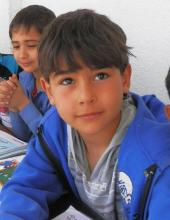
This CIES 2018 presentation is an overview of findings from classroom observations of teachers implementing the Jordan RAMP initiative problem-solving technique in teaching early grade mathematics. The presentation was given by Aarnout Brombacher, RTI's Senior Technical Advisor for the Jordan RAMP initiative.
Assoc. Photo (Port.)
Pages from Brombacher, Aarnout_CIES 2018_I dont know how to do that using mathematics.jpg
Country
Resource Type
Featured projects
Resource Language
Month and Year

Significant improvements recorded in early grade students' performance

Submitted by admin on
Description/Abstract
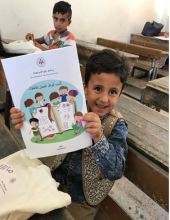
The following article from the Jordan Times describes positive results of the USAID and DFID co-funded RAMP program implemented by RTI in Jordan.
Assoc. Photo (Port.)
0259A036-78E0-4E43-81B9-25C59B894998.jpeg
Country
Featured projects
Resource Language
Month and Year
Publisher Or Client
Jordan Times

School Readiness Program Prepares Children for Grade One

Submitted by admin on
Author
Description/Abstract
Success story about a recent kindergarten initiative under USAID's Early Grade Reading and Mathematics Project to help children and parents prepare to enter school.

Assoc. Photo (Port.)
ramp.png
Resource (File)
Country
Resource Language
Month and Year

Jordan Remedial Study: Mathematics Diagnostic Assessment Tool and Stimulus Sheet

Submitted by admin on
Description/Abstract
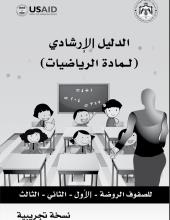
In 2013–14, in response to the success of a reading and mathematics intervention, the Ministry of Education in Jordan developed and piloted a remedial program to provide differentiated (focused) support to the lowest performing children. Because the pedagogical approaches of the reading and mathematics activities were very similar, teachers were able to apply remedial activities in both subjects, and thus, children benefited in both reading and mathematics In Jordan, the remedial pilot activity included two teacher administered tools: (a) a “coarse-grain” screening tool used to identify children in need of remedial support and (b) a “fine-grain” diagnostic tool administered to each child identified by the coarse-grain tool as needing remedial support. To ensure efficacy—in particular, of the coarse grain tool’s ability to correctly identify students—the tools were piloted. In the pilot, the coarse-grain screening tool was administered to all students in the pilot classrooms. The students in the class were then ranked based on their performance on the coarse-grain tool. The fine-grain tool was then administered to every fourth or fifth student (depending on class size) on the list arranged in order of performance. Students who performed better on the coarse-grain tool were consistently identified as performing at a higher level by the fine-grain tool, and students who performed more poorly on the coarse-grain tool were determined to be performing at a lower level by the fine-grain tool. The attached resources are the Mathematics Diagnostic Assessment Tool and the Pupil Stimulus Sheets in Arabic used as part of the remedial pilot program.
Assoc. Photo (Port.)
Country
Resource Language
Month and Year

Jordan Remedial Study: Mathematics Teachers' Guide (Arabic)

Submitted by admin on
Description/Abstract
In 2013–14, in response to the success of a reading and math intervention, the Ministry of Education in Jordan developed and piloted a remedial program to provide differentiated (focused) support to the lowest performing children. Because the pedagogical approaches of the reading and mathematics activities were very similar, teachers were able to apply remedial activities in both subjects, and thus, children benefited in both reading and mathematics. The attached document is the Mathematics Teachers' Guide in Arabic.
Assoc. Photo (Port.)
jordan math TG.jpeg
Resource (File)
Country
Resource Language
Month and Year

Jordan Remedial Study: Mathematics Teachers' Guide

Submitted by admin on
Description/Abstract
In 2013–14, in response to the success of a reading and mathematics intervention, the Ministry of Education in Jordan developed and piloted a remedial program to provide differentiated (focused) support to the lowest performing children. In Jordan, the remedial pilot activity included two teacher administered tools: (a) a “coarse-grain” screening tool used to identify children in need of remedial support and (b) a “fine-grain” diagnostic tool administered to each child identified by the coarse-grain tool as needing remedial support. To ensure efficacy—in particular, of the coarse grain tool’s ability to correctly identify students—the tools were piloted. In the pilot, the coarse-grain screening tool was administered to all students in the pilot classrooms. The students in the class were then ranked based on their performance on the coarse-grain tool. The fine-grain tool was then administered to every fourth or fifth student (depending on class size) on the list arranged in order of performance. Students who performed better on the coarse-grain tool were consistently identified as performing at a higher level by the fine-grain tool, and students who performed more poorly on the coarse-grain tool were determined to be performing at a lower level by the fine-grain tool. The attached resource is the mathematics teachers' guide in Arabic used as part of the remedial pilot program.
Assoc. Photo (Port.)
Resource (File)
Country
Month and Year

Early Primary Mathematics Education in Arab Countries of the Middle East and North Africa

Submitted by admin on
Description/Abstract
MENA countries are facing significant challenges in providing access to quality education for children in the early grades. However, it is important to note that the situation in the MENA region is not so different from that in other regions of the Global South: quality and learning are not being achieved. In MENA countries, achievement in math is not only associated with the effectiveness of teaching and learning, but also with providing an equitable system of education for all children. This paper presents the state of mathematics education in the MENA region and suggests means to improve it according to the pertinent cultural and social context.
Assoc. Photo (Port.)
Screen Shot 2017-02-21 at 4.17.46 PM.png
Resource Language
Month and Year
Publisher Or Client
Deutsche Gesellschaft für Internationale Zusammenarbeit (GIZ) GmbH

Learning Outcomes Assessments and Numeracy With Reference to Early Grade Numeracy in Low Income Countries

Submitted by admin on
Description/Abstract
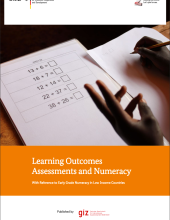
The focus of this desk study is to provide information on the assessment of early numeracy learning outcomes as an integral part of efforts aimed at increasing education quality in low income countries. In order to provide focus for the study, GIZ identified three assessment-related challenges, which are crosscutting for each of the sections of the study: Using assessment to support children in mastering foundational concepts and competencies, such as number sense and computation. 2. Relating or adapting assessment to the environments of children in low income countries. 3. Applying assessment to understand the strengths and weaknesses of the informal mathematics that children bring to school.
Assoc. Photo (Port.)
giz.png
Country
Resource Type
Resource Language
Month and Year
Publisher Or Client
Deutsche Gesellschaft für Internationale Zusammenarbeit (GIZ) GmbH