Policy, Systems, and Governance

Purpose-driven education system transformations: History Lessons from Korea and Japan [CIES 2023 Presentation]

Submitted by admin on
Author
Description/Abstract
The method used is a historical analysis of the route through which education in Japan and South Korea was framed, and then implemented, in the period starting in 1870 (approximately) in the former and 1945 (approximately but especially after the Korean war) or so in the latter. We analyze both policy intention as in various laws, decrees, and policies, as well as implementation. Debates around equality, the interpretation of Western ideas as filtered by each country’s history, are covered. Original policy documents are analyzed as well as literature on the educational history of both countries, including educational and pedagogical issues. Long-term historical statistics and cliometrics are also employed mostly to compare context and results, rather than methods. South Korea and Japan are chosen because they are, today, high performers both in terms of average achievement and, even more importantly, equality, who went about their reforms with clear intentionality and purpose, and where there were distinct historical pivots that can be pinned to a specific decade or even a single pivotal year. Other high-achieving countries in the West more or less evolved into their systems. Even countries that are often cited as examples for the lower-income countries to emulate, such as Finland, did not set about fundamental reforms with the clear purpose and intentionality that South Korea and Japan did. Side references are made to other cases where intentionality was key, and where there was a clear purpose and bureaucratic organizational effort, such as Prussia. Similar insights are raised through an analysis of speeches and writings of pan-African independence leaders in the 1960s regarding the centrality of education to the nation-building project. Emerging themes that could be of interest to lower-income countries today include: a) the focus on education as fundamental to national purpose, not just as an abstract commitment to numerical goals such as the MDGs and SDGs (without denying the utility of such goals), b) an intense focus on education as a way of redressing class (as in “education should not just be for the samurai class”) and colonization issues (as in “education is key to help us resist undue economic and military power from the West”) from the past, and hence a focus on equality, c) an intense questioning of what could be learned from the West rather than just acceptance and simple borrowing, and d) a relentless focus on bureaucratic efficiency, planning, and investment discipline in terms of not expanding higher levels until lower levels are universalized (for the sake of equality and quality). The focus is largely narrative and qualitative, but historical statistics are used to document the results obtained, such as the very high degree of equality and also efficiency achieved (in fact, signaling how efficiency and equality may have been helpful to each other), whereby even low-income segments of the population benefit from quality education. The contexts, not just the results, are analyzed both qualitatively and quantitatively.
Assoc. Photo (Port.)
Screenshot 2023-03-07 172553.png
Resource Type
Month and Year

Navigating Aid Alternatives: Government-to-Government funding partnerships in Jordan, Senegal, Nepal [CIES 2023 Panel Presentations]

Submitted by admin on
Description/Abstract
Since 2010, USAID has increased funding to partner country institutions by 50% [1], and the current administration’s localization agenda suggests that the government-to-government (G2G) modality may be increasingly frequent. Implementing partners operating in countries with a G2G arrangement, must pay careful attention to the meaning of technical assistance and system strengthening for scale and sustainability. This topic was covered by three presentations in a panel session, including: (1) Driving government ownership of a new language policy through a Government-to-Government partnership: The case of Senegal; (2) Government-to-Government programs to improve student learning: The case of Nepal; and (3) The case of Jordan
Assoc. Photo (Port.)
G2G portrait.JPG
Country
Resource Type
Month and Year

Digital Inclusion and data-driven dropout prevention in Guatemala​ [CIES 2023 Presentation]

Submitted by admin on
Description/Abstract
Building on past efforts in dropout prevention, the Guatemala Basic Education Quality and Transitions Program seeks to support the Ministry of Education to deploy an open-source mobile application to teachers’ devices that will both facilitate data collection and display easily understandable information on student learning, attendance, and risk of dropout. The application will enable teachers to regularly assess student learning, track daily attendance, and report on key variables that past research has shown to be indicators of risk of dropout, including trauma, economic stress, and other destabilizing conditions. The data will be shared at the school, municipal and ministry level, but only in anonymized and aggregated form, which we expect will reduce teacher fears of punitive accountability. Free community Wi-Fi and school-based internet connectivity will improve teacher’s ability to access the application and other education data, resources and tools while also improving digital inclusion for students to access online learning opportunities and resources. This presentation was delivered by Cynthia del Aguila at the 2023 CIES Annual Conference.
Assoc. Photo (Port.)
Screenshot 2023-03-01 162456.png
Resource (File)
Country
Resource Type
Month and Year

What have we learned about improving learning at the system level? [CIES 2023 Presentation]

Submitted by admin on
Author
Description/Abstract
This presentation, given at the CIES 2023 Annual Conference, highlights the global shift in measurement and improvement in learning outcomes since the adoption of SDG 4.1.1, under which countries are asked to report on the “the proportion of children and young people…achieving at least a minimum proficiency level in reading and mathematics”. Building on these results, the World Bank and UIS estimate that eighty percent of children in poor countries cannot read a simple sentence by the end of primary school. In reviewing the results of multiple regional and systems-level learning improvement programs to better understand the distribution of learning outcomes and system-level impact we find that: 1) while some progress has been made, the massive changes required to move the needle on the share of children reaching minimum proficiency remains elusive and 2) a small share of schools account for the majority of the gains. Finally, the panelist will create a link between this challenge and the theme of the panel; that education change will only be successful if work is undertaken to better understand and diminish the restraining forces of mindsets and education system social norms.
Assoc. Photo (Port.)
Screenshot 2023-02-28 165526.png
Resource (File)
Gove CIES 2023.pptx
Resource Type
Month and Year
Publisher Or Client
RTI

Co-designing Prototypes for Future Learning Spaces: A Field Guide for Scaling Future Learning Spaces Innovation in the Philippines

Submitted by admin on
Description/Abstract
The purpose of this field guide is to introduce concepts, tools, and group activities that can be used to guide educators in co-creating locally defined prototypes of future learning spaces that will not only enhance social, emotional, and academic learning for all Filipino learners, but will ensure that learners flourish and develop a sense of agency, proactive citizenship, and work readiness for a successful future. The guide was created from selected content, exercises, and group processes that were introduced in the Leaders in Futures of Education (LIFE) course (June 20–July 19, 2022) and the Prototyping Future Learning Spaces Workshop (August 15–19 2022), which were attended by DepEd central office representatives, representatives from three regional offices (i.e., Region III: Central Luzan; Region VI: Central Visayas; and the Cordillera Administrative Region), and prototyping teams consisting of representatives from five SDOs—Tanauan City, Tuguegarao City, Pasig City, Caloocan City, and Quezon City—and at least one cooperating school in each SDO. This field guide provides a framework for DepEd partnerships across the country to begin their prototyping journey for co-designing future learning spaces for Filipino students.
Assoc. Photo (Port.)
EducFutures_guidebook_port.JPG
Resource (File)
Country
Resource Type
Featured projects
Resource Language
Month and Year
Publisher Or Client
RTI International

Doing Reform Differently: Combining Rigor and Practicality in Implementation and Evaluation of System Reforms

Submitted by admin on
Description/Abstract
This paper brings together two promising intellectual trends in development: Doing Development Differently (DDD), and whole-system reform. In addition, it provides a framework for evaluating system reforms, as rigorously as possible. This paper adapts some concepts from the paper “A Practical Approach to In-Country Systems Research” written for the Research on Improving Systems of Education (RISE) Programme. This version turns more toward the Doing Development Differently movement rather than education systems reform. The original paper was presented at the first RISE conference in Washington, DC, June 18–19, 2015.
Assoc. Photo (Port.)
ddd.JPG
Resource (File)
Country
Resource Type
Resource Language
Month and Year
Publisher Or Client
RTI International

Strengthening institutional capacity to produce learning at scale: Case studies from Jordan, Malawi, Nepal, and Uganda

Submitted by admin on
Description/Abstract
Case studies of RTI's work on strengthening institutional capacity in Nepal, Jordan, Malawi, and Uganda focusing on three core functions: (1) setting and communicating expectations; (2) monitoring against expectations; (3) providing targeted support to struggling schools.
Assoc. Photo (Port.)
bidemi cap assessment_port.jpg
Resource Type
Month and Year

Comprehensive Rapid Literacy Assessment [CIES Presentation]

Submitted by admin on
Description/Abstract
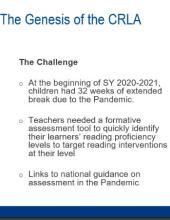
The CRLA was initially conceived as a 5-minute start-up reading assessment designed to help teachers quickly determine the reading profiles of their G1-G3 learners, and develop appropriate reading instructional strategies. The main goal is to identify children who need additional support in reading. The CRLA was developed in response to the extended break that learners experienced over the summer of 2020 due to the pandemic. After 32 weeks of no class, teachers needed a rapid, easy to use tool, to determine what level of readiness and support the returning children needed. The beginning of school year tasks focused on letter sounds, isolated words and sentence in reading in MT (G1), Filipino (G1-G2) and English (G1-G3). In the Philippines, learners are expected to transition from their mother tongue (MT) to Filipino and English (L2 and L3 respectively) by grade 4. However, the earliest standardized assessment used in the Philippines is for Filipino starting in G3 and English starting in G4. Prior to the CRLA, there were no existing standardized tools or systems used to assess in the MT. It was also a tool that could be administered remotely (online or even over the phone) which proved critical for schooling in the new normal where face to face classes were not permitted. Thus, the CRLA met the needs of teachers who were missing such a tool in their early grade assessment toolbox. The CRLA was initially piloted in November 2020 with select schools. The experience of the pilot led DepEd to scale up the CRLA to all schools in the ABC+ Target Regions. The feedback from the schools and teachers who utilized the CRLA was encouraging. Many schools used the results of the CRLA to develop remedial and focused reading programs in the context of the new normal and identify the struggling readers to provide additional support. Based on the success of the beginning of school year RLA, the Department of Education requested ABC+ to help develop middle and end of year assessments that would align to their curricular competencies. Keeping to the same criteria (rapid and easy to administer and analyze), the team incorporated listening comprehension, oral reading fluency and reading comprehension tasks for end of year administration. At the request of DepEd, ABC+ is currently in the process of expanding the number of MT languages supported by the CRLA and incorporating it into their operations manual for mother tongue-based multi-lingual education.
Assoc. Photo (Port.)
crls_port.jpeg
Resource (File)
CRLA_CIES-2022_IE.pptx
Country
Resource Type
Month and Year
Publisher Or Client
USAID

Read Liberia Activities-Flag Day

Submitted by admin on
Description/Abstract
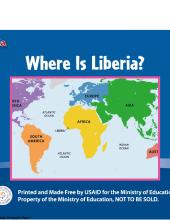
A storybook for grade one students in Liberia.
Assoc. Photo (Port.)
193615_RTI Inter_Where Is Liberia_G1_Booklet_Cover_Page_1.jpg
Country
Featured projects
Resource Language
Month and Year

Read Liberia Activities-Flag Day

Submitted by admin on
Description/Abstract
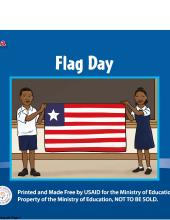
A storybook for grade one students in Liberia.
Assoc. Photo (Port.)
193614_RTI Inter_Flag Day_G1_Booklet_Cover_Page_1.jpg
Country
Featured projects
Resource Language
Month and Year