Video and Multimedia Tools for Training and Learning

What We Are Learning About Learning Networks [CIES 2024 Presentation]

Submitted by admin on
Description/Abstract
The USAID Leading Through Learning Global Platform (LTLGP) and USAID Improving Learning Outcomes for Asia (ILOA) presented a panel at the 2024 CIES Conference on what each project has been learning about establishing and implementing learning networks. Presentations from three USAID learning networks (HELN, GRN, ECCN) and one regional hub managed by LTLGP along with a presentation from ILOA discuss how each learning network utilizes collaboration, learning, and adapting (CLA) to assess how well their networks are reaching and meeting the needs of their members and how they have adapted and adjusted their networks based on CLA fedback.
Assoc. Photo (Port.)
Networks.png
Resource (File)
Resource Type
Featured projects
Month and Year
Publisher Or Client
USAID
Instructional design of a blended teacher professional development (TPD) course in the Philippines [CIES 2024 Presentation]

Submitted by admin on
Author
Description/Abstract
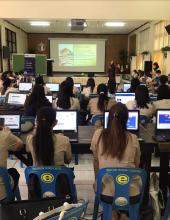
This presentation features the instructional design of a blended learning online course on formative assessment developed at the request of the Philippine Department of Education (DepEd), under the USAID/Philippines All Children Reading task order. In 2020, DepEd, through the National Educators Academy of the Philippines (NEAP), issued a policy aimed at strengthening the quality of TPD. The policy calls for several transformations, including the use of a wider range of learning modalities, such as job-based learning and teacher communities of practice; the adoption of a wider range of delivery platforms, such as online and blended learning; and the immediate application of TPD lessons in classrooms. The adoption of the policy has been slow and there are few exemplars of approved courses that meet these requirements. The challenge was to design a learning experience for teachers that not only exemplified these requirements but was also flexible enough to adapt to the myriad school contexts in the Philippines and was ready to be taken to scale by regional DepEd offices―without donor support―before the closeout of USAID funding for this activity.
Assoc. Photo (Port.)
Video lessons.jpg
Country
Resource Type
Featured projects
Month and Year
Publisher Or Client
USAID/Philippines

LET’S LIVE IN HARMONY (LLH) - Jordan Early Grade Reading and Math Program (RAMP)

Submitted by admin on
Author
Description/Abstract
Between June 2021, and May 2022, RAMP, in coordination with the Ministry of Education (MOE) and in collaboration with INTEGRATED, implemented the Let’s Live in Harmony (LLH) pilot program based on the LLH initiative funded by UNICEF in 2018-2019. This initiative aimed to establish a positive learning environment for students across 96 Double Shifting Schools (DSSs) in Jordan. The study addressed educational challenges faced by underprivileged students in Jordan, particularly those in double-shift public schools with a mix of Jordanian and Syrian students. At the beginning of the school semester in 2021, 1310 tablets were updated with the Ministry of Education (MoE)-approved LLH content material application. These tablets were strategically distributed among the 96 DSSs for students in Grades 1 to 3, with the allocation based on the number of students in each class to ensure equitable access to resources. The study employed tablets with multimedia content to facilitate interactive learning. Achievements encompassed teacher training, updated materials, curriculum alignment, and enhanced program delivery. These initiatives addressed challenges posed by refugees and the pandemic, leading to improvements in reading fluency, comprehension, and literacy. The study underscored the significance of adaptable educational solutions. The LLH activities were introduced to supervisors through a WhatsApp group to facilitate interactive communication. Integrated into the curriculum, the activities aimed to enhance Arabic literacy for grades 1-3. MOE supervisors ensured fidelity through observations and feedback. Additionally, the study focused on institutionalizing LLH within the MOE, involving various departments and the School and Directorate Development Program (SDDP). Lessons learned included role clarification, formal adoption, capacity building, and effective communication strategies for integration. Findings highlighted LLH's potential impact on reading skills and emphasized the need for ongoing support. Recommendations encompassed further capacity-building, recognition, incentives, and improved communication strategies between schools and the MOE.
Assoc. Photo (Port.)
Jordan report cover.png
Resource (File)
Country
Resource Type
Featured projects
Month and Year
Publisher Or Client
USAID and UKaid
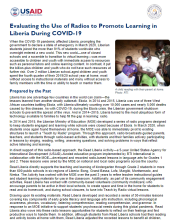
Using radio to promote learning in Liberia during COVID-19

Submitted by admin on
Description/Abstract
Liberian public schools closed in March 2020, and the MOE Teach by Radio program ran from March 30 through June 30, 2020. Drawing upon its existing materials, Read Liberia developed and recorded a series of 30-minutes lessons covering key components of early grade literacy and language arts instruction, including phonological awareness, phonics, vocabulary, listening comprehension, reading comprehension, and grammar. In response to an MOE initiative to support students’ psychosocial needs during this global pandemic, Read Liberia also wove into these radio lessons opportunities for students to reflect on their feelings and find productive ways to handle them. Read this brief to learn more!
Assoc. Photo (Port.)
evaluating radio programs.png
Country
Resource Type
Featured projects
Resource Language
Month and Year

MERLA Course Navigation Guidelines

Submitted by admin on
Description/Abstract
These navigation guidelines can be used with the MERLA course developed by RTI International for open access. https://www.rti.org/monitoring-evaluation-research-learning-and-adapting
Assoc. Photo (Port.)
Course nave.png
Resource (File)
Country
Resource Type
Month and Year
Publisher Or Client
RTI

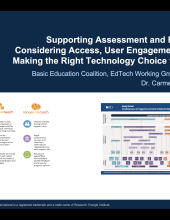
Virtual Assessment and Making the Right Technology Choices (Presentation)

Submitted by admin on
Author
Description/Abstract
This presentation was held by Carmen Strigel during the second webinar of the Basic Education Coalition EdTech working group on April 27, 2020. The presentation is about using Tangerine for student self-study and self-assessment as well as family outreach. The presentation also introduces a new tool developed by RTI on considering access, user engagement, and content in making the right technology choices for your audience.
Assoc. Photo (Port.)
Webinar_pptintro_Strigel_27Apr20.png
Country
Resource Type
Resource Language
Month and Year

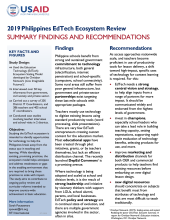
Philippines Education Technology Ecosystem Profile [Brief]

Submitted by admin on
Description/Abstract
A one page description of the Education Technology Ecosystem in the Philippines.
Assoc. Photo (Port.)
ecosys1_port.png
Resource (File)
Country
Resource Type
Featured projects
Resource Language
Month and Year
Publisher Or Client
USAID
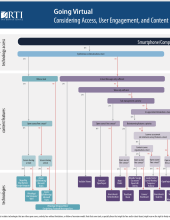
Going Virtual: Content Delivery Decision-making Tool

Submitted by admin on
Author
Description/Abstract
This tool was created to support projects who are considering delivering educational content remotely. The decision tree supports multiple aspects of instructional design and accessibility to suggest specific authoring tools and delivery platforms.
Assoc. Photo (Port.)
Screen Shot 2020-05-06 at 1.26.15 PM.png
Resource (File)
Country
Resource Type
Resource Language
Month and Year
Publisher Or Client
RTI International

Philippines Education Technology Ecosystem Profile

Submitted by admin on
Description/Abstract
This report is an analysis of the education technology (EdTech) ecosystem in the Philippines. This report seeks to identify opportunities for EdTech alternatives to help the Philippines break away from the status quo in teaching and learning. It will contribute to ongoing policy review and curricular reforms intended to improve country-wide achievement in basic education. The information was gathered by a team of researchers from the Foundation for Information Technology Education and Development, Inc. (FIT-ED), and RTI over the course of four months in the second half of 2019. The study team interviewed over 50 key informants from government, civil society, and the private sector and visited schools, consulted relevant documents, and administered a large survey, all designed to answer the questions: what technology is being used in education, how is it being promoted and adopted, what are the effects, and how can good practices be scaled up? The result is the following ecosystem profile, based on the Scaling Equitable Education Technology (EdTech) Ecosystem Model published by Omidyar Network, now Imaginable Futures,1in 2019 (Omidyar Network, 2019a). Cite this report: Pouezevara, S. (2020). Philippines EdTech ecosystem profile. Prepared for USAID under the All Children Reading-Philippines Project, AID-OAA-TO-16-00017. Research Triangle Park, NC: RTI
Assoc. Photo (Port.)
Ecosystem Report_port.png
Resource (File)
Country
Resource Type
Featured projects
Resource Language
Month and Year
Publisher Or Client
USAID
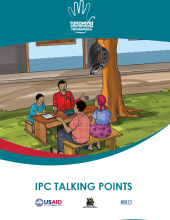
Tukomye Okutuntuza! Tekugunjula IPC Talking Points

Submitted by admin on
Description/Abstract
Interpersonal Communication Personnel Talking Points created by USAID/Uganda's Literacy Achievement and Retention Activity (LARA) as part of their Social and Behavior Change Communication (SBCC) materials to reduce primary teachers' use of corporal punishment in school.
Assoc. Photo (Port.)
asdfasdfds.PNG
Country
Resource Type
Resource Language
Month and Year