
Adaptive Technologies

Kyrgyzstan: Technology Enhanced Monitoring of Learning [CIES 2024 Presentation]

Submitted by admin on
Description/Abstract
The small, landlocked mountainous nation of Kyrgyzstan occupies an important space in Post Soviet Central Asia – as the only parliamentary democracy in the region since independence in 1992. While the country has admirably maintained near-universal enrollment rates in primary and lower-secondary levels, these important gains in educational access have not been accompanied by adequate learning outcomes. As evidenced by the 2017 National Sample Based Student Assessment, about 60% of grade 4 students in Kyrgyzstan lagged in age-appropriate comprehension level. By all estimates, these learning gaps have worsened due to school closures and economic disruptions caused by COVID-19. While improvements are necessary in many aspects of Kyrgyz school education, few issues are as pressing or as consequential as strengthening the system that prepares and supports the 75,000 public school teachers in the country. In this paper we present innovative models of teacher support structures that hold promise for creating an enabling environment for public school teachers in Kyrgyzstan to grow and succeed in their profession. Specifically, the paper will present insights from two complementary on-going initiatives (each led by one of the co-presenters) that focus on structured observation, feedback, and mentoring mechanisms, and creatively use simple technology applications to promote instructional quality in the classrooms and a community of practice across the system. Our paper will situate the scope of these initiatives in the ecosystem of teacher development practices in Kyrgyzstan and discuss their broader policy applicability. We submit that these insights would be relevant for other resource-constrained education contexts that are aspiring to improve support systems for teachers. The first initiative in focus is the technology-enhanced mentoring model of the Master of Arts in Teaching (MAT) program of the Institute of Education (IOE) at the American University of Central Asia. Launched in 2018, the program – open to both aspiring and in-service teachers – embeds digital pathways in its structure, curricular content, and delivery processes. At the core of the program is a web-video based mentoring model that assigns experienced teachers as mentors for the MAT candidates (mentees). Both mentors and mentees use a lesson observation rubric and simple digital tools (YouTube, Google Form, Google Classroom, Zoom, etc.) to observe, analyze, and reflect on classroom instruction videos, all under the watchful guidance of a dedicated Faculty Advisor from the MAT program. The teaching observation rubric used is a modified version of the evidence-based Danielson Framework for Teaching. Besides providing constructive feedback to the mentees, the mentors are encouraged to model good practice for their mentees and help them identify possible areas of focus and improvement in the subsequent lessons. In other words, these non-hierarchical dialogs are meant to be both evaluative and generative, specific, yet holistic – attentive to mentees’ relative strengths and weaknesses in the context of the specific classroom where they need to perform. Evidence from the assessments by mentors over four cohorts of MAT practicum indicates that thanks to the video-based observation-reflection-feedback loop, the mentees are able to take ownership of their own growth and demonstrate qualitative improvements in their classroom instruction by the end of the practicum. Internal program evaluation data also suggest that the mentors themselves are appreciating benefits of their engagement in the IOE model. Additionally, having dedicated Faculty Advisors overseeing the mentoring program has not only created a support structure for the mentors, but the entire program has also resulted in a broader community of practice. While these are promising results, the scope and scale of a university-based selective program is limited when compared to the needs of the broader education system. This is where the second initiative of this paper - Okuu Keremet! (Learning is Awesome! in Kyrgyz language) is particularly significant. The ongoing USAID funded Okuu Keremet project (2019 – 2024) is designed to help improve learning outcomes in reading and mathematics of more than 450,000 students in Grades 1‒4 in 1,682 target schools in Kyrgyzstan. The project is implemented by RTI (Research Triangle International) in partnership with the Ministry of Education and Sciences of Kyrgyzstan. To date, around 15,000 teachers have completed special pedagogical training in teaching read and math in the primary grades. An important way the project has integrated technology in the improvement of instructional practice is by creation of a Coaching app that is contextualized for easy access and usage by Kyrgyz school teachers and teacher educators. This app assists methodologists to mentor teachers through classroom observations. The program uses a classroom observation rubric / checklist that is easy to interpret, and to update, using the app interface and based on country’s teacher professional standards. Around 3,500 school administrative staff and methodologists of district education departments were trained to mentor teachers in primary schools. The app is being used in 1,682 target schools. Both the IOE model and the Okuu Keremet project underscore the significance of technology-enhanced mentoring in improving instructional practices of classroom teachers in Kyrgyzstan. Data from both initiatives will be presented at the CIES Conference. As leaders of these respective initiatives, we recognize that the promise of our approaches derives from leveraging the power of digital technologies in learning-rich professional development processes for current and aspiring teacher in ways that are evidence-based, context-informed, cost-effective, sustainable, and scalable. Ongoing implementation and refinement of our respective initiatives have uncovered strong levers and weak links in the broader teacher development structures of Central Asia. One critical area is the importance of framing mentoring as a holistic approach to teacher development that goes beyond benchmarking against a rubric and attends to the intersecting concerns of teachers by promoting an ethos of growth mindset and social-emotional support. We submit that developing such holistic mentoring skills and attitudes among skilled and experienced teachers is a policy priority that must be attended to by the Ministry of Education of Kyrgyzstan and its development partners.
Assoc. Photo (Port.)
Resource (File)
Country
Resource Type
Featured projects
Month and Year

Harnessing AI Speech Recognition Technology for Educational Reading Assessments amid the COVID-19 Pandemic in the Philippines [CIES 2024 Presentation]

Submitted by admin on
Description/Abstract
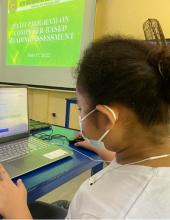
The challenges of conducting educational assessments in low- and middle-income environments during the pandemic can be eased by AI-powered speech recognition technology that offers a promising solution to enhance assessments. By utilizing advanced algorithms and machine learning techniques, this technology accurately transcribes spoken language into written text. Reading fluency and comprehension can be efficiently measured by integrating AI speech recognition into assessments, without the need for physical presence. From the safety of their homes, students can perform the assessments using their smartphones or computers, assisting schools in organizing complex logistics. AI speech recognition technology has a great edge in providing instant feedback, which is one of its main benefits. While students are speaking out loud, the AI system can swiftly assess their intonation, pronunciation, and tempo, rendering quick guidance and identifying areas for refinement. This personalized feedback effortlessly assists students in boosting their reading abilities, even in the absence of in-person teacher interactions. Moreover, AI-backed evaluations can be carried out on a wider scale, enabling educators to collect extensive data on reading patterns and tackle specific issues that are commonly seen among students. The objective of this presentation is to feature the self-administered AI Speech recognition Computer-based reading assessment that RTI developed at the request of the Philippines Department of Education (DepEd), under the USAID All Children Reading (ACR). Throughout the school years of 2020-2022, the COVID-19 pandemic posed significant challenges to conducting face-to-face assessments, particularly in remote learning environments. As a result, teachers faced constraints in terms of time and resources to individually assess learners' reading skills against crucial learning competencies. The proposed automated assessment technology offered a potential solution to alleviate this burden and streamline the evaluation process, allowing educators to efficiently gauge students' reading abilities remotely. In February 2022, ACR-Philippines initiated discussions with USAID and the Philippines Department of Education (DepEd) to produce a ‘proof of concept’ that explores the feasibility of a self-administered computer-based reading assessment (CoBRA) in English and Filipino for students in the Philippines. The concept found resonance with the DepEd leadership as the adoption of a computer-based format for assessments aligns with international practices and provides an excellent opportunity to ascertain students' preparedness to take computer-based tests, such as the Program for International Student Assessment (PISA). The result of this intervention generated a prototype solution piloted and tailored to fit DepED's existing platforms for supporting remote learning and delivery. The pilot provided insights on the feasibility of a computer-based assessment in the context of the Philippines for students in grades 4 -6. The research findings examined the performance, reliability, and results of the AI Speech recognition technology reading assessment, compared to the assessor-administered approach of the assessment. The research generated key design considerations, feedback from end users, recommendations regarding implementing similar approaches, and the future development of similar technology for other languages within and outside the Philippines.
Assoc. Photo (Port.)
cobra 3.jpg
Resource (File)
Country
Resource Type
Featured projects
Resource Language
Month and Year
Publisher Or Client
USAID ASIA

Using radio to promote learning in Liberia during COVID-19

Submitted by admin on
Description/Abstract
Liberian public schools closed in March 2020, and the MOE Teach by Radio program ran from March 30 through June 30, 2020. Drawing upon its existing materials, Read Liberia developed and recorded a series of 30-minutes lessons covering key components of early grade literacy and language arts instruction, including phonological awareness, phonics, vocabulary, listening comprehension, reading comprehension, and grammar. In response to an MOE initiative to support students’ psychosocial needs during this global pandemic, Read Liberia also wove into these radio lessons opportunities for students to reflect on their feelings and find productive ways to handle them. Read this brief to learn more!
Assoc. Photo (Port.)
evaluating radio programs.png
Country
Resource Type
Featured projects
Resource Language
Month and Year

Supporting children to learn during forced school closures: Lessons from Read Liberia

Submitted by admin on
Description/Abstract
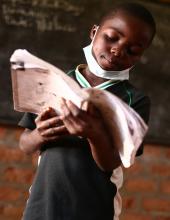
In Liberia, as elsewhere around the world, recent school closures disrupted learning for all students. The effects of the COVID-19 pandemic have exacerbated pre-existing education inequality, especially disadvantaging girls, students with disabilities, people living in extreme poverty, and other marginalized groups. For Read Liberia’s technical team, the recent pandemic was a catalyst for innovation. The project quickly adapted to a new virtual implementation model to continue trainings, community engagement, and teacher instructional coaching. Read this brief to learn more about what the Activity did to ensure Liberia's students continued to learn during the pandemic.
Assoc. Photo (Port.)
support children 1.jpeg
Country
Resource Type
Resource Language
Month and Year

Mobile money: A new way to compensate teachers in Liberia

Submitted by admin on
Description/Abstract
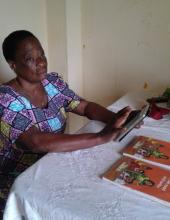
In 2019, Read Liberia transitioned to the use of mobile money to remit per diem payments to teachers upon completion of twice-yearly trainings. Mobile money had a significant impact on Read Liberia's operations, training continuity, and its teachers. Read this brief to find out how.
Assoc. Photo (Port.)
Mobile Money.png
Country
Resource Type
Featured projects
Resource Language
Month and Year

MEL-Tech Case Studies: Lessons Learned from Technology-Supported Remote Trainings in Five Countries During the Pandemic

Submitted by admin on
Description/Abstract
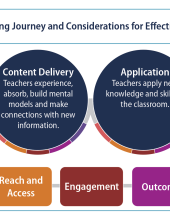
This report presents case studies of five remote training activities conducted by USAID-funded and RTI-implemented programs: the Advancing Basic Education Project (ABC+) in the Philippines, the Malawi Early Grade Reading Improvement Activity (MERIT), Read Liberia, Okuu Keremet! in the Kyrgyz Republic, and the Uganda Literacy Achievement and Retention Activity (LARA). The case studies seek to apply a more process-based and learning-oriented approach, drawing from the MEL-Tech Framework, to understand technology-supported remote teacher training introduced in response to COVID-19.
Assoc. Photo (Port.)
photo credit- Uganda SHRP_4.JPG
Resource (File)
Resource Type
Featured projects
Resource Language
Month and Year
Publisher Or Client
RTI International

MEL Framework for Technology Supported Remote Teacher Training

Submitted by admin on
Description/Abstract
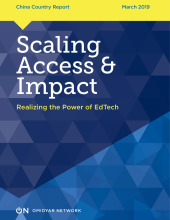
This MEL Framework for Technology-Supported Remote Training seeks to help education program implementers, governments, and program evaluators more effectively design, implement, and learn lessons from remote training activities. It places special consideration on the unique characteristics of technology-supported interventions in the global South. The framework presents minimum standards for the evaluation of technology-supported remote training, which, in turn, facilitates the development of an actionable evidence base for replication and scale-up. Rather than “just another theoretical framework” developed from a purely academic angle, or a framework stemming from a one-off training effort, this framework is based on guiding questions and proposed indicators that have been carefully investigated, tested, and used in five RTI monitoring and research efforts across the global South: Kyrgyz Republic, Liberia, Malawi, the Philippines, and Uganda (Pouezevara et al. 2021). Furthermore, the framework has been reviewed for clarity, practicality, and relevance by several RTI project teams across Africa and Asia.
Assoc. Photo (Port.)
Teacher Learning Journey - graphic_0.png
Resource (File)
MEL_Framework_FINAL.pdf
Resource Type
Resource Language
Month and Year
Publisher Or Client
RTI International

China Country Report: Scaling Access and Impact - Realizing the Power of EdTech

Submitted by admin on
Description/Abstract
This series of reports was produced by Omidyar Network’s Education initiative, whose mission is to unlock human potential through learning by catalyzing people, ideas, and systems – so every individual thrives and contributes in a changing and interdependent world. The Omidyar Network team included Eliza Erikson, Erin Simmons, Rebecca Hankin, and Eshanthi Ranasinghe. The data underpinning this report come from interviews, surveys, site visits, and desk research by a team of researchers and EdTech practitioners led by RTI International, drawing on local expertise in each of the case study countries. The team conducted more than 100 interviews with teachers, school principals, education administrators, policymakers, and EdTech experts. This study sought to understand the conditions that have thus far enabled EdTech initiatives to scale in China. The study found that there is a multibillion dollar business opportunity for EdTech entrepreneurs that leverage widespread access to mobile internet and performance pressure generated by cultural values and government standards. Reaching rural and ethnic minority schools with equal access to high quality lessons through virtual teaching and blended models of instruction.
Assoc. Photo (Port.)
China scaling portrait.png
Resource (File)
Country
Resource Type
Resource Language
Month and Year
Publisher Or Client
Omidyar Network

One-page Brief on Electronic Vision and Hearing Screening Applications

Submitted by admin on
Author
Description/Abstract
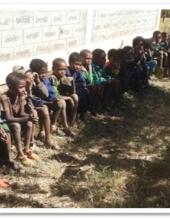
Peek Acuity and hearScreen® are mobile, electronic screening tools that provide data on vision and hearing impairments. The tools were designed to be administered in schools and classrooms so that teachers and schools can better accommodate visually- or hearing-impaired students to increase their opportunities of succeeding in school.
Assoc. Photo (Port.)
Vision_ethiopia.jpg
Country
Resource Type
Month and Year

Carmen Strigel Presentation on RTI Screening Technology Experiences

Submitted by admin on
Author
Description/Abstract
Presentation by Carmen Strigel, Director, Technology for Education and Training, RTI International. Delivered at the RTI Panel Discussion "Vision and Hearing Screening in LMICs: Challenges and Opportunities" held Wed, September 26, 2018 in Washington, D.C. For related resources, see also the topic "Assessments" using the "by Topic" link in the menu above.
Assoc. Photo (Port.)
Tangerine photo.jpg
Country
Resource Type
Month and Year
Publisher Or Client
RTI International