
Open Educational Resources

Tukomye Okutuntuza SBCC Tool Kit

Submitted by admin on
Description/Abstract
Toolkit created by USAID/Uganda's Literacy Achievement and Retention Activity (LARA) as part of their Social and Behavior Change Communication (SBCC) materials to reduce primary teachers' use of corporal punishment in school.
Assoc. Photo (Port.)
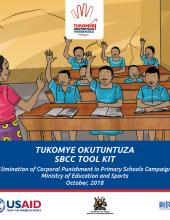
SBCC Toolkit.PNG
Resource (File)
Country
Resource Type
Resource Language
Month and Year
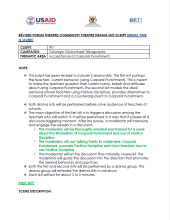
"Break Time is Over!" - Forum/Community Theatre Drama Skit Script

Submitted by admin on
Description/Abstract
Forum Theatre / Community Theatre Drama Skit Script titled "Break Time is Over!" created by USAID/Uganda's Literacy Achievement and Retention Activity (LARA) as part of their Social and Behavior Change Communication (SBCC) materials to reduce primary teachers' use of corporal punishment in school.
Assoc. Photo (Port.)
BreakTime.PNG
Country
Resource Type
Resource Language
Month and Year
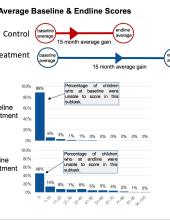
Global Learning XPRIZE Data Summary

Submitted by admin on
Description/Abstract
This presentation was delivered to a team of researchers who participated in a "Data Deep Dive" convened by the XPRIZE Foundation after the announcement of the Global Learning XPRIZE award.
Assoc. Photo (Port.)
xprize img.jpeg
Resource Type
Resource Language
Month and Year
Publisher Or Client
XPRIZE Foundation

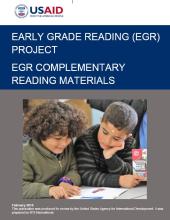
Early Grade Reading (EGR) Project EGR Complementary Reading Materials

Submitted by admin on
Author
Description/Abstract
The US Agency for International Development (USAID) Early Grade Reading Project (EGR) cooperated closely with the Ministry of Education and Higher Education (MOEHE) to provide each student in EGR classrooms with age- and grade-level appropriate reading materials. In March 2018 EGR formed the Materials Development Technical Working Group (TWG) comprised of 10 members from four MOEHE General Directorates: General Education – Kindergarten (KG), Supervision and Educational Qualifications; National Institute of Education and Training (NIET); and Information Technology. The TWG methodically progressed through many stages before the complementary reading materials reached the classrooms: developing a book leveling instrument, inventorying the available books in the schools and in the market, leveling the available books, identifying the gaps, and finally developing and/or purchasing needed reading materials. By project end, EGR had developed or procured over 100,000 titles of leveled readers, decodable readers, big books, and read-aloud books to provide the 104 schools that EGR supports with complementary reading materials for KG-Grade 2 classrooms. EGR, in coordination with a TWG from the MOEHE, developed criteria to determine the grade-level appropriateness of the complementary reading materials. EGR considered two factors in determining a book’s appropriateness: level and readability. Both leveling and readability are necessary for determining the texts that students should be reading.
Assoc. Photo (Port.)
Complementary Materials photo.JPG
Resource Type
Resource Language
Month and Year
Publisher Or Client
USAID/West Bank and Gaza

Early Grade Reading (EGR) Project EGR Training Report

Submitted by admin on
Description/Abstract
In cooperation with the MOEHE Training Technical Working Group (TWG), EGR developed training modules in the five basic reading skills: phonemic awareness, phonics, fluency, vocabulary, and reading comprehension as well as a comprehensive module in writing skills. The project initially planned to introduce one module at each training session conducted throughout the academic year. However, when EGR learned that the project would close prematurely due to legislative restrictions and funding issues, project staff compressed the trainings on the five basic skills into four over a period of four months. The shortened timeframe did not allow EGR to offer training in the four basic writing skills, but the project developed one comprehensive writing module, which was provided to the coaches in January 2019. EGR supplemented the training modules with additional instructional resources. Project specialists developed three instructional videos to reinforce the strategies introduced in the training modules. Additional activities to support the five basic reading skills were compiled in one resource book. EGR provided four interactive posters for teachers to use in their classrooms and a variety of complementary reading materials. The project’s goal was to equip coaches and teachers with the tools needed to implement a quality early grade reading program.
Assoc. Photo (Port.)
Tranng report photo.JPG
Resource Type
Resource Language
Month and Year
Publisher Or Client
USAID/West Bank and Gaza

Early Grade Reading (EGR) Project Complementary Reading Materials

Submitted by admin on
Description/Abstract
The US Agency for International Development (USAID) Early Grade Reading Project (EGR) cooperated closely with the Ministry of Education and Higher Education (MOEHE) to provide each student in EGR classrooms with age- and grade-level appropriate reading materials. In March 2018 EGR formed the Materials Development Technical Working Group (TWG) comprised of 10 members from four MOEHE General Directorates: General Education – Kindergarten (KG), Supervision and Educational Qualifications; National Institute of Education and Training (NIET); and Information Technology. The TWG methodically progressed through many stages before the complementary reading materials reached the classrooms: developing a book leveling instrument, inventorying the available books in the schools and in the market, leveling the available books, identifying the gaps, and finally developing and/or purchasing needed reading materials. By project end, EGR had developed or procured over 100,000 titles of leveled readers, decodable readers, big books, and read-aloud books to provide the 104 schools that EGR supports with complementary reading materials for KG-Grade 2 classrooms.
Assoc. Photo (Port.)
Complementary Materials photo.JPG
Resource Type
Resource Language
Month and Year
Publisher Or Client
USAID/West Bank and Gaza

Concept Paper on Open Licensing for Ministries of Education in Low- and Middle-Income Countries

Submitted by admin on
Author
Description/Abstract
This concept paper is targeted at Ministries of Education in developing countries, without an existing policy for Open Educational Resources (OERs), that are considering open licensing of early reading materials developed, in whole or in part, with USAID funding. The purpose of the paper is to: a) provide further background on the rationale for open licensing; b) explain what open licensing is and how Creative Commons licenses operate; and c) answer ministries’ most pressing questions about the implications of open licensing.
Assoc. Photo (Port.)
Concept Paper on Copyright and Licensing_Final_V4.jpg
Country
Resource Type
Resource Language
Month and Year
Publisher Or Client
USAID/Nepal

Strengthening the Textbook Production Chain in Morocco: Study Conclusions and Recommendations Appendix B: A Review of the Domain of Electronic Textbooks

Submitted by admin on
Description/Abstract
This is Part 3 of a four-part comprehensive evaluation of the public textbook procurement system in Morocco. It is an overview of the challenges and opportunities of school-based digital teaching and learning, intended to provide a framework for policymakers in Morocco who are considering further investments in information and communication technology (ICT) for learning in government schools. Specifically, it addresses the area of digital textbooks. The overview poses questions that policymakers should ask and provides examples of how other countries have responded to such questions.
Assoc. Photo (Port.)
3_English_Textbooks Morocco_Digital.jpg
Resource (File)
Country
Resource Type
Resource Language
Month and Year
Publisher Or Client
USAID/Morocco

Nigeria Reading Access and Research Activity (RARA): Development of Teaching and Learning Materials for Early Grade Reading Instruction

Submitted by admin on
Description/Abstract
This document focuses on the instructional materials for early reading in Hausa developed under Nigeria RARA. It documents the process through which the materials were conceptualized. The intention is to provide guidance to similar projects implemented by donors, ministries of education, non-government organizations (NGOs), and private publishers. The lessons documented are most applicable in contexts in which existing materials do not adequately support early reading instruction or are very scarce. While Nigeria RARA materials are exemplars of a research-based approach to materials development, they are pilot versions. Similar initiatives are encouraged to build upon this model and make improvements of their own.
Assoc. Photo (Port.)
Nigeria RARA Materials Development Process_Final.jpg
Country
Resource Type
Resource Language
Month and Year
Publisher Or Client
RTI International

Using ICT to support evidence-informed instruction [Presentation]

Submitted by admin on
Description/Abstract
This presentation was delivered by Wendi Ralaingita at the Open Learning Exchange (OLE) conference in Kathmandu, Nepal (November 2017). It provides an overview of RTI's evidence-based approach to ICT integration, based largely on the Improvement Science literature, particularly Edward Deming. Describes uses of Tangerine open-source software for teacher coaching (Tangerine:Tutor) and classroom continuous assessment (Tangerine:Class) as well as hearing and vision screening tools integrated with EGRA and EGMA assessments.
Assoc. Photo (Port.)
OLE ICT Conference_RTI Presentation 2017.jpg
Resource (File)
Country
Resource Type
Resource Language
Month and Year
Publisher Or Client
RTI International