In the News and Impact Stories

UEEP Success Story #8: Student's English Improves with New Textbooks

Submitted by admin on
Author
Description/Abstract
This success story highlights a English as a foreign language teacher's experience piloting the new ELF textbooks launched by the Ministry of Public Education, with support from the United States Agency for International Development (USAID. As a master training, she recognized that some teachers needed time to switch from their unusual approach and adjust their teaching to use the new materials, and she wanted to support them in this process. As part of her preparation to become a master trainer, she met with English as a foreign language experts from the Uzbekistan Education for Excellence Program to discuss each section of the new textbooks, workbooks, and teacher guides and explore all the new supplementary materials available to teachers, including video and audio files, word cards, and a test generator. She found that the new content and the approach to teaching English were drastically different from those she had used in the past. She found the teacher guide easy to follow and noted that the steps included in the guide helped her to implement each lesson.
Assoc. Photo (Port.)
uz ss 8 port.PNG
Country
Featured projects
Resource Language
Month and Year
Publisher Or Client
USAID

UEEP Success Story #7: New Information and Communication Technology Books Bring Opportunities for Uzbekistan's Youth

Submitted by admin on
Author
Description/Abstract
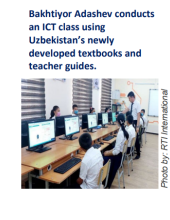
This success story highlights the experience of a ICT master teacher trainer who participated in the piloting of new ICT teaching and learning materials in Uzbekistan. Improving the quality of ICT teaching in Uzbekistan was critical to achieve student learning and the new teaching methods and materials are helping shift teaching from theory to practice. Shifting teacher practices will take time as teachers initially found using a teacher guide to prepare their lessons difficult. Because the content and the methods were new to them, preparing for each lesson took extra time and energy. Previously, it was unusual for teachers to have students work on practical project-based assignments during class time. By piloting the new materials, teachers are observing increasing students interest and practical skills. As a result, the new methods will have enormous impact on students’ learning.
Assoc. Photo (Port.)
UEEP SS 7 port.PNG
Country
Featured projects
Resource Language
Month and Year

UEEP Success Story #4: Uzbekistan's New ICT Materials Meet World Educational Standards (UEEP)

Submitted by admin on
Author
Description/Abstract
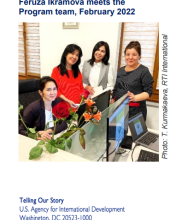
The Ministry of Public Education (MPE) with the support of the U.S. Agency for International Development (USAID) and the Uzbekistan Ministry of Public Education, initiated a reform to enhance ICT education to produce graduates with computer and programming skills that will contribute to youth employability. Under the USAID-funded Uzbekistan Education for Excellence Program, the Republican Education Center and Abdulla Avloni Institute collaborated with RTI International and Mississippi State University to update Uzbekistan’s ICT educational standards and goals, scopes and sequences, teacher guides, student textbooks, student evaluations, and teacher professional development. The Program and MPE piloted an ICT program for grades 5–11.
Assoc. Photo (Port.)
SS 4 Image.png
Country
Featured projects
Resource Language
Month and Year

UEEP Success Story #6: Early Grade Teacher Co-Authors New Uzbek Language Arts Textbooks (UEEP)

Submitted by admin on
Author
Description/Abstract
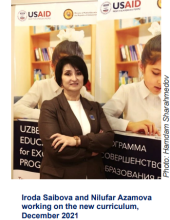
This success story highlight the experience of one Uzbek Language Arts teacher in supporting the development of new reading materials for grades 1-4 learners. When she started working on the student textbooks and teacher guides, she found transforming Uzbekistan's approach to reading in local language challenging and rewarding, especially with the tremendous support of the international and local experts, who helped the writers to ensure international best practices guided the content and teaching methods. The result of their hard work, lead to the creation of books that inspire children to learn and develop a love of the Uzbek language.
Assoc. Photo (Port.)
SS 6 Image.png
Country
Featured projects
Resource Language
Month and Year

UEEP Success Story #5: Uzbek Teacher of Mathematics Contributes to New Curriculum and Books (UEEP)

Submitted by admin on
Author
Description/Abstract
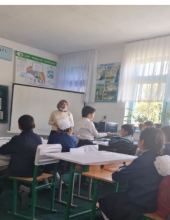
This success story highlights the experience of a early grade math teacher and textbook writer. She outlines the development of age-appropriate requirements and standards for students first and then, once those are set, write teacher guides and student textbooks. Before starting work on the teacher guide, the Program developed the topic scopes and sequences. The teacher guides were then designed to give teachers clear instructions on the lessons. With help of the teacher guides, the teachers will know how to begin the lesson, how to connect the topics, how to continue, what problems or unexpected questions may occur, and how to guide and assist students. Additionally, they incorporated more practical examples and problem-solving tools.
Assoc. Photo (Port.)
SS 5 Image.png
Country
Featured projects
Resource Language
Month and Year

UEEP Success Story #3: Guess What: Learning English Becomes Easy in Uzbekistan (UEEP)

Submitted by admin on
Author
Description/Abstract
The United States Agency for International Development’s (USAID’s) Uzbekistan Education for Excellence Program is supporting the Ministry of Public Education to update its English as a Foreign Language (EFL) curriculum through the procurement, adaptation, and piloting of Cambridge University Press teacher guides, student textbooks, and student workbooks in two regions—Sirdaryo and Namangan. Thanks to teachers’ active engagement and participation in this piloting of EFL materials, the Program will be able to finalize the teacher guides for national rollout during the 2022/2023 school year.
Assoc. Photo (Port.)
SS 3 Image.png
Country
Featured projects
Resource Language
Month and Year

UEEP Success Story #1: Co-Creation Workshop Enhances Program Start Up in Uzbekistan [UEEP]

Submitted by admin on
Author
Description/Abstract
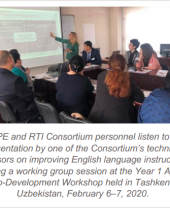
This success story outlines the co-creation process for the Uzbekistan Education for Excellence Program in From February 2020. RTI held a collaborative, interactive Co-Development Workshop to 1) affirm the shared vision for the Program, 2) clarify the Program’s overall mandate and scope, and 3) produce outlines of planned activities with associated implementation strategies, resource needs, and roles and responsibilities.
Assoc. Photo (Port.)
SS 1 Image.png
Country
Sub-topic
Featured projects
Resource Language
Month and Year

UEEP Success Story #2: U.S. Assistance with Student Standards Renews Teachers’ Optimism

Submitted by admin on
Author
Description/Abstract
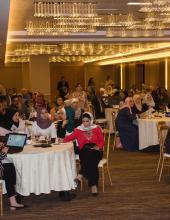
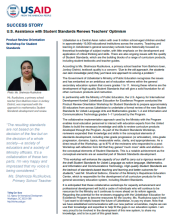
The Government of Uzbekistan’s Ministry of Public Education embarked on an ambitious set of education reforms within the general secondary education system that covers grades 1 to 11. Among these reforms are the development of high-quality Student Standards that will give a solid foundation for all other curriculum products and instruction. In partnership with the Ministry of Public Education, the U.S. Agency for International Development-funded Uzbekistan Education for Excellence Program conducted the Product Review Orientation Workshop for Student Standards to prepare approximately 50 educators from across Uzbekistan to undertake a formal review of the new Student Standards for Uzbek Language Arts and Mathematics grades 1–4 and Information and Communications Technology grades 1–11 produced by the Program
Assoc. Photo (Port.)
SS1port.PNG
Country
Resource Language
Month and Year

Jordan National Arabic literacy strategy 2023-2028

Submitted by admin on
Author
Description/Abstract
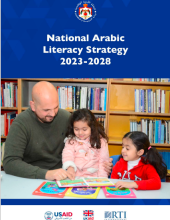
In light of the achievements made by the Ministry of Education (MOE) in collaboration with the RAMP project, which encompassed various aspects of early education, such as enhancing literacy skills, refining supervision and teaching methods for reading and math, implementing effective learning assessments, and developing supportive educational materials, the MOE sought to integrate these gains into a comprehensive roadmap to further enhance literacy skills and align with the objectives of the national strategy for human resource development. The Ministry of Education is committed to creating a coherent vision aimed at significantly elevating Arabic literacy standards for students in KG2 to Grade 6. This vision is manifested in an evidence-based literacy reform strategy owned by Jordan and slated for implementation over a five-year period. Given the complexity of this endeavor, collaboration among multiple interconnected national teams was essential. To that end, the MOE established a National Task Force, chaired by the Minister of Education and comprised of influential figures from the public and private sectors who could bring this visionary literacy reform strategy to fruition in Jordan. The development of this comprehensive National Literacy Strategy was led by the Ministry of Education, with support from USAID, UKAID, and other national partners. This strategy built upon the achievements of the RAMP project, expanded upon them, and ensured ongoing progress in enhancing Arabic reading skills, extending its reach to include students in higher grades. The National Literacy Strategy (NLS) is a visionary initiative designed to achieve several crucial objectives: 1. Identify National Priorities: It pinpoints key national priorities and programs aimed at enhancing Jordan's literacy outcomes. 2. Leverage Existing Strengths: The NLS builds upon the assets and strengths already in place, particularly those established by RAMP, to maximize its impact. 3. Provide a Clear Roadmap: It offers a practical, evidence-informed implementation roadmap, ensuring that its objectives are met effectively. 4. Long-Term Commitment: The NLS commands widespread support over a 5-year implementation period, emphasizing its dedication to sustainable progress. 5. Unite Stakeholders: It aligns all actors in the education space toward a common goal and coordinates external financing and technical support from partners in the public, private, and community sectors. Over a span of two years from 2020 to 2022, the NLS Technical Committee embarked on an extensive journey. during which they meticulously: • Analyzed the current literacy status at different learning stages in Jordan, officially acknowledging the challenge of low student literacy performance. • Agreed upon the NLS vision and strategic goals, identifying the factors in homes, communities, and schools influencing literacy learning. • Scrutinized the various elements within the education system affecting literacy learning, assessing their strengths and weaknesses. • Identified educational policy priorities and programs essential for improving literacy and contributing to the NLS's vision and objectives. • Developed a results framework, outlining strategic objectives, specific program objectives, short and long-term activities, risk analyses, and challenges. In the final stretch of 2022, RAMP completed the first draft of the strategy document, seeking input from the National Literacy Strategy Taskforce and key partners such as USAID, FCDO, World Bank, UNICEF, and the Higher Family Council. Their valuable comments were integrated to refine the strategy further. With RAMP's technical assistance, the NLS Technical Committee devised a 5-year NLS plan and a 1-year implementation plan, guided by the Minister of Education's directions during a pivotal Task Force meeting in December 2022. Workshops and interviews were conducted to gather data and budget information. Fast forward to May 5, 2023, a momentous day for Jordan's education landscape. The NLS Implementation and Monitoring Plan received approval from the Task Force, led by H.E. Minister of Education, Dr. Azmi Mahafzah, with the esteemed presence of USAID. The Minister endorsed the plan, indicating that the MOE would seek approval from the MoE educational board and establish a dedicated committee or secretariat to manage the NLS plan's implementation. Jordan's launch of its first five-year National Literacy Strategy is a moment of pride and hope. This strategy marks a transformative step towards fostering a generation of passionate readers, improving literacy, and promoting reading as an enjoyable habit. It's not just a milestone for Jordan but also sets an inspiring model for literacy improvement across the Middle East. Jordan's National Literacy Strategy is not just a plan; it's a beacon of hope, a promise of a brighter future, and a testament to the power of collaboration and dedication in the pursuit of educational excellence.
Assoc. Photo (Port.)
jordan literacy strategy portrait.PNG
Resource (File)
Country
Featured projects
Resource Language
Month and Year
Publisher Or Client
USAID and UKaid

Jordan Early Grades Reading and Mathematics Initiative (RAMP) Sustainability Plan

Submitted by admin on
Author
Description/Abstract
The Reading and Mathematics Initiatives (RAMP), in close collaboration and coordination with the Ministry of Education (MOE), have developed a comprehensive sustainability plan. This plan was created through active engagement with MOE Directorates and extensive consultations with stakeholders, both within the initiative and the Ministry of Education. It outlines a detailed strategy for each of the four key areas: Curricula, Professional Development/Training, Support and Supervision, and Assessment. Additionally, it includes several overarching recommendations critical to achieving sustainability and enhancing educational outcomes. The plan contains two levels: Level 1 focuses on defining the specific elements of new concepts or activities introduced under RAMP; Level 2 focuses on ensuring that these concepts or activities are seamlessly integrated throughout the system, ensuring that each department understands its role and responsibility for implementation. Structure of the Sustainability Plan Level One: This level addresses the essential procedures and plans required to seamlessly integrate the methodologies and projects initiated by RAMP into the Ministry's educational framework. It focuses on both current and future methodologies and projects, ensuring their alignment with the phases of the educational process. Specific, measurable objectives have been established, and they are applied within predefined timelines to enhance and consolidate concepts, methods, tools, and information technology currently utilized by the Ministry of Education. For instance, the MOE has effectively sustained and improved the e-supervision system, a crucial tool for identifying underperforming schools and devising coaching plans to bolster their performance. This system has led to substantial enhancements in data collection, evidence-based decision-making, as well as monitoring and accountability systems. Level Two: At this level, procedures and plans are outlined to identify high-level recommendations aimed at fostering coherence, consistency, data flow, and accountability within the Ministry of Education. These recommendations are designed to enhance key procedures related to early-grade education in reading and mathematics, extending to ensure coordination among various MOE directorates and other stakeholders. It's important to note that the recommendations at this level are not limited to RAMP methodologies; they encompass all aspects of the Ministry's systems, procedures, and methodologies. For example, the MOE has established a committee comprising education experts from different MOE directorates. This committee collaboratively works to ensure coherence and consistency in early-grade education practices across diverse MOE directorates. Together, they have standardized the following elements mentioned in the sustainability plan related to early grades: 1. Student performance indicators have become essential components of the Education Strategic Plan (ESP). Simultaneously, the National Center for Curriculum Development (NCCD) has successfully incorporated RAMP's reading and mathematics instructional approaches into the newly developed curriculum framework and learning materials designed for early grades. 2. The Examination and Testing Directorate has played a vital role in institutionalizing the Early Grades National Assessment Framework, which includes the biannual Early Grade Reading Assessment (EGRA) and Early Grade Mathematics Assessment (EGMA), annual surveys based on the Lot Quality Assurance Sampling (LQAS) methodology, and the implementation of a class-level diagnostic assessment system with accompanying tools. Standard operating procedures were meticulously designed to ensure consistency and effectiveness in this process. 3. The Education and Training Center (ETC) has accredited the Continuing Professional Development (CPD) Program specifically tailored for Kindergarten (KG) and early grades teachers. The RAMP Sustainability Plan transcends mere documentation – it serves as a guiding compass steering the MOE towards sustained excellence in early-grade strategies and approaches within the broader education framework, system, and policies."
Assoc. Photo (Port.)
Sustainability workshop-MOE.jpg
Resource (File)
RAMP Sustainability Plan.pdf
Country
Sub-topic
Featured projects
Resource Language
Month and Year
Publisher Or Client
USAID and UKaid