Early Grade Reading Assessment (EGRA)

Tanzania National and Regional Dissemination Event Report for EGRA, EGMA, SSME Results

Submitted by admin on
Description/Abstract
Dissemination of the results from the 2015/2016 round of the Early Grade Reading Assessment (EGRA), the Early Grade Mathematics Assessment (EGMA), the Snapshot of School Management Effectiveness (SSME), and Life Skills occurred at four forums. First, a National Dissemination Workshop for education stakeholders, government representatives, and development partners occurred in mid-June 2016 in Dar es Salaam, Tanzania. This workshop was followed by three locally led, Regional Dissemination Workshops held in late October 2016 in three central regions and attracted practitioners and education representatives from surrounding districts and regions. Third, a Directors’ Meeting was held in mid-November 2016 in Dodoma, Tanzania. The Directors’ Meeting attracted high-level representatives from relevant branches of the Ministry of Education, Science, and Technology (MoEST) and key stakeholders to discuss the findings and their implications for education policy and planning for Tanzania. The final event was a two-hour presentation to the Ministry of Education in Zanzibar to present findings specific to the Zanzibar context. The four events are further discussed in the remainder of this report.
Assoc. Photo (Port.)
Resource Type

Findings Report, Tanzania National Early Grade Reading Assessment (EGRA)

Submitted by admin on
Description/Abstract
Findings report from the Tanzania National EGRA, EGMA, SSME, and Life Skills.
Assoc. Photo (Port.)
TZ egra.png
Resource (File)
Resource Type
Month and Year
Publisher Or Client
USAID, Government of Canada, UNICEF

Tanzania EGRA/EGMA/SSME (2016) Final, Validated Instruments

Submitted by admin on
Description/Abstract
Final, validated instruments used in the 2016 Tanzania National EGRA. The EGRA and SSME were made possible with funding from USAID. The EGMA component was made possible by funding from Global Affairs Canada. The Life Skills component was made possible by UNICEF Tanzania.
Assoc. Photo (Port.)
instruments report.png
Resource (File)
Resource Language
Month and Year

Using EGRA data for differentiated instruction: Learning profiles and instructional needs in Uganda

Submitted by admin on
Description/Abstract
Presentation delivered at CIES2017 (Atlanta). A challenge of large-scale education research projects in international development is determining the most appropriate way to effectively report findings for a wide variety of audiences (e.g., researchers, ministry officials, donors, and other relevant stakeholders). It is important to consider technical rigor and accessibility, while ultimately providing results that can be used to inform policy and instruction. Using Early Grade Reading Assessment (EGRA) data from Uganda in two languages, we are replicating an approach for categorizing students into learning profiles, which are directly tied to their particular instructional needs. We have conducted this analysis previously with data from Indonesia. We had conceptualized on the framework to be used across different context This study reports on the efficacy of using the same method with this sample with Luganda speakers. We divided students into five learning profiles based on their reading ability (Next Grade Ready, Fluent, Instructional, Beginner, and Nonreader) and then examined the relationship among these profiles and their reading skills on a variety of EGRA subtasks to determine the instructional need required to promote students from one profile to the next. Our learner profile method has been used with data in two countries and two languages. EGRA has been used in over 70 countries and in more than 100 languages. This study is an initial attempt to explore the value in this method.
Assoc. Photo (Port.)
dubeck and stern.png
Resource (File)
Country
Resource Type
Resource Language
Month and Year

Measuring regional progress toward early grade reading and mathematics targets in a national application of LQAS as part of the RAMP Initiative in Jordan.
Submitted by admin on
Description/Abstract
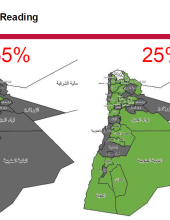
Presentation delivered at CIES 2017 (Atlanta). CIES Panel title: Measuring regional progress toward early grade reading and mathematics targets in a national application of LQAS as part of the RAMP Initiative in Jordan. RTI International (RTI) and its partners are implementing the United States Agency for International Development (USAID) and United Kingdom’s Agency for International Development (UKAID) funded Early Grade Reading and Mathematics Initiative (RAMP). RAMP is a nationwide initiative of the Jordanian Ministry of Education (MoE) designed to improve the reading and mathematics skills of students in kindergarten 2 through grade 3 (K2–G3). RAMP, which will be carried out over five years, expects to deliver improved reading and mathematics instruction to all public school students in Jordan in grades K2–G3—about 400,000 students. Central to the RAMP approach is developing reflective practice at all levels of the education system. At the classroom level, teachers use screening and diagnostic tools developed by the initiative for reading and mathematics to gain a better sense of the developmental level(s) of the students in their class and in response, to use research based pedagogical approaches and materials to respond to these needs. At the national level the MoE uses biannual national surveys that include the Early Grade Reading Assessment (EGRA) and Early Grade Mathematics Assessment (EGMA) to measure progress toward national benchmarks. RAMP is exploring the efficiency of the Lot Quality Assurance Sampling (LQAS) methodology in providing regional structures (Field Directorates) with regular information on the progress by schools and Field Directorates toward achieving the national benchmarks for early grade reading and mathematics. In addition, the LQAS based assessments will also contribute to the development of school reports. This panel will discuss the first national implementation of the LQAS based assessment conducted in May 2016 (Brombacher, 2016). The first presentation will provide background to the RAMP initiative, the centrality of reflective practice at all levels of the system to improving performance in early grade reading and mathematics, and the role that the LQAS based assessments will play in providing regional structures with the information that they need to monitor and support progress toward the national benchmarks. The second presentation will describe the development of the instruments used in the LQAS assessment activity, the implementation of the first national LQAS based assessment, the findings of the study, and a range of important lessons learned. The third and final presentation will describe the response of the MoE to the national implementation. The presentation will also deal with the anticipated institutionalization of the approach into the roles and responsibilities of the ministry supervisors. The panel contributes to the conference theme, “Problematizing (In)Equality: The Promise of Comparative and International Education”, as it examines the implementation of an efficient and cost-effective mechanism for national and regional education structures to identify the schools and regions that are in greatest need of support – allowing the structures to deploy limited resources in a cost effective way.
Assoc. Photo (Port.)
CIES Slide.png
Resource (File)
Country
Resource Type
Resource Language
Month and Year

CIES 2017 Presentation: Measurement of early reading under the SDGs

Submitted by admin on
Description/Abstract
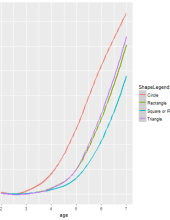
Measurement of learning is central to the Sustainable Development Goals for education, both in early primary (grade 2/3) and in early childhood (under the age of 5) (IAEG 2016). Of particular concern is the ability of global measurement approaches to reflect the social and linguistic differences of a diverse range of societies, including traditionally marginalized groups. This presentation relies on literacy assessment data to answer the following question: can results from non-equated national assessments be used to report against global goals?
Assoc. Photo (Port.)
ShapeName Laos.png
Resource (File)
Gove CIES March 2017.pptx
Country
Resource Type
Resource Language
Month and Year

RDC, 2015 : Évaluation des compétences fondamentales en lecture (EGRA) et Aperçu de l'efficacité de la gestion des écoles (SSME) – Rapport des conclusions en 5e année, révisé

Submitted by admin on
Description/Abstract
L’objectif de l’étude est d’avoir une évaluation de référence des compétences en lecture et en mathématiques des élèves de 3e et 5e années d’école primaire en République démocratique du Congo (RDC). Plus concrètement, cette étude offre à l’Agence américaine pour le développement international (USAID) et le Gouvernement de la République démocratique du Congo (GRDC) des données portant sur les capacités des enfants et 3e année d’école primaire à lire dans les trois langues nationales de la RDC (notamment le lingala, le kiswahili ou le tshiluba) et sur les compétences de compréhension et de production orales en français des mêmes élèves. D’autres éléments de l’étude offrent des aperçus des compétences en mathématiques d’enfants en 3e année dans un des districts du Katanga. La présente étude offre aussi un certain contexte et des données portant sur les variables principales en rapport avec les élèves, les enseignants, les directeurs des écoles et les écoles, variables supposées être de bons prédicteurs de la performance des élèves de primaire en lecture et mathématiques. Ces informations diagnostiques aideront les décisionnaires à prendre des décisions éclairées par les données, décisions sur les stratégies correctives qui pourront améliorer la qualité des résultats de l’enseignement et de l’apprentissage des élèves dans les premières années de l’école primaire.
Assoc. Photo (Port.)
grade 5.png
Resource (File)
Resource Type
Resource Language
Month and Year

Status of Early Grade Reading in Sub-Saharan Africa

Submitted by admin on
Description/Abstract
Student literacy assessments contribute to identifying the U.S. Agency for International Development’s (USAID’s) progress toward Goal 1: improving reading skills for 100 million children by 2015. Tracking progress toward this goal is challenging, and information regarding literacy assessments across sub-Saharan Africa has yet to be fully coordinated. Accordingly, the purpose of this study is to advance knowledge of which select countries in sub-Saharan Africa have and have not conducted early grade reading assessments, while also providing information regarding where literacy issues remain critical and where improvement is underway. Twenty countries were selected because of USAID’s presence and continued interest in working to improve educational opportunities within these countries. The 20 countries are as follows: Benin, Côte d’Ivoire (Ivory Coast), Democratic Republic of the Congo (DRC), Djibouti, Ethiopia, Ghana, Kenya, Liberia, Malawi, Mali, Mozambique, Nigeria, Rwanda, Senegal, Somalia, South Africa, South Sudan, Tanzania, Uganda, and Zambia.
Assoc. Photo (Port.)
literacy.png
Resource (File)
Country
Resource Type
Resource Language
Month and Year