Global

EARLY GRADE READING ASSESSMENT TOOLKIT 2009

Submitted by admin on
Author
Description/Abstract
This toolkit is the product of ongoing collaboration among a large community of scholars, practitioners, government officials, and education development professionals to advance the cause of early reading assessment and acquisition among primary school children in low-income countries. Extensive peer review comments for this toolkit and suggestions for instrument development were provided by Marcia Davidson, Sandra Hollingsworth, Sylvia Linan-Thompson, and Liliane Sprenger-Charolles. Development of EGRA would not have been possible without the support of the nongovernmental organization and Ministry of Education EGRA Evaluation Teams of Afghanistan, Bangladesh, Egypt, The Gambia, Guyana, Haiti, Honduras, Jamaica, Kenya, Liberia, Mali, Nicaragua, Niger, Peru, Senegal, and South Africa. Our deepest gratitude goes to the teachers, the students, and their families for their participation and continued faith in the benefits of education. In repayment we will diligently seek to improve reading outcomes for all children around the world. Amber Gove is responsible for primary authorship of the toolkit, with contributions from Luis Crouch, Amy Mulcahy-Dunn, and Marguerite Clarke; editing support was provided by Erin Newton. The opinions expressed in this document are those of the authors and do not necessarily reflect the views of the United States Agency for International Development or the World Bank. Please direct questions or comments to Amber Gove at agove@rti.org.
Assoc. Photo (Port.)
toolkit cover.png
Resource (File)
EGRA_Toolkit_Mar09.pdf
Country
Resource Type
Resource Language
Month and Year
Publisher Or Client
USAID and The World Bank

Measurement and Use of Education Data across the Asia Region

Submitted by admin on
Description/Abstract
The Improving Learning Outcomes for Asia (ILOA) regional project works closely with USAID’s Asia Bureau and Missions across the region to identify key questions and challenges Mission staff face in their day-to-day work. An advisory group of USAID Mission colleagues raised an important question: how best to wade through the array of education data available? What are the types, how are they used, when are different data useful, etc.? Indeed, the use of different data to effectively partner with governments to make evidence-based decisions is a top priority. As a result, ILOA produced a brief summarizing the different sources and uses of data for basic education, youth and workforce development, and higher education. The brief recognizes how data sources and uses have evolved over time, enabling ministries, their partners, and stakeholders to measure performance, inform policy and plan interventions, and manage limited resources. The brief is designed to succinctly assist USAID staff and their partners in navigating the world of education data.

Assoc. Photo (Port.)
Iloa 1 port.png
Resource (File)
Country
Resource Type
Featured projects
Month and Year

Supported Peer Assisted Remediation (SPAR) Guide

Submitted by admin on
Description/Abstract
Remediation -- providing additional support to help students catch up to and/or master the content being taught in class -- is needed by many students but is often challenging to implement. Time and financial resources are two of the largest barriers to providing quality remediation for students in most schools, and these barriers can render remediation models impossible to sustain in resource-limited contexts. One particular model of remediation -- Supported Peer-Assisted Remediation (SPAR) -- reduces these barriers by engaging learners as facilitators in remediation and putting the teacher in a supportive, monitoring role. SPAR is one approach to remediation that can supplement or replace other models of remediation. It is not the only model a program might consider, but it does offer advantages that other models do not. This guide introduces considerations programs should take into account when evaluating the benefits or designing a SPAR model. It offers decision trees, poses questions, and walks a program through deciding how a SPAR could benefit a program. If a SPAR model can be useful for your program, the T&L team at RTI International can help you design one specifically for your program.
Assoc. Photo (Port.)
SPAR_Adaptations_8.png
Resource (File)
Country
Resource Type
Month and Year

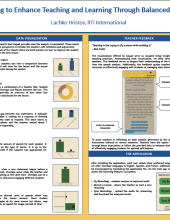
Loquat - Machine Learning to Enhance Teaching and Learning Through Balanced Classroom "Talk Time"[CIES 2024 Poster Presentation]

Submitted by admin on
Author
Description/Abstract
RTI’s latest mobile EdTech product, "Loquat", uses language-agnostic speech activity detection to determine when someone is talking. It then passes the detected speech to a voice type classifier to establish who is currently speaking. This allows the app to be used in different countries and settings, regardless of the instructional language. The mobile app, built for Android devices, is designed to be easy and intuitive. It provides timely classroom support for teachers located in rural or urban areas who may not have access to a mentor or coach. The app can also be used as part of a standard coaching session where the coach helps the teacher with techniques in improving their talk time balance in the classroom.  To use Loquat, the teacher records the audio of the entire lesson or choses a particular activity to be recorded. Then, they upload the recording through the app, to the Loquat server. After the audio recording of a lesson or activity is fully processed and analyzed, there are various reports available to the teacher. Each of these reports aims to aid the teacher in initiating self-reflection, applying immediate corrective actions, and improving talk time balance in their classroom (e.g., proportion of teacher talk time versus student talk time, individual talk time versus group talk time). Loquat is designed as a tool that empowers the teacher to take immediate action thus allowing students to grow and improve their learning outcomes. The app uses modern cloud architecture and serverless, scalable infrastructure, to process the audio. It only saves the data files used for building the graphs and charts used on the device reports. All classroom recordings are removed from the servers after analysis. There is no identification of voice or voice to text transcription. We have the Loquat application interface and user documentation in 3 languages, English, French, and Spanish. We want to present results and summary of the collected feedback from user testing in Guatemala and Senegal. There are three other pilots scheduled for 2023. Those include testing pilots in Ghana, Bangladesh, and Tanzania. Our vision for Loquat is that it experiences future iterations to include language detection but also provide additional functionality, like voice models identification or affective models that help not only assess talk time but also time on task, classroom climate, language, and content. We are also interested in exploring other uses of the application with emphasis on inclusivity in parent teacher meetings and communities of practice.
Assoc. Photo (Port.)
Screenshot 2024-09-23 at 11.31.23 AM.png
Resource (File)
RTI_CIESPoster_8Mar24.pdf
Country
Resource Type
Month and Year

Reflections on promoting Nurturing Care as a cultural outsider​ [CIES 2024 Presentation]

Submitted by admin on
Description/Abstract
The rise in popularity of the Nurturing Care Framework, which describes the enabling conditions for a child to thrive in the first several years of life, has resulted in an increase in global attention on parenting and child development. The Framework includes children’s need for good health, adequate nutrition, safety and security, opportunities for early learning, and responsive caregiving. While this holistic approach to nurturing young children is surely beneficial, the implementation of Nurturing Care should be considered through a cultural lens. According to McGillicuddy-De Lisi and Subramanian (1996), beliefs about parenting and child development are developed through three means: (1) beliefs come directly (and unquestioned) through the culture; (2) beliefs are formed through the holder’s own childhood, family, and parenting experiences; and (3) beliefs are influenced by the exchange of ideas and assumptions of people from different cultures. Since these beliefs inform parenting behaviors (Bornstein, 2012), we must be thoughtful in any efforts to change parenting and caregiver behaviors which are the result of the culture and the childhood experiences of parents. Changing behavior without an adequate consideration of the underlying cultural beliefs could be at risk of perpetuating colonial legacies and destabilizing cultural ways of being. This presentation focuses on the risks and rewards of taking an approach to shaping caregiving behaviors that considers the importance of cultural continuity. The presentation will use cross-national examples from work with two Native American tribes, the Blackfeet and the Lac Courte Oreilles Ojibwe, as well as traditional international development work in Senegal and Liberia to illustrate opportunities and challenges of foreign technical “expertise.” The differences between efforts to shape parental behaviors, which are clearly culturally-influenced, versus teacher or ECE caregiver behaviors, which may be more subtly cultural, will be examined. Finally, this presentation will offer some practical considerations for other individuals seeking to further Nurturing Care outside their own communities.
Assoc. Photo (Port.)
Nell cover.png
Resource (File)
Country
Resource Type
Resource Language
Month and Year

Практическое руководство и обзор литературы

Submitted by admin on
Description/Abstract
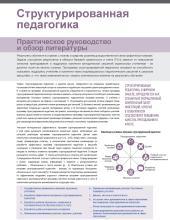
*** This is the Russian translation of the Science of Teaching Structured Pedagogy Guide Literature Review *** Результаты обучения в странах с низким и средним уровнем дохода являются катастрофически низкими. Задача улучшения результатов в области базовой грамотности и счета (FLN) зависит от повышения качества преподавания и поддержки принятия методических решений отдельными учителями - их десятки тысяч во многих странах. Программы структурированной педагогики показали их способность оказывать поддержку учителям в принятии таких индивидуальных педагогических решений в широком масштабе, и, что такие изменения могут оказать значительное влияние на результаты обучения.
Assoc. Photo (Port.)
10. Практическое руководство и обзор литературы.jpg
Country
Sub-topic
Resource Type
Resource Language
Month and Year

Early Grade Reading Assessment Workshop: Summary Notes from the Expert Workshop, Washington, DC, November 16 and 17, 2006

Submitted by admin on
Author
Description/Abstract
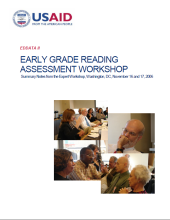
In order to obtain feedback on and confirm the validity of the draft Early Grade Reading Assessment, RTI convened a meeting of cognitive scientists, early-grade literacy experts, research methodologists, and assessment experts to review the proposed key components of the draft assessment instruments. During the 2-day workshop, participants were charged with bridging the gap between research and practice; that is, merging advances in the reading literature and cognitive science with assessment experiences. Researchers and practitioners presented evidence on their strategies for measuring literacy acquisition within the early primary grades. In addition, they were asked to identify the key issues to consider in designing a multi-country, multi-language early grade literacy assessment protocol. The workshop, co-hosted by USAID, The World Bank, and RTI, included more than a dozen experts from a diverse group of countries, as well as some 14 observers from institutions such as USAID, the World Bank, the William and Flora Hewlett Foundation, George Washington University, the South Africa Ministry of Education and Plan International, among others. A detailed list of participants, including expert bios and contact information can be found in the Appendix, along with a sample invitation, workshop agenda and Round Table discussion questions.
Assoc. Photo (Port.)
Screenshot 2023-10-27 165002.png
Resource (File)
Country
Resource Type
Resource Language
Month and Year
Publisher Or Client
USAID

Can the Middle Tier Drive Foundational Learning at Scale?

Submitted by admin on
Author
Description/Abstract
An integral part of a decentralized education system hierarchy is the “middle tier” comprising subnational actors in charge of education delivery at the regional, provincial, state, district, municipality, city, or circuit and cluster levels. The general roles and responsibilities of the middle tier are described in research on district leadership in OECD countries. Their responsibilities range from planning, monitoring, and implementing reforms at the subnational and school levels, to ensuring school-based accountability through data and evidence, to innovating, supporting, and monitoring improvements in teaching and learning in schools through instructional leadership and fostering professional learning communities at the district and school levels. While rigorous academic evidence may be lacking on the ability of middle managers to bring about improvements in foundational literacy and learning outcomes at scale in LMICs, we have theoretical and programmatic evidence on (1) their role in instructional leadership, (2) the importance of building their capacity to drive teaching and learning, and (3) the importance of trust and support within the education system that fosters learning at scale. Thumbnail Credit: Pakistan Reading Program/IRC
Assoc. Photo (Port.)
Picture4_0.jpg
Resource (File)
Resource Type
Resource Language
Month and Year
Publisher Or Client
Center for Global Development / Bill and Melinda Gates Foundation

Education Reform Support Today

Submitted by admin on
Description/Abstract
Traditional projects in education introduce innovations at the school level, sometimes improving learning in a defined number of schools. The hope is that somehow piloted successes can be replicated or taken to scale. But too often they are not. Dissatisfied with this, donors may choose policy-level interventions that promote resource reallocations, specific policy reforms, and investments in administrative and management capacity to effect system-wide change. But the record of policy reforms having impact on learning at the school level is disappointing. If we fund school-level projects, the challenge lies in how to create policy and institutional reforms that support replicable school-level success. If we support policy-level interventions, the challenge lies in how to ensure that national reforms lead to changes in the day-to-day practice of schools. Both approaches require effective programs of what we call reform support. Why is reform support needed? Ten years ago USAID published the Education Reform Support (ERS) series to answer just this question. ERS recognizes that the existing arrangements in the education sector—urban-rural inequities, management environments skewed by bureaucratic concerns, teaching improvements constrained by union prerogatives—are not accidental. Powerful political forces benefit from, shape, and defend the current situation. Changes within the system cannot realistically be implemented without first dealing with the preexisting institutional environment. Altering that environment means recognizing who stands to win or lose from pro-posed reforms, and what incentives signal them to either work for change or defend the status quo. The literature supporting such an understanding of education reform is rich. ERS draws on that literature and goes one step further to outline the tools and techniques for sup-porting and strategically managing the reform process.
Assoc. Photo (Port.)
Screenshot 2023-06-01 093329.png
Resource (File)
Country
Resource Type
Month and Year
Publisher Or Client
USAID

Developing school-level instruments for better understanding effective numeracy instruction at scale [CIES 2023 Presentation]

Submitted by admin on
Description/Abstract
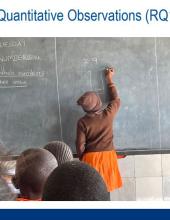
While there has been substantial investment in early-grade reading in low- and middle-income country contexts (LMICs) in the last 15 years, and a concomitant increase in evidence around what works to improve reading outcomes, there has been much more limited investment in early-grades mathematics. As a result, the body of evidence on what works to improve mathematics teaching and learning in LMICs is more limited. This study has identified six government- and program-led interventions in LMICs that have evidence of impact on students’ numeracy outcomes and are working at scale, to understand how and why they are effective and consolidate that evidence for the international education community. In order to examine the target programs, the study team has developed a suite of instruments designed to examine the programs and to identify common elements that these successful numeracy may have in common. The goal in designing these instruments was to be able to examine a range of potential factors, based on the evidence that we have on mathematics teaching and learning from research in high-income country contexts, as well as the limited research evidence we have from LMICs. This suite of instruments includes: (1) a quantitative classroom observation instrument, based on multiple frameworks for high-quality math instruction, including work by The Danielson Group (2019), The University of Michigan’s High Leverage Teaching practices, and a cross-institutional working group of math education experts working in LMICs (co-author, 2019); (2) a student cognitive interview instrument intended to provide insight into students’ development of higher order, conceptual understanding of basic mathematics concepts; (3) a qualitative classroom observation instrument and accompanying lesson-based teacher interview; (4) a survey of teachers’ Mathematical Knowledge for Teaching, based on work by Deborah Ball (2011). Focusing primarily on the quantitative classroom observation and student cognitive interview instruments, this paper will present the theoretical foundations of the instrument and the processes for developing, piloting, and adapting the instruments for different country and program contexts. Preliminary findings and lessons learned from utilizing the tools for data collection across country contexts will also be shared. Given the need to expand the body of evidence around what works to improve math teaching and learning, these instruments represent potentially valuable resources for research in this area – and the authors look forward to discussing the potential for use and further development/adaptation.
Assoc. Photo (Port.)
numeracy portrait.JPG
Resource (File)
Country
Resource Type
Month and Year