
Briefs

Uganda School Health and Reading Program Early Grade Reading Assessment Cluster 3 Follow Up 1

Submitted by admin on
Description/Abstract
This brief discusses Cluster 3 schools where Early Grade Reading Assessment (EGRA) data were collected from 112 randomly selected program and control schools without the program in 9 districts in Uganda1 in October, 2015 from 1,504 program learners and 1,432 control learners at the end of P1 and the findings compared to baseline data collected at the beginning of P1 in February, 2015 from 1,599 program and 1,574 control learners.
Assoc. Photo (Port.)
Resource (File)
Country
Resource Type
Resource Language
Month and Year
Publisher Or Client
USAID

Uganda School Health and Reading Program: Cluster 3 Baseline Brief Report

Submitted by admin on
Description/Abstract
This brief discusses the data collected for Cluster 3 schools using the Early Grade Reading Assessment (EGRA) from 112 randomly selected government primary schools in 9 program districts in Uganda. EGRA data were collected in five languages— Lugwere, Lusoga, Lhukonzo, Ŋakarimojoŋ and English; all learners were assessed in English and in one of the four local languages. Overall, 3,244 Primary 1 (P1) and 1,124 Primary 3 (P3) learners were assessed. In addition to this, 40 P1 reading lessons were observed and 104 teachers and 112 head teachers (or designees in their absence) were interviewed about the support that they provide to teachers in the area of reading.
Assoc. Photo (Port.)
briefer UG.jpeg
Country
Resource Type
Resource Language
Month and Year
Publisher Or Client
USAID

Uganda School Health and Reading Program Early Grade Reading Assessment Cluster 2 Follow Up 2

Submitted by admin on
Description/Abstract
This brief discusses the Early Grade Reading Assessment (EGRA) data collected for Cluster 2 shows that Leb Acӧli, Lugbarati, and Runyoro-Rutooro schools receiving the SHRP intervention are continuing to make small but significant progress towards reading proficiency.
Assoc. Photo (Port.)
Resource (File)
Country
Resource Type
Month and Year
Publisher Or Client
USAID

Uganda School Health and Reading Program Early Grade Reading Assessment Cluster 2 Follow Up 1

Submitted by admin on
Description/Abstract
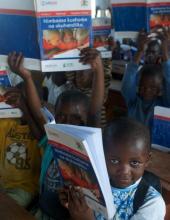
This brief looks at whether or not reading achievement increased as a result of the USAID/Uganda School Health and Reading Program interventions. Using the Early Grade Reading Assessment, data collected for 4 Cluster 1 languages local languages Lebacoli, Lugbarati, Lumasaba, and Runyoro-Rutoro) and English at baseline, beginning of P1 compared to data collected at the end of P1 show increases in foundational pre-reading and emergent reading skills, significantly higher than increases found in control schools.
Assoc. Photo (Port.)
Resource (File)
Country
Resource Type
Month and Year
Publisher Or Client
USAID

Uganda School Health and Reading Program Early Grade Reading Assessment Cluster 1 Follow Up 3

Submitted by admin on
Description/Abstract
This brief looks at whether or not reading achievement increased as a result of the USAID/Uganda School Health and Reading Program interventions. Using the Early Grade Reading Assessment, data collected for 4 Cluster 1 languages (Ateso, Leblango, Luganda and Runyankore-Rukiga) and English at the beginning of Primary 1 compared to end of Primary 3 show increases in fundamental reading skills, higher than increases found in control schools.
Assoc. Photo (Port.)
uganda 2016.jpg
Resource (File)
Country
Resource Type
Resource Language
Month and Year
Publisher Or Client
USAID

Uganda School Health and Reading Program Early Grade Reading Assessment Cluster 1 Follow Up 2

Submitted by admin on
Description/Abstract
This brief presents data from the USAID-funded Uganda School Health and Reading Program (SHRP) on the Early Grade Reading Assessment from Cluster 1 Follow-up 2. The EGRA included 4,541 learners in program schools and 1,468 learners in control schools at the beginning of P1 in February, 2013 compared to 4,343 learners in program schools and 1,472 learners in control schools at the end of P2 in October, 2014.
Assoc. Photo (Port.)
Resource (File)
Country
Resource Type
Month and Year
Publisher Or Client
USAID

Uganda School Health and Reading Program Early Grade Reading Assessment Cluster 1 Follow Up Preliminary Results: P1 Local Language Reading Ability and Classroom Teaching of Reading

Submitted by admin on
Description/Abstract
This brief focuses on the P1 learners from the Uganda School Health and Reading Program (SHRP) and their changes in local language reading skills and abilities as well as their learning environment (classroom teaching) in the area of reading.
Assoc. Photo (Port.)
Screen Shot 2020-10-13 at 12.00.10 PM.png
Resource (File)
Country
Resource Type
Month and Year
Publisher Or Client
USAID

USAID/Uganda School Health and Reading Program: Early Grade Reading Assessment Baseline Results

Submitted by admin on
Description/Abstract
This brief discusses the results from the EGRA Baseline conducted in in February and March, 2013 in Uganda as part of the USAID-funded School Health and Reading Program (SHRP). Data were collected from 300 randomly selected government primary schools in 14 districts in Uganda. 7,463 P1 and 2,163 P31 learners were assessed in one of four local languages (Ateso, Leblango, Luganda and Runyankore/Rukiga) and English.
Assoc. Photo (Port.)
Country
Resource Type
Month and Year
Publisher Or Client
USAID

EdData II Nigeria RARA: Research to Advance Education Access Brief

Submitted by admin on
Description/Abstract
This brief discusses the Nigeria Reading and Access Research Activity and the research on education access conducted through the various desk studies, surveys, and evaluations as part of the activity.
Assoc. Photo (Port.)
Screen Shot 2020-10-13 at 11.52.19 AM.png
Country
Resource Type
Resource Language
Month and Year
Publisher Or Client
USAID

Assessment for Results: Early Grade Reading Assessments for Learning Improvement

Submitted by admin on
Description/Abstract
In classrooms, teachers use a variety of assessments. Formative and summative assessments provide them information on the effectiveness of the instruction they are providing during and after a lesson. Assessments also differ in the type of information they provide. Criterion-referenced assessments measure what students know against a set of skills or knowledge. Results from norm-referenced assessments indicate how well a student did in relation to a group of similar students. Each type of assessment has a function and provides unique information to the system.
Assoc. Photo (Port.)
Resource (File)
Country
Resource Type
Month and Year
Publisher Or Client
USAID