RTI International

Malawi Social and Behavior Change Communications Pilot: Baseline Report

Submitted by admin on
Description/Abstract
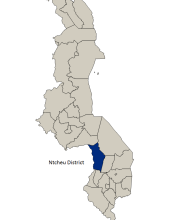
The USAID-funded Early Grade Reading Activity has been active in 11 districts in Malawi, one of which, Ntcheu, has been selected for implementation of this pilot SBCC campaign. Having seen that the multichannel approach was successful in Senegal at promoting positive changes in households’ attitudes, beliefs, and behaviors, the pilot in Malawi is set up to validate/replicate those findings in a different context. Furthermore, the Malawi pilot will test two variations on the multichannel approach in an attempt to isolate the value added of community theatre as a communication and message reinforcement channel. In collaboration with the Malawi Early Grade Reading Activity, EdData II will implement two versions of the SBCC campaign in the communities associated with 16 schools in the zone of Kasinje (half will include community theater, half will not). Another group of communities in a different zone (Senzani) in Ntcheu District will serve as a comparison (no SBCC activities will take place there). In conjunction with the Malawi Early Grade Reading Activity Staff and a local partner organization, Invest in Knowledge Initiative (IKI), a baseline survey was completed in March 2016. The results of that survey are the subject of this report.
Assoc. Photo (Port.)
Ntcheu District, Malawi.png
Resource (File)
Country
Resource Type
Month and Year

Malawi Social and Behavior Change Communications Pilot: Endline Report

Submitted by admin on
Description/Abstract
With funding from the United States Agency for International Development’s (USAID’s) Office for Economic Growth, Education, and the Environment (E3), the Education Data for Decision Making (EdData II) project has investigated how to employ social and behavior change communication (SBCC) strategies to promote and stimulate home-based support for children learning to read. Recognizing that the dramatic improvements needed in reading outcomes in most developing countries will likely be achieved only through a combination of in-school and athome efforts in support of early literacy, USAID wanted to test how the lessons from successful SBCC campaigns in the health sector could be applied in education. Following an initial pilot SBCC campaign in one district in Senegal (see RTI International, 2015), EdData II initiated a second round of research—in a second district in Senegal (RTI International, 2016), and in one district in Malawi (DeStefano & Cummings, 2015). The USAID-funded Early Grade Reading Activity (June 2013–October 2016) was active in 11 districts in Malawi, one of which, Ntcheu, was selected for implementation of this pilot SBCC campaign. Because the multichannel approach was successful in Senegal at promoting positive changes in households’ attitudes, beliefs, and behaviors, the pilot in Malawi was set up to validate/replicate those findings in a different context. In collaboration with the Malawi Early Grade Reading Activity, EdData II implemented the SBCC campaign in the communities associated with 16 schools in the zone of Kasinje. Another group of communities in a different zone (Senzani) in Ntcheu District served as a comparison (no SBCC activities took place there).
Assoc. Photo (Port.)
malawi sbcc.png
Resource (File)
Country
Resource Type
Month and Year
Publisher Or Client
USAID

Proposing Benchmarks for Early Grade Reading Skills in Liberia

Submitted by admin on
Description/Abstract
Ministry of Education officials, district education officers, and a cross section of stakeholders attended this workshop over two days to begin Liberia’s first ever effort to define standards for student performance in key areas of reading skill development in grades 1, 2 and 3.

Assoc. Photo (Port.)
liberia.png
Country
Resource Type
Resource Language
Month and Year

Proposing Benchmarks for Early Grade Reading and Mathematics in Ghana

Submitted by admin on
Description/Abstract
The results of the 2013 national study on early grade reading and early grade mathematics provided the evidence base for developing benchmarks for reading and mathematics that are appropriate for the current Ghanaian context.
Assoc. Photo (Port.)
ghana.png
Resource (File)
Country
Resource Type
Month and Year

Benchmarks for Early Grade Reading Skills in Egypt

Submitted by admin on
Description/Abstract
In spring 2013, USAID supported the MOE to conduct the first national baseline assessment of early grade reading skills. Findings of this national Grade 3 EGRA were presented to the MOE in June 2013 in a policy workshop. The workshop initiated USAID support to establish target benchmarks for improved reading skills in Grade 3 of MOE schools.
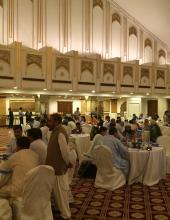
Assoc. Photo (Port.)
Egypt.png
Country
Resource Type
Month and Year

Setting and Using Benchmarks for Reading Performance

Submitted by admin on
Description/Abstract
The spread of the Early Grade Reading Assessment (EGRA) has yielded a wealth of country-specific evidence on students’ literacy skills. Those data were then used to help a dozen countries set meaningful benchmarks for student reading performance. This brief summarizes the approach used, shares the results of the benchmarking workshops, and draws some lessons from our experience.
Assoc. Photo (Port.)
Benchmarking Pakistan1_2015-06-11 11.34.24.jpg
Resource (File)
Country
Resource Type
Month and Year

Development and Pilot Testing of Additional Subtasks for the Early Grade Reading Assessment: EGRA 2.0

Submitted by admin on
Description/Abstract
In 2016, RTI International suggested piloting additional subtasks to enhance the Early Grade Reading Assessment instrument. Researchers from RTI collaborated with a team of researchers in Accra, Ghana, to adapt, refine and pilot four subtasks. The work was funded under an EdData II task order, “Measurement and Research Support to Education Strategy Goal 1.” This report describes the skills assessed, the four subtasks, the pilot, and the results.
Assoc. Photo (Port.)
egra 2.0.png
Country
Resource Type
Month and Year

Complements to the Early Grade Reading Assessment: Spelling, Reading Comprehension, and Oral Language Subtasks

Submitted by admin on
Description/Abstract
The EGRA has been a useful tool to understand students’ progress toward fluent reading. However, users are often left wanting additional information about reading comprehension, writing, and language. The subtasks that we piloted in the research activity described in this brief can give researchers and practitioners more detailed information to understand the early literacy abilities of students in low-income contexts.
Assoc. Photo (Port.)
egra 2.0.png
Resource (File)
Country
Resource Type
Month and Year

Results of Social and Behavior Change Communication Pilots in Senegal and Malawi

Submitted by admin on
Description/Abstract
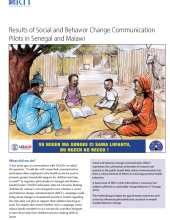
Social and behavior change communication (SBCC) represents the culmination of decades of research and practice in the public health field, where communication has been a critical element of efforts to encourage positive health behaviors. A basic tenet of SBCC is that information is necessary but seldom sufficient to sustainably change behavior (C-Change, 2012). The methodology bridges the gap between awareness and action by influencing the beliefs that can block or enable needed behavior change.
Assoc. Photo (Port.)
senegalSBCC_port2.png
Resource (File)
Country
Resource Type
Month and Year

Early Grade Mathematics Assessment (EGMA) Toolkit

Submitted by admin on
Description/Abstract
The EGMA Toolkit provides detailed information about the Early Grade Mathematics Assessment. The first chapter provides an introduction to the instrument and summarizes the purposes of the assessment. Chapter 2 discusses the development of the EGMA, including the theoretical foundations of the instrument. Chapter 3 details the technical adequacy of the EGMA. Chapter 4 provides information on adaptation and training.
Assoc. Photo (Port.)
Screen Shot 2017-02-21 at 10.17.05 AM.png
Resource (File)
EGMA Toolkit_Nov 2022.pdf
Country
Resource Type
Resource Language
Month and Year
Publisher Or Client
RTI