Ghana

Country Code
GHA

Instructional Support for Effective Large-Scale Reading Interventions (Learning at Scale)

Submitted by admin on
Description/Abstract
Learning outcomes are low and instruction is poor in many low- and middle-income countries (LMICs). These shortcomings are particularly concerning given the substantial learning loss due to COVID-19 from which many systems are suffering. The Learning at Scale study identified eight of the most effective large-scale education programs in LMICs and now is examining what factors contribute to successful improvements in learning outcomes at scale (see list of programs on last page of this brief). These programs were selected based on their demonstrated gains in reading outcomes at-scale, from either midline or endline impact evaluations. The study addresses three overarching research questions, focused on understanding (1) the components of instructional practices (Brief 1), (2) instructional supports (Brief 2), and (3) system supports (Brief 3) that lead to effective instruction. This brief focuses specifically on instructional supports. It addresses the following research question: What methods of training and support lead to teachers adopting effective classroom practices in successful, large-scale literacy programs?
Assoc. Photo (Port.)
Brief2.png
Resource (File)
Resource Type
Resource Language
Month and Year
Publisher Or Client
Center for Global Development, Bill and Melinda Gates Foundation

Instructional Practices for Effective Large-Scale Reading Interventions (Learning at Scale)

Submitted by admin on
Description/Abstract
The Learning at Scale study aimed to investigate factors contributing to successful improvements in learning outcomes at scale in eight of the most effective large-scale education programs in LMICs (see the map of programs on the last page of this brief). These programs were selected based on their demonstrated gains in reading outcomes at-scale, from either midline or endline impact evaluations. The study addressed three overarching research questions, focused on understanding the components of instructional practices (Brief 1), instructional supports (Brief 2), and system supports (Brief 3) that lead to effective instruction. This brief focuses specifically on instructional practices. It addresses the following research question: What classroom ingredients (e.g., teaching practices, classroom environment) lead to learning in programs that are effective at scale?
Assoc. Photo (Port.)
Brief1.png
Resource (File)
Resource Type
Resource Language
Month and Year
Publisher Or Client
Center for Global Development, Bill and Melinda Gates Foundation

Learning at Scale Interim Report

Submitted by admin on
Description/Abstract
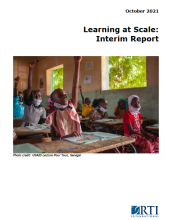
The Learning at Scale study was designed to identify existing early grade reading programs with demonstrated impact on basic skills at scale and to conduct in-depth investigations of these programs to determine what makes them successful. After an extensive search, eight programs (spanning seven countries) were selected for inclusion in the study. Research on these programs has been conducted in order to answer the three overarching research questions, focused on understanding the components of instructional practices, instructional supports, and system supports that lead to effective instruction. Learning at Scale data collection activities for some of these programs were delayed due to COVID-19. However, with demand for information about how to implement effective interventions at large scale at an all-time high, we believe that the timely sharing of findings from Learning at Scale is essential. Accordingly, this interim report provides preliminary findings from our study to date, highlighting key high-level findings across all eight programs, as well as quantitative and qualitative findings from primary research for select programs. The Learning at Scale study is led by RTI International, as part of the Center for Global Development (CGD) education research consortium, funded by the Bill and Melinda Gates Foundation.

Assoc. Photo (Port.)
Screen Shot 2021-11-15 at 11.34.28 AM.png
Resource Type
Resource Language
Month and Year

Early Grade Reading Barometer

Submitted by admin on
Description/Abstract
The Early Grade Reading Barometer is an interactive dashboard that lets you: - SEE an overview of how well students are reading, the percentage of struggling readers, and how comprehension is associated with reading fluency. - VIEW information about student performance on EGRA subtasks. See how outcomes vary by key student and school characteristics. - EXPLORE how different EGRA subtasks are related to one another. View graphic displays of these relationships. - CHOOSE a target oral reading fluency benchmark, and see information on how many students are meeting the targeted benchmark now and how the percentage of students meeting the benchmark value could change over time. - SEE how countries compare with each other with respect to student outcomes on EGRA assessments and progress towards meeting UN SDG Goal 4. - REVIEW the impact of interventions aimed at improving the fundamental reading skills of students. - COMPARE how the distributions for selected EGRA subtasks have changed or remained the same over time.
Assoc. Photo (Port.)
Generic_icon_shared.rti_.org_.png
Resource Type
Resource Language
Month and Year
Publisher Or Client
USAID

Ghana Teacher Questionnaire

Submitted by admin on
Description/Abstract
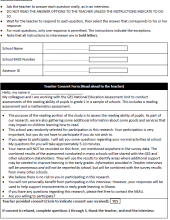
Under the USAID Partnership for Education: Testing activity, a teacher questionnaire was introduced to the 2015 national EGRA/EGMA survey in Ghana. This was in response to the 2013 EGRA/EGMA pupil data, which raised questions about how both pupils and their teachers experienced the language of instruction (LOI) policy, which stipulates that pupils should be taught in the Ghanaian language of the local area in the early grades and transition to English by P4. In an effort to learn more about how the LOI policy is implemented in schools, this teacher questionnaire was added in 2015 to collect more information about teacher preparation and instructional practices related to language use. The questionnaire was administered to 671 P2 teachers.

Assoc. Photo (Port.)
ghana.png
Resource (File)
Country
Resource Language
Month and Year

Ghana 2015 EGRA and EGMA: Report of Findings

Submitted by admin on
Description/Abstract
The National Education Assessment Unit (NEAU) of the Ghana Education Service (GES) conducted a national Early Grade Reading Assessment (EGRA) and Early Grade Mathematics Assessment (EGMA) in July 2015. This was the second administration of EGRA and EGMA in Ghana; the first took place in 2013, and both were conducted as part of the USAID Partnership for Education: Testing activity. This report describes the findings.
Assoc. Photo (Port.)
Resource (File)
Country
Resource Type
Resource Language
Month and Year
Publisher Or Client
USAID

Effective Teaching and Education Policy in Sub-Saharan Africa: A Conceptual Study of Effective Teaching and Review of Educational Policies in 11 Sub-Saharan African Countries

Submitted by admin on
Description/Abstract
This report explores teacher issues and policies in sub-Saharan African countries via three interrelated questions and methods, each of which is discussed in turn. First, the paper presents the state of issues related to teaching and learning in sub-Saharan African countries. Recent data and evidence, obtained from international, regional, and national databases for numerous sub-Saharan African countries are presented that speak to the state of teacher issues and conditions of service for teachers. Second, the paper outlines national policies and educational plans germane to teaching and learning in 11 sub-Saharan African countries. A third section of the paper highlights reasons why educational policies and plans may not be sufficiently salient to substantially influence the classroom practice of teachers.

Assoc. Photo (Port.)
DERP1.png
Resource Type
Month and Year

Proposing Benchmarks for Early Grade Reading and Mathematics in Ghana

Submitted by admin on
Description/Abstract
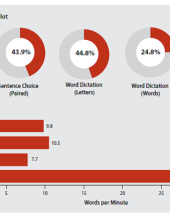
The results of the 2013 national study on early grade reading and early grade mathematics provided the evidence base for developing benchmarks for reading and mathematics that are appropriate for the current Ghanaian context.
Assoc. Photo (Port.)
ghana.png
Resource (File)
Country
Resource Type
Month and Year

Development and Pilot Testing of Additional Subtasks for the Early Grade Reading Assessment: EGRA 2.0

Submitted by admin on
Description/Abstract
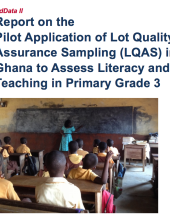
In 2016, RTI International suggested piloting additional subtasks to enhance the Early Grade Reading Assessment instrument. Researchers from RTI collaborated with a team of researchers in Accra, Ghana, to adapt, refine and pilot four subtasks. The work was funded under an EdData II task order, “Measurement and Research Support to Education Strategy Goal 1.” This report describes the skills assessed, the four subtasks, the pilot, and the results.
Assoc. Photo (Port.)
egra 2.0.png
Country
Resource Type
Month and Year

Report on the Pilot Application of Lot Quality Assurance Sampling (LQAS) in Ghana to Assess Literacy and Teaching in Primary Grade 3

Submitted by admin on
Description/Abstract
This report summarizes main findings and lessons learned from the piloting of lot quality assurance sampling (LQAS) in the education sector in Ghana. It also suggests next steps for applying LQAS more broadly for education program monitoring.
Assoc. Photo (Port.)
Screen Shot 2016-12-14 at 10.28.56 PM.png
Resource (File)
Country
Resource Type
Resource Language
Month and Year
Publisher Or Client
USAID