Life Skills

What's Positive About Positive Schools: Lessons from Malawi and Uganda [CIES 2019 Presentation]

Submitted by admin on
Description/Abstract
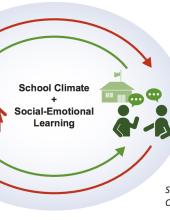
RTI conducted a small pilot study in Malawi and Uganda to identify the factors in the organizational culture and environment of primary schools that make them more (or less) conducive to children’s social and emotional development. The research team postulated that social and emotional learning are not products of the implementation of an “SEL” curriculum, but rather are inherently dependent on and result from the nature of the school climate.
Assoc. Photo (Port.)
norman.jpeg
Resource (File)
Country
Resource Type
Month and Year

Effective pedagogy in cultural context: Preaching to the introverted [CIES 2019 Presentation]

Submitted by admin on
Author
Description/Abstract
Several forces are at play in determining whether pedagogical approaches are optimally adapted to the culture of children’s behaviour and of teacher-child interaction in the classroom. Teachers’ expectations for children’s behaviour may differ from the way in which children are raised at home (Jukes et al, 2018). Teaching activities may be designed by experts from outside the beneficiary education system or who may be removed from the culture of rural schools. The evidence for the effectiveness of recommended teaching practices may be based on children and teachers from a different culture. The current study sought to understand the role of cultural factors in the teaching of early grade reading in Tanzania. The aim was to investigate teacher’s pedagogical choices and the implicit theory of teaching and learning that underpinned these choices. We also aimed to understand teachers’ perceptions of students’ social and emotional skills and how this influenced their pedagogical choices. The current study took place in three regions of Tanzania – Zanzibar, Mtwara and Iringa – in the context of the USAID supported Tusome Pamoja (“let’s read together”) project. Researchers observed one lesson from each of 36 teachers and recorded key teaching activities. A subsequent qualitative interview with the teachers examined the decisions they made during the lesson and how their perception of students’ competencies influenced their decisions. Two themes emerged from the results. First, teachers said that children who did not participate in classroom activities lacked confidence and curiosity, particularly in rural areas. These two qualities - confidence and curiosity - were identified in previous work as traits valued more by teachers than parents in the context of learning. Second, teachers said the independent activities were not effective because pupils always cooperate with others in life. There was a strong preference for activities that involved the whole class and against students learning by doing, independent of the teacher. Schools can respond by conducting more activities that build curiosity and confidence. Children becoming more confident and curious in rural Africa represents a cultural change. But one that emerges from the community - not imposed upon it. Instructional design should consider the strong cultural preference for group-orientation and work with - rather than against - this preference where possible.
Assoc. Photo (Port.)
Jukes cies.jpeg
Resource Type
Month and Year

Measuring Soft Skills Through Mobile Gaming [Presentation]

Submitted by admin on
Author
Description/Abstract
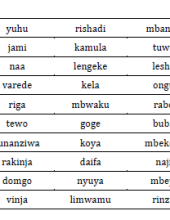
This presentation was prepared for UNESCO Mobile Learning Week, 2018. It describes an RTI International internal research program to learn whether mobile gaming can be used to assess soft skills important for employability. The presentation was created by Lee Nordstrum and delivered by Sarah Pouezevara.
Assoc. Photo (Port.)
mlw2018.jpg
Resource (File)
Country
Resource Type
Resource Language
Month and Year
Publisher Or Client
RTI International

2017 Tanzania National EGRA, EGMA, SSME, and Life Skills Instruments

Submitted by admin on
Description/Abstract
Final, validated instruments used in the 2017 Tanzania National EGRA. The EGRA and SSME were made possible with funding from USAID. The EGMA component was made possible by funding from Global Affairs Canada. The Life Skills component was funded by UNICEF Tanzania.

Assoc. Photo (Port.)
tz egra.png
Resource (File)
Resource Language
Month and Year
Publisher Or Client
USAID, Global Affairs Canada,

Tanzania National and Regional Dissemination Event Report for EGRA, EGMA, SSME Results

Submitted by admin on
Description/Abstract
Dissemination of the results from the 2015/2016 round of the Early Grade Reading Assessment (EGRA), the Early Grade Mathematics Assessment (EGMA), the Snapshot of School Management Effectiveness (SSME), and Life Skills occurred at four forums. First, a National Dissemination Workshop for education stakeholders, government representatives, and development partners occurred in mid-June 2016 in Dar es Salaam, Tanzania. This workshop was followed by three locally led, Regional Dissemination Workshops held in late October 2016 in three central regions and attracted practitioners and education representatives from surrounding districts and regions. Third, a Directors’ Meeting was held in mid-November 2016 in Dodoma, Tanzania. The Directors’ Meeting attracted high-level representatives from relevant branches of the Ministry of Education, Science, and Technology (MoEST) and key stakeholders to discuss the findings and their implications for education policy and planning for Tanzania. The final event was a two-hour presentation to the Ministry of Education in Zanzibar to present findings specific to the Zanzibar context. The four events are further discussed in the remainder of this report.
Assoc. Photo (Port.)
Resource Type

Findings Report, Tanzania National Early Grade Reading Assessment (EGRA)

Submitted by admin on
Description/Abstract
Findings report from the Tanzania National EGRA, EGMA, SSME, and Life Skills.
Assoc. Photo (Port.)
TZ egra.png
Resource (File)
Resource Type
Month and Year
Publisher Or Client
USAID, Government of Canada, UNICEF

Tanzania EGRA/EGMA/SSME (2016) Final, Validated Instruments

Submitted by admin on
Description/Abstract
Final, validated instruments used in the 2016 Tanzania National EGRA. The EGRA and SSME were made possible with funding from USAID. The EGMA component was made possible by funding from Global Affairs Canada. The Life Skills component was made possible by UNICEF Tanzania.
Assoc. Photo (Port.)
instruments report.png
Resource (File)
Resource Language
Month and Year

School Quality Assessment for Education and WASH in Three UNICEF-Supported Regions

Submitted by admin on
Description/Abstract
This is the inception report for the School Quality Assessment for Education and WASH in Three UNICEF-Supported Regions of Tanzania. The report outlines the approach to the study including the fundamental research questions and associated design to implementing the study.
Assoc. Photo (Port.)
tz wash.png
Resource (File)
Resource Type
Resource Language
Month and Year
Publisher Or Client
UNICEF Dar es Salaam, Tanzania