Instruments and Questionnaires

Kindergarten Classroom Observation Assessor Sheet (Arabic, Jordan)

Submitted by admin on
Description/Abstract
Kindergarten Classroom Observation Assessor Sheet.
Assoc. Photo (Port.)
jordan observation tool port.PNG
Resource (File)
Country
Featured projects
Resource Language
Month and Year
Publisher Or Client
USAID

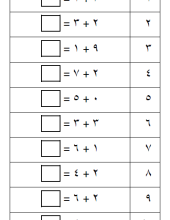
Group Administered Mathematics Assessment Student Sheet

Submitted by admin on
Description/Abstract
Group administered mathematics assessment student sheet.
Assoc. Photo (Port.)
Capture.PNG
Resource (File)
2. GAMA_Student Sheet.pdf
Country
Featured projects
Resource Language
Month and Year
Publisher Or Client
USAID

Group Administered Mathematics Assessment Assessor Sheet [Arabic]

Submitted by admin on
Description/Abstract
Group administered mathematics assessment assessor sheet.
Assoc. Photo (Port.)
Capture.PNG
Resource (File)
1. GAMA_Assessor Sheet.pdf
Country
Featured projects
Resource Language
Month and Year
Publisher Or Client
USAID

Jordan EGMA 2021 Stimulus Sheets

Submitted by admin on
Description/Abstract
Jordan EGRA 2021 stimulus sheet.
Assoc. Photo (Port.)
Capture.PNG
Resource (File)
Country
Featured projects
Resource Language
Month and Year
Publisher Or Client
USAID

Jordan EGMA 2021 Assessor Protocol

Submitted by admin on
Description/Abstract
Jordan EGMA 2021 assessor protocol.
Assoc. Photo (Port.)
Resource (File)
Country
Featured projects
Resource Language
Month and Year
Publisher Or Client
USAID

Early Grade Reading and Mathematics Initiative: KG Data for Decision-Making: Phase II National Survey of Families

Submitted by admin on
Description/Abstract
The Kingdom of Jordan’s Human Resource Development (HRD) Strategy mandates the universal provision of kindergarten (KG2) by 2025. The HRD Strategy emphasizes using partnerships between the Ministry of Education (MoE) and other governmental and nongovernmental actors to assure expanded provision of kindergarten services. The strategy further emphasizes the need to improve the quality of kindergarten services, while reaching every child. To fully understand how the MoE can increase access, improve quality, and assure equitable provision of KG1 services, more accurate information is needed, especially about other, as yet unrecognized service providers who may be offering KG or KG-similar services to five-year-old children. The MoE needs a more complete picture of the current provision of KG2 to determine the best strategy to achieve the HRD goal that every child in Jordan receives a high-quality kindergarten experience.
Assoc. Photo (Port.)
Capture.PNG
Country
Featured projects
Resource Language
Month and Year
Publisher Or Client
RTI International

Uganda LARA: Ministry of Education and Sports Literacy and Numeracy Advisory Committee Terms of Reference

Submitted by admin on
Description/Abstract
The idea of the literacy and numeracy advisory committee started with “literacy” specifically, to offer advisory support on sustainability of EGR activities of Projects funded by USAID. During Basic Education Working Group meetings, members agreed to add numeracy, on the premise that developing children’s foundation skills of both literacy and numeracy is vital during the formative years. The purpose of the advisory committee is to ensure that organizational, systemic, and institutional capacity gaps and needs are identified and relevant organs receive guidance to act on measures to fill the gaps and ensure cost effective EGR/Numeracy activities are sustained. It is composed of senior and mid-level MoES official responsible for successful implementation of primary curriculum, with a specific focus on EGR and numeracy, drawn from BE and SE, DES, NCDC, TIET, SNE, Districts, Kyambogo University and development partners. The committee reports to the MoES PS and has authority to make recommendations for policy review and formulation of a new set of policy documents contributing to a new Sector Strategic Plan, including EGR and Numeracy. It also monitors programming, provides oversight and offers related guidance on interventions and strategies. The project supported MoES to develop a Terms of Reference to create a structure for the work of the Advisory Committee.
Assoc. Photo (Port.)
Screen Shot 2020-12-21 at 12.15.13 PM.png
Resource (File)
Country
Resource Language
Month and Year
Publisher Or Client
USAID/Uganda Literacy Achievement & Retention Activity

Uganda/LARA: Journeys Impact Qualitative Assessment instruments

Submitted by admin on
Description/Abstract
LARA developed a set of qualitative tools to learn about the successes and challenges related to the implementation of Journeys and to understand what changes staff and pupils had observed since Journeys started in the program schools. The qualitative tools include individual interviews and focus group discussion (FGD) guides with head teachers, teaching and non-teaching staff, change agents and students. There are two individual interviews, one for the teachers and another for the head teachers. The individual interview for teachers investigates the value the Journeys program has brought to the teachers personally, to the school and the classroom, for example changes in the way teachers relate and interact with pupils and changes in disciplinary practices at the school. The individual interview for head teachers on the other hand investigate what has gone well and what the head teachers are struggling with regarding the implementation of Journeys for School Staff and Journeys for Pupils (the Uganda Kids Unite [UKU] Program). There are three FGD guides; (i) FGD guide for teaching and non-teaching staff provides information about the changes (for example interactions among students, teacher attendance, extent of SRGBV) in the school as a result of Journeys, initiatives undertaken by the school to make the school safe and positive and how the initiatives improved the school and/or reduced violence; (ii) FGD guide for head Teachers and school change agents (SCA) that gathers feedback on the successes and challenges associated with the implementation of Journeys program for the school staff and Journeys program for pupils as well as improvements needed to for the continuity of the Journeys program in the schools; and (iii) FGD guide for students that focuses mainly on what pupils enjoyed most about the UKU program and the specific UKU activities they loved. It also asks about what pupils did not enjoy in the UKU meetings, initiatives that UKU teams developed to improve the school, what pupils learned through the UKU program and how the school and classroom have changed since Journeys began.
Assoc. Photo (Port.)
Screen Shot 2020-12-18 at 8.06.09 AM.png
Country
Month and Year
Publisher Or Client
USAID/Uganda Literacy Achievement & Retention Activity

Uganda/LARA: Journeys Monitoring and Support Supervision tool

Submitted by admin on
Description/Abstract
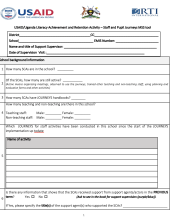
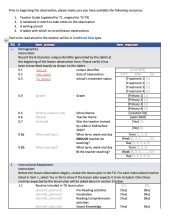
This tool is used by school support actors (e.g., DEOS, DIS, MEOs, DIS, MIS, IS, CCTs, head teachers, project staff) to monitor and support implementation of Journeys for school staff and Journeys for pupils. The tool serves two purposes: (i) to gather monitoring data to understand how well schools are organized and supported to implement the Journeys program. Monitoring data is also used for reporting purposes. With regard to Journeys for school staff, the type of monitoring data gathered using the MSS tool include the number of school change agents (SCAs) in the school, number of SCAs that have Journeys handbooks, number of Journeys for staff activities that the school conducted, evidence that SCAs receive support from support actors, number of SRGBV cases that have been resolved out of the total cases reported. For UKU, monitoring data gathered include the number of UKU teams in the school, number of UKU teams that have attendance registers, whether UKU attendance registers are updated regularly and whether UKU teams have work plans; (ii) to supervise and support SCAs and Teacher Patrons. SCAs lead Journeys sessions for Schools Staff while Teacher Patrons lead Journeys sessions for Pupils/UKU. The MSS tool has an observation checklist for School Staff Journeys sessions and an observation checklist for UKU sessions. The checklists are used by the school support actors to record key information about the Journeys session they observed, including whether the SCA/Teacher Patron applied Journeys facilitation approaches, followed the rights steps to conduct the session and used the planning form and evaluation form correctly to initiate and appraise the session respectively. Each checklist is complemented with a feedback section where the school support actors document the positive things (areas of strength) the SCA/Teacher Patron demonstrated during the Journeys activity and area of improvement.
Assoc. Photo (Port.)
Screen Shot 2020-12-18 at 8.02.42 AM.png
Resource (File)
JOURNEYS MSS tool.docx
Country
Sub-topic
Resource Language
Month and Year
Publisher Or Client
USAID/Uganda Literacy Achievement & Retention Activity

Uganda/LARA: EGR Action Research Tools

Submitted by admin on
Description/Abstract
LARA developed action research tools to measure the level of fidelity of implementation of the EGR methods and generate lessons learned to inform adaptations in EGR programming. The action research tools gather both historical and real-time data at the school. They include the EGR core methodologies action research tool; the remedial instruction action research tool and the intensive coaching action research tool (subdivided into two tools i.e. head teacher coaching event log and school based community of practice event log). The EGR core methodologies action research tool assesses the teacher’s perception of the Teacher Guide usability, level of macro pacing, implementation of lesson plan elements, implementation of core EGR methodologies and tracking of instructional adaptations by the teacher. The remedial instruction research tool tracks the teacher’s perception to remedial instruction, the implementation of group-based instruction as well as in-class assessment. The intensive coaching action research tool tracks teacher’s perception of intensive coaching and keeps a log of head teacher instructional coaching events in addition to school-based community of practice activities. The action research tools are designed to be deployed electronically in order to seamlessly incorporate extra data quality standards and innovations like the Stalling’s classroom observation snapshot (Stallings and Kaskowitz, 1974 ). The project also developed the action research process flow guidelines to guide data collection activities.
Assoc. Photo (Port.)
Screen Shot 2020-12-18 at 7.59.05 AM.png
Country
Month and Year
Publisher Or Client
USAID/Uganda Literacy Achievement & Retention Activity