
Reports | 27 September 2016
USAID/Uganda School Health and Reading Program: The Status of Early Grade Reading and Support to Primary School Teachers to Teach Reading in Uganda: Cluster 3 Baseline Report
This report summarizes the findings from a baseline assessment that was conducted in February and March, 2015 to determine the current status of reading achievement in the “Cluster 3” schools in which the Program is currently working, as well as achievement in control1 schools that will be used as a
Reports | 26 September 2016
USAID/Uganda School Health and Reading Program: The Status of Early Grade Reading and Support to Primary School Teachers to Teach Reading in Uganda: Cluster 1 Baseline Report
This baseline report discusses the results from an Early Grade Reading Assessment (EGRA) where data were collected from 300 randomly selected government primary schools in 15 districts in Uganda (11 program districts and 4 control districts).
Reports | 26 September 2016
Early Grade Reading Assessment (EGRA) National Baseline Assessment in Mali
This report shares the findings from a study of early grade reading skills and classroom practices in Mali which was conducted in three regions of Mali (Koulikoro, Sikasso and Ségou) in May 2015 at the end of the school year.
Reports | 26 September 2016
Liberia Teacher Training Program Endline Assessment of the Impact of Early Grade Reading and Mathematics Interventions
This report addresses the main research question: In Cohort 1 and Cohort 2 schools, were the pupils who participated in the United States Agency for International Development’s Liberia Teacher Training Program (LTTP) Phase II (LTTP II) reading and mathematics interventions now achieving better resul
Reports | 26 September 2016
Primary School Reading Study for Honduras: Final Report
The first component of this EdData II research report (RTI Task 30) was a desk study of literacy instruction in primary schools in Honduras. The researchers reviewed curriculum materials and investigated the instructional practices and use of materials by teachers in primary schools.
Reports | 23 September 2016
Lot Quality Assurance Sampling (LQAS) Pilot in Tanzania: Final Report
This final report summarizes main findings and lessons learned from the piloting of lot quality assurance sampling (LQAS) in the education sector in Tanzania. It also suggests next steps for applying LQAS more broadly for education program monitoring.
Reports | 23 September 2016
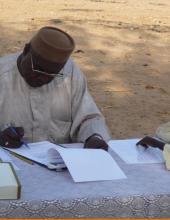
Rapport d'Analyse: Evaluation des Compétences Fondamentales en Lecture au Sénégal
This report describes the results of an early Grade Reading Assessment (EGRA) conducted in Senegal in two languages: French and Wolof.
Reports | 23 September 2016
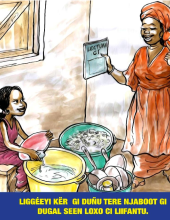
Senegal Behavior Change Communication Research: Kaolack Endline Report
This report summarizes the results from a three-month pilot research activity in Kaolack, Senegal designed to test whether communications techniques can bring about changes in family members’ knowledge, attitudes, and behaviors related to their children learning to read.
Reports | 23 September 2016
Zambia 2016 Grade 2 National Assessment Survey Implementation Plan
This implementation report was designed to assist the Examination Council of Zambia (ECZ) by providing detailed instructions for carrying out the 2016 National Assessment Survey for Grade 2.
Reports | 23 September 2016
Zambia 2016 Grade 2 NAS Implementation Plan
This implementation report was designed to assist the Examination Council of Zambia (ECZ) by providing detailed instructions for carrying out the 2016 National Assessment Survey for Grade 2.