Reports

Malawi Social and Behavior Change Communications Research: Campaign Materials

Submitted by admin on
Description/Abstract
The attached document is a literacy activity titled "Find What's Missing" that was developed and used as part of the social and behavior change communications (SBCC) research pilot in Malawi.
Assoc. Photo (Port.)
malawi sbcc.png
Country
Resource Type
Month and Year

Senegal Social and Behavior Change Communications Research: Posters

Submitted by admin on
Description/Abstract
Under the Education Data for Decision Making (EdData II) task order titled “Measurement and Research Support to Education Strategy Goal 1,” RTI International implemented a three-month SBCC campaign in the Senegalese communities of Kaolack and Rufisque. This campaign included radio broadcasts, community meetings, community-theater, and posters reinforcing a common set of messages regarding what parents and family members could do to help their children learn to read. The objectives of the campaign were to enhance families’ perception of the value of reading, promote children’s reading and literacy as a pleasure and a shared responsibility, and strengthen parents’ confidence in their ability to improve their children’s success in reading. The campaign also helped overcome a lack of reading materials in the community by providing stocks of books that children and families could borrow.
Assoc. Photo (Port.)
senegal4.png
Country
Resource Type
Resource Language
Month and Year

Senegal Social and Behavior Change Communications Research: Poster Campaign Materials

Submitted by admin on
Description/Abstract
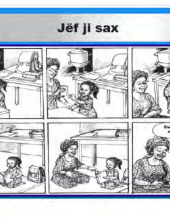
The following poster images were designed for the Social and Behavior Change Communications (SBCC) campaign in the Senegalese school communities of Kaolack and Rufisque. SBCC, a strategy originally used to support public health initiatives, utilizes a series of communication techniques to bring about changes in family members’ knowledge, attitudes, and behaviors related to their children learning to read. The five posters found in this document were placed in public spaces in Kaolack and Rufisque and served as one of the many forms of campaign material designed to influence families’ attitudes toward their children’s reading.
Assoc. Photo (Port.)
senegalSBCC_port.png
Country
Resource Type
Resource Language
Month and Year

Senegal Social and Behavior Change Communications Research: Memory Card Campaign Materials

Submitted by admin on
Description/Abstract
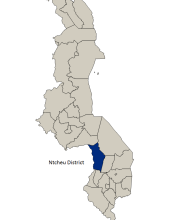
Under the Education Data for Decision Making (EdData II) task order titled “Measurement and Research Support to Education Strategy Goal 1,” RTI International implemented a three-month SBCC campaign in the Senegalese communities of Kaolack and Rufisque. This campaign included radio broadcasts, community meetings, community-theater, and posters reinforcing a common set of messages regarding what parents and family members could do to help their children learn to read. The objectives of the campaign were to enhance families’ perception of the value of reading, promote children’s reading and literacy as a pleasure and a shared responsibility, and strengthen parents’ confidence in their ability to improve their children’s success in reading. The campaign also helped overcome a lack of reading materials in the community by providing stocks of books that children and families could borrow.
Assoc. Photo (Port.)
senegal.png
Country
Resource Type
Month and Year

Malawi Social and Behavior Change Communications Pilot: Baseline Report

Submitted by admin on
Description/Abstract
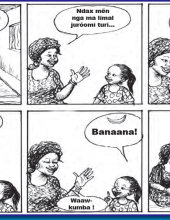
The USAID-funded Early Grade Reading Activity has been active in 11 districts in Malawi, one of which, Ntcheu, has been selected for implementation of this pilot SBCC campaign. Having seen that the multichannel approach was successful in Senegal at promoting positive changes in households’ attitudes, beliefs, and behaviors, the pilot in Malawi is set up to validate/replicate those findings in a different context. Furthermore, the Malawi pilot will test two variations on the multichannel approach in an attempt to isolate the value added of community theatre as a communication and message reinforcement channel. In collaboration with the Malawi Early Grade Reading Activity, EdData II will implement two versions of the SBCC campaign in the communities associated with 16 schools in the zone of Kasinje (half will include community theater, half will not). Another group of communities in a different zone (Senzani) in Ntcheu District will serve as a comparison (no SBCC activities will take place there). In conjunction with the Malawi Early Grade Reading Activity Staff and a local partner organization, Invest in Knowledge Initiative (IKI), a baseline survey was completed in March 2016. The results of that survey are the subject of this report.
Assoc. Photo (Port.)
Ntcheu District, Malawi.png
Resource (File)
Country
Resource Type
Month and Year

Malawi Social and Behavior Change Communications Pilot: Endline Report

Submitted by admin on
Description/Abstract
With funding from the United States Agency for International Development’s (USAID’s) Office for Economic Growth, Education, and the Environment (E3), the Education Data for Decision Making (EdData II) project has investigated how to employ social and behavior change communication (SBCC) strategies to promote and stimulate home-based support for children learning to read. Recognizing that the dramatic improvements needed in reading outcomes in most developing countries will likely be achieved only through a combination of in-school and athome efforts in support of early literacy, USAID wanted to test how the lessons from successful SBCC campaigns in the health sector could be applied in education. Following an initial pilot SBCC campaign in one district in Senegal (see RTI International, 2015), EdData II initiated a second round of research—in a second district in Senegal (RTI International, 2016), and in one district in Malawi (DeStefano & Cummings, 2015). The USAID-funded Early Grade Reading Activity (June 2013–October 2016) was active in 11 districts in Malawi, one of which, Ntcheu, was selected for implementation of this pilot SBCC campaign. Because the multichannel approach was successful in Senegal at promoting positive changes in households’ attitudes, beliefs, and behaviors, the pilot in Malawi was set up to validate/replicate those findings in a different context. In collaboration with the Malawi Early Grade Reading Activity, EdData II implemented the SBCC campaign in the communities associated with 16 schools in the zone of Kasinje. Another group of communities in a different zone (Senzani) in Ntcheu District served as a comparison (no SBCC activities took place there).
Assoc. Photo (Port.)
malawi sbcc.png
Resource (File)
Country
Resource Type
Month and Year
Publisher Or Client
USAID

Lot Quality Assurance Sampling (LQAS) Pilot Activities in Amhara and Tigray, Ethiopia: Final Report

Submitted by admin on
Description/Abstract
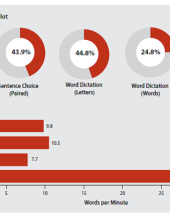
This report summarizes main findings and lessons learned from the piloting of the lot quality assurance sampling (LQAS) methodology in the education sector in Ethiopia. It also suggests next steps for applying the LQAS methodology more broadly for education program monitoring.
Assoc. Photo (Port.)
Ethiopia_LQA_April2016 (378).jpg
Resource (File)
Country
Resource Type
Resource Language
Month and Year
Publisher Or Client
USAID

Development and Pilot Testing of Additional Subtasks for the Early Grade Reading Assessment: EGRA 2.0

Submitted by admin on
Description/Abstract
In 2016, RTI International suggested piloting additional subtasks to enhance the Early Grade Reading Assessment instrument. Researchers from RTI collaborated with a team of researchers in Accra, Ghana, to adapt, refine and pilot four subtasks. The work was funded under an EdData II task order, “Measurement and Research Support to Education Strategy Goal 1.” This report describes the skills assessed, the four subtasks, the pilot, and the results.
Assoc. Photo (Port.)
egra 2.0.png
Country
Resource Type
Month and Year

Learning Outcomes Assessments and Numeracy With Reference to Early Grade Numeracy in Low Income Countries

Submitted by admin on
Description/Abstract
The focus of this desk study is to provide information on the assessment of early numeracy learning outcomes as an integral part of efforts aimed at increasing education quality in low income countries. In order to provide focus for the study, GIZ identified three assessment-related challenges, which are crosscutting for each of the sections of the study: Using assessment to support children in mastering foundational concepts and competencies, such as number sense and computation. 2. Relating or adapting assessment to the environments of children in low income countries. 3. Applying assessment to understand the strengths and weaknesses of the informal mathematics that children bring to school.
Assoc. Photo (Port.)
giz.png
Country
Resource Type
Resource Language
Month and Year
Publisher Or Client
Deutsche Gesellschaft für Internationale Zusammenarbeit (GIZ) GmbH

Lower Mekong Workforce Skills Gap Analysis and Implications for Regional Economic Growth

Submitted by admin on
Description/Abstract
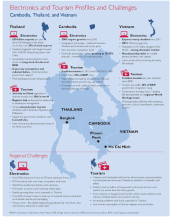
This report, commissioned by the United States Agency for International Development (USAID) through the Education Data for Decision Making (EdData) II Program, focuses on ways educational institutions in the tourism and electronics sectors in the Lower Mekong region can better meet private-sector demand and increase the employability of youth. It is designed to provide context and further detail to the labor market assessments (LMA) produced under the USAID Connecting the Mekong through Education and Training (COMET) program. The study was conducted from March to May 2016, with on-the-ground interviews of over 70 Lower Mekong employers and education institutions, as well as significant literature review.
Assoc. Photo (Port.)
mekong.png
Sub-topic
Resource Type
Resource Language
Month and Year