
Publications

Worldwide Inequality and Poverty in Cognitive Results: Cross-sectional Evidence and Time-based Trends

Submitted by admin on
Description/Abstract
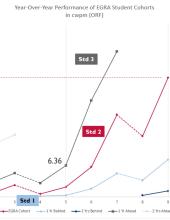
The Sustainable Development Goals (SDGs) for education represent a major departure from the Millennium Development Goals (MDGs) - at least if educational leaders act seriously in their pursuit - in at least two important respects. First, the goals now pertain to learning outcomes. Second, there is a great deal of focus on inequality in the SDGs. Taking note of this new dual emphasis of the SDGs, this paper assembles the largest database of learning outcomes inequality data that we know of, and explores key issues related to the measurement of inequality in learning outcomes, with a view to helping countries and international agencies come to grips with the key dimensions and features of this inequality. Two issues in particular are explored. First, whether, as countries improve their average cognitive performance (as measured by international learning assessments) from the lowest to middling levels, they typically reduce cognitive skill inequality or, more importantly perhaps, whether they reduce absolute lack of skills. Second, whether most of cognitive skills inequality is between or within countries. In dealing with these measurement issues, the paper also explores the degree to which measures of cognitive skills are “proper” cardinal variables lending themselves to generalizations from the field of income and wealth distribution—the field for which many measures of inequality and its decomposition were first applied. To do this, we look into whether using the item response theory (IRT) test scores of programmes such as TIMSS influence these types of findings, relative to the use of the underlying and more intuitive classical test scores. Patterns emerging from the classical scores are far less conclusive than those of the IRT scores, in part due to the greater ability of the IRT scores to discriminate between pupils at the bottom end of the performance spectrum. An important contribution of the paper is to examine the sensitivity of standard measures of inequality to different sets of test scores. The sensitivity is high, and the conclusion is that meaningful comparisons between test score inequality and, for instance, income inequality are not possible, at least not using the currently available toolbox of inequality statistics. Finally, the paper explores the practical use of school-level statistics from the test data to inform strategies for reducing inequalities.
Assoc. Photo (Port.)
12_Poverty_0.jpg
Country
Resource Type
Resource Language
Month and Year
Publisher Or Client
Research on Improving Systems of Education (RISE) Programme

Is ‘summer’ reading loss universal? Using ongoing literacy assessment in Malawi to estimate the loss from grade-transition breaks

Submitted by admin on
Description/Abstract
Published abstract: "Summer learning loss – decreased academic performance following an extended school break, typically during the period after one grade ends and before another grade starts – is a well-documented phenomenon in North America, but poorly described in sub-Saharan African contexts. In this article, we use the term ‘grade-transition break’ loss in lieu of ‘summer’ loss to refer to the period after one grade ends and before another grade starts. This study analyses data from early grade reading assessments in Malawi, estimating statistically significant average reductions of 0.38 standard deviations (SD) across several measures of reading and pre-reading skills during two grade-transition breaks. The data show the loss in reading skills during the extended breaks between grades 1 and 2 and between grades 2 and 3 in two consecutive years. The study found no gender-based differences in loss. The findings suggest a need for early grade reading interventions to develop and evaluate mitigation strategies lest significant proportions of within-year performance gains be lost over the break between academic years."
Assoc. Photo (Port.)
malawi.jpg
Country
Resource Type
Resource Language
Month and Year

Implementing large-scale instructional technology in Kenya: Changing instructional practice and developing accountability in a National Education System

Submitted by admin on
Description/Abstract
Article published in the IJEDICT, Vol. 13, No. 3 (2017). Published Abstract: "Previous large-scale education technology interventions have shown only modest impacts on student achievement. Building on results from an earlier randomized controlled trial of three different applications of information and communication technologies (ICTs) on primary education in Kenya, the Tusome Early Grade Reading Activity developed the National Tablets Program. The National Tablets Program is integrated into the Tusome activity by providing tablets to each of more than 1,200 instructional coaches in the country to use when they visit teachers. This enables a national database of classroom instructional quality, which is used by the education system to monitor overall education quality. The tools provided on the tablets are designed to help coaches increase the quality of their instructional support to teachers, and deepen the shallow accountability structures in Kenya’s education system. Using results of a national survey, we investigated the ability of the National Tablets Program to increase the number of classroom observations done by coaches and to improve student learning outcomes. Survey results showed high levels of tablet program utilization, increased accountability, and improvements in learning outcomes. We share recommendations regarding large-scale ICT interventions and literacy programs.
Assoc. Photo (Port.)
ijedict.jpg
Country
Resource Type
Featured projects
Resource Language
Month and Year
Publisher Or Client
International Journal of Education and Development Using ICTs

Examining the secondary effects of mother-tongue literacy instruction in Kenya: Impacts on student learning in English, Kiswahili, and mathematics

Submitted by admin on
Description/Abstract
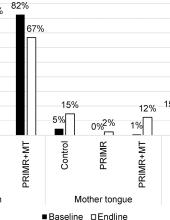
Limited rigorous evidence is available from sub-Saharan Africa regarding whether children who learn to read in their mother tongue will have higher learning outcomes in other subjects. A randomised controlled trial of mother-tongue literacy instruction, the Primary Math and Reading (PRIMR) Initiative, was implemented in Kenya from 2013 to 2014. We compared the impacts of the PRIMR mother-tongue treatment group in two languages with those of another group that did not use mother tongue, but utilised the same instructional components. Results showed that assignment to the mother-tongue group had no additional benefits for English or Kiswahili learning outcomes beyond the non-mother-tongue group, and that the mother-tongue group had somewhat lower mathematics outcomes. Classroom observational analysis showed that assignment to the mother-tongue group had only small impacts on the usage of mother tongue in other subjects. Advocates for mother-tongue programmes must consider such results alongside local implementation resistance in programme design.

Assoc. Photo (Port.)
LOI.jpg
Country
Resource Type
Featured projects
Resource Language
Month and Year
Publisher Or Client
International Journal of Education Development

Special Issue--Working to improve: seven approaches to quality improvement in education

Submitted by admin on
Description/Abstract
A collection of articles on Improvement Science, published in a special issue (Volume 25 Issue 1) of the journal "Quality Assurance in Education". Each article describes one of seven improvement methods, presents its history, and gives at least one example of it employed in the education sector. The seven improvement methods covered by these articles are: - Networked improvement communities - Design-based implementation research - Implementation science - Lean - Six Sigma - Positive Deviants - Deliverology
Assoc. Photo (Port.)
publications icon purchased sm.png
Country
Resource Type
Resource Language
Month and Year
Publisher Or Client
Quality Assurance in Education (Emerald Insight)

Revisiting the "M" in m-learning: Making the most of mobile environments for teaching and learning

Submitted by admin on
Description/Abstract
Published in the conference proceedings for E-Learn 2015 - October 19-22, 2015 (Kona, Hawaii). A version of this paper was also presented at the mobile learning conference in Helsinki, 2013. Educational innovations in developing countries are expanding due to pressure to achieve quality outcomes at scale and changing markets, where mobile devices are increasingly affordable. m-Learning as a concept has existed prior to the acceleration of these forces, but has gained increasing attention because of them. Growth in mobile phone ownership in developing countries has made mobile-phone enabled education (a form of e-learning) commonplace in formal and informal education. This paper draws on a broad review of existing m-learning programs to illustrate how instructional strategies are being employed, and explore whether these strategies are appropriate for learners in these contexts. It urges thinking differently about the ‘m’ in m-learning, and moving the conversation away from broad notions of mobile learning for any and all purposes to more detailed guidance on how to implement mobile learning from an informed pedagogical perspective that includes attention to local cultures
Assoc. Photo (Port.)
mlearning.png
Country
Resource Type
Resource Language
Month and Year

International education is a broken field: Can ubuntu education bring solutions?

Submitted by admin on
Author
Description/Abstract
Article published in the International Review of Education. February 2016, Volume 62, Issue 1, pp 101–111. Published abstract: "Ubuntu is an African philosophy of human kindness; applying it in the Global South would fundamentally alter the design of the education sector. This essay argues, however, that the field of international educational development is not, in fact, structured to support an education influenced by ubuntu ideals. Specifically, the educational development milieu includes donors, implementers and academicians who do not sufficiently question the power dynamics which underpin education development. This creates a field where the power imbalances between donors and host governments are not interrogated, where development workers place too much faith in their own knowledge rather than that of local education experts, and where development practitioners rarely appreciate the privilege of working in countries which are not their own. An ubuntu education would alter the educational development field in myriad critical ways, a few of which are suggested in this essay. Educational development programmes in universities and intake programmes for implementers and donors should teach officers humility, appreciating existing local talent and expertise. Donor programmes should incentivise reflective practice which formally embeds appreciation for local culture and expertise, thereby supporting structures which help educational development experts to review their metacognitive processes. The field should also dramatically increase the numbers of local, minority and female educational development practitioners and provide more avenues for advancement for those groups. These are activities which are critical to supporting the education development field, but require a fundamental change of attitude by practitioners to ensure the right kind of relationships between the West and the Global South."

Assoc. Photo (Port.)
ubuntu.jpeg
Country
Sub-topic
Resource Type
Resource Language
Month and Year
Publisher Or Client
International Review of Education

Using an Assessment of Early Mathematical Knowledge and Skills to Inform Policy and Practice: Examples from the Early Grade Mathematics Assessment

Submitted by admin on
Description/Abstract
Article published in the International Journal of Education in Math, Science and Technology, Volume 4, Number 3. (Open Access). Published abstract: "This paper describes the development and intended uses of the Early Grades Mathematics Assessment (EGMA), which measures essential early mathematical knowledge and skills that are foundational to more sophisticated mathematical abilities, predictive of later achievement, and teachable. Administering the EGMA can provide policy makers, practitioners, and researchers with information about whether existing educational policies, curricular reforms or programs, and instructional interventions are supporting students in reaching important goals in mathematics. We highlight the utility of the EGMA results in three abbreviated illustrations of implementation studies in low-income countries. Recommendations for policy makers, practitioners, and researchers are provided."

Assoc. Photo (Port.)
publications icon purchased sm.png
Country
Resource Type
Resource Language
Month and Year
Publisher Or Client
International Journal of Education in Mathematics, Science and Technology

“I failed, no matter how hard I tried”: A mixed-methods study of the role of achievement in primary school dropout in rural Kenya.

Submitted by admin on
Description/Abstract
Article published in the International Journal of Education and Development, Volume 50. From Journal abstract: "Initial access to school is nearly universal in Kenya, but many children who enroll drop out before completing primary school. In this mixed-methods study, we use quantitative data from a randomized control trial involving 2666 upper primary-grade students, as well as qualitative data from interviews with 41 schoolchildren, dropouts, and parents, to examine dropout. Poorer baseline performance on literacy and numeracy assessments predicted a higher risk of dropout. Interviews revealed that children are the primary decision-makers rather than parents. Together, these findings suggest that school quality interventions may be an effective means of reducing primary school dropout in this region."

Assoc. Photo (Port.)
publications icon purchased sm.png
Country
Resource Type
Resource Language
Month and Year
Publisher Or Client
International Journal of Education and Development

Measurement of Early Childhood Development and Learning under the Sustainable Development Goals

Submitted by admin on
Description/Abstract
Article published in the Journal of Human Development and Capabilities Volume 17, 2016 - Issue 4: Investing in Early Childhood Development. Published abstract: "Children’s early development serves as the foundation for later health, learning and well-being. The inclusion of early childhood development (ECD) in the Sustainable Development Goals implies that countries must report on the percentage of children under 5 years of age who are “developmentally on track.” This note briefly reflects on the history of global ECD goals and their measurement and outlines the challenge ahead: creating a workable strategy for ECD measurement that balances the need for national relevance with globally comparable data. The global variation in the timing and nature of early childhood skills acquisition presents an important opportunity as countries set their own standards for what it means to be developmentally on track. Country-driven measurement and standard setting, derived from measurement approaches that meet international expectations for quality, can have an important influence on policy and practice. Countries can measure the development of their youngest citizens in a way that is most relevant and useful to them, so that they may use those data to ensure that all children have the opportunity to fulfill their potential."
Assoc. Photo (Port.)
publications icon purchased sm.png
Country
Resource Type
Resource Language
Month and Year
Publisher Or Client
Journal of Human Development and Capabilities