Briefs

USAID/Uganda School Health and Reading Program Cluster 2 Follow up 1, End or Primary 1: Lebacoli, Lugbarati, Lumasaba, and Runyoro-Rutoro and English

Submitted by admin on
Description/Abstract
Have fundamental reading skills increased as a result of the USAID/Uganda School Health and Reading Program interventions? Early Grade Reading Assessment (EGRA) data collected for 4 Cluster 2 languages (local languages Lebacoli, Lugbarati, Lumasaba, and Runyoro-Rutoro) and English at baseline, beginning of P1 compared to data collected at the end of P1 show increases in foundational pre-reading and emergent reading skills, significantly higher than increases found in control schools. That being said, the overall reading gains and scores are still lower than the ideal. Program learners performed better than control learners in virtually all reading skills assessed, most significantly in emergent literacy and pre-reading skills.
Assoc. Photo (Port.)
Uganda 4.png
Resource (File)
Country
Resource Type
Month and Year

USAID/Uganda School Health and Reading Program Cluster 2 Baseline: Lebacoli, Lugbarati, Lumasaba, and Runyoro-Rutoro and English

Submitted by admin on
Description/Abstract
This report summarizes the findings from a baseline assessment that was conducted in February and March, 2014 to determine the current status of reading achievement in the “Cluster 2” schools in which the Program will be working, as well as achievement in control1 schools that will be used as a basis for comparison in assessing the effectiveness of the interventions. The baseline assessment sets out to answer the following questions in an attempt to lay the foundation for and support a national literacy policy and subsequent reading program in primary schools nationwide. • What is the level of reading achievement among P1 and P32 learners in the local language and in English in Ugandan primary schools? • What is currently happening in P1 reading lessons? • How are teachers and schools supported to teach reading? • What should be the focus of future MoES and stakeholder support for reading?
Assoc. Photo (Port.)
uganda 5.png
Country
Resource Type
Featured projects
Month and Year

USAID/Uganda School Health and Reading Program Cluster 3 Baseline: Lugwere, Lusoga, Lhukonzo, Ŋakarimojoŋ and English

Submitted by admin on
Description/Abstract
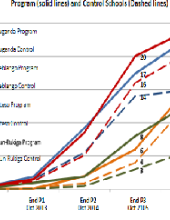
This report summarizes the findings from a baseline assessment that was conducted in February and March, 2015 to determine the current status of reading achievement in the “Cluster 3” schools in which the Program is currently working, as well as achievement in control 1 schools that will be used as a basis for comparison in assessing the effectiveness of the interventions going forward. The baseline assessment sets out to answer the following questions in an attempt to lay the foundation for and support a national literacy policy and subsequent reading program in primary schools nationwide. -- What is the level of reading achievement among P1 and P32 learners in the local language and in English in Ugandan primary schools? -- What is currently happening in P1 reading lessons? -- How are teachers and schools supported to teach reading? -- What should be the focus of future MoESTS and stakeholder support for reading?
Assoc. Photo (Port.)
RTI_Uganda_SHRPLARA.png
Country
Resource Type
Featured projects
Month and Year

USAID/Uganda School Health and Reading Program Cluster 1 Follow up 4, End or Primary 4: Ateso, Leblango, Luganda, Runyankore/Rukiga and English

Submitted by admin on
Description/Abstract
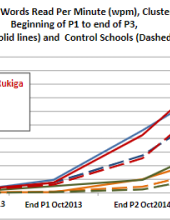
Has reading achievement increased as a result of the USAID/Uganda School Health and Reading Program interventions? Early Grade Reading Assessment data collected for four Cluster 1 languages (Ateso, Leblango, Luganda and Runyankore-Rukiga) and English at the beginning of Primary 1 compared to end of Primary 4 show increases in fundamental reading skills, higher than increases found in control schools. No systematic differences were found between girls and boys. By the end of P4, learners in Program Schools are reading more words than learners in control schools and are closer to becoming fluent readers in both Local Language and English.
Assoc. Photo (Port.)
shrp5.png
Resource (File)
Country
Resource Type
Month and Year

USAID/Uganda School Health and Reading Program Cluster 1 Follow Up 3, end of Primary 3: Ateso, Leblango, Luganda, Runyankore/Rukiga and English

Submitted by admin on
Description/Abstract
Has reading achievement increased as a result of the USAID/Uganda School Health and Reading Program interventions? Early Grade Reading Assessment data collected for 4 Cluster 1 languages (Ateso, Leblango, Luganda and Runyankore-Rukiga) and English at the beginning of Primary 1 compared to end of Primary 3 show increases in fundamental reading skills, higher than increases found in control schools. By the end of P3, learners in Program Schools are reading more words than learners in control schools and are closer to becoming fluent readers in both Local Language and English.
Assoc. Photo (Port.)
shrp6.png
Resource (File)
Country
Resource Type
Featured projects
Month and Year

USAID/Uganda School Health and Reading Program Cluster 2 Follow up 2 End of Primary 2: Ateso, Leblango, Luganda, Runyankore/Rukiga and English

Submitted by admin on
Description/Abstract
Has reading achievement increased as a result of the USAID/Uganda School Health and Reading Program interventions? Early Grade Reading Assessment data collected for 4 Cluster 1 languages (Ateso, Leblango, Luganda and Runyankore-Rukiga) and English show increases in fundamental reading skills, significantly higher than increases found in control schools. By the end of P2, learners in Program Schools could read more words and understand more of what they read than learners in control schools – this was true in all 4 Local Languages. Program learners could also read more words in English than learners in control schools.
Assoc. Photo (Port.)
shrp7.png
Resource (File)
Country
Resource Type
Month and Year

USAID/Uganda School Health and Reading Program Cluster 1 Follow up 1: Ateso, Leblango, Luganda and Runyankore/Rukiga

Submitted by admin on
Description/Abstract
To what extent did the Uganda School Health and Reading Program interventions1 improve early grade reading and the teaching of early grade reading in USAID/Uganda-supported primary schools over the course of the 2013 academic year? To answer this question, in October 2013, Early Grade Reading Assessment (EGRA) data were collected as a follow up to the February/March, 2013 Baseline data collection efforts. Basic oral reading skills were assessed in the local language (i.e., Ateso, Leblango, Luganda, or Runyankore- Synopsis of findings: • Emergent literacy skills (listening comprehension and segmenting words into syllables) have increased in both treatment and control schools. • The ability to identify letter sounds has increased • Oral reading fluency has increased among Luganda and Runyunkore Rukiga speaking learners but there was no significant difference between treatment and control. • Teachers are changing their behavior in the classroom: • Support to teachers to improve reading is increasing
Assoc. Photo (Port.)
Uganda 4.png
Resource (File)
Country
Resource Type
Featured projects
Month and Year

USAID/Uganda School Health and Reading Program Cluster 1 Baseline: Ateso, Luganda, Leblango, Runyunkore-Rukiga

Submitted by admin on
Description/Abstract
This report summarizes the findings from a baseline assessment that was conducted in February and March, 2013 to determine the current status of reading achievement in the schools in which the School Health and Reading Program will be working, as well as achievement in “control” schools that will be used as a basis for comparison in assessing the effectiveness of the interventions.
Assoc. Photo (Port.)
uganda8.png
Country
Resource Type
Featured projects
Month and Year

USAID Uganda School Health and Reading Program, Systemic, Sustained Reading Achievement

Submitted by admin on
Description/Abstract
Briefer: Final Early Grade Reading Assessment Results from the USAID/Uganda School Health and Reading Program. This briefer compares English and local language reading fluency and comprehension among program and control learners from Primary 1 to Primary 4 (when the program ended) and beyond to Primary 5. It also goes back and compares Primary 2 results for later cohorts. Major findings: • By the end of Primary (P4), program learners were more than twice as likely to be reading 60 or more words per minute in English than learners from control schools. • P4 Program learners were also able to answer almost twice as many comprehension questions correctly in English than control learners. • Program results are proving to be sustainable. P2 learners in subsequent cohorts registered reading gains similar to those found in the initial cohort, and control schools brought into the program also registered gains. Furthermore, these gains are being maintained into P5 (though the program ended in P4)
Assoc. Photo (Port.)
Picture2.png
Resource (File)
Country
Resource Type
Featured projects
Resource Language
Month and Year

Brief: Audio Computer-Assisted Self-Interview

Submitted by admin on
Description/Abstract
The traditional face-to-face (FTF) survey method cannot accommodate the privacy needed to mitigate the effect of social-desirability bias, particularly with the most sensitive topics such as corporal punishment and sexual violence, nor does it provide a means to elicit authentic responses. Indeed, an assessor asking a respondent questions about their experiences of violence will contribute to the stress of taking such a survey. However, audio computer-assisted self-interview (ACASI) does hold promise in addressing this issue with survey administration. This brief provides an overview of ACASI, discusses a 2019 large-scale study that compared the ACASI and FTF administration methods, and provides data for discussion regarding ACASI’s viability as a more effective method of survey administration when collecting data on experiences of SRGBV.
Assoc. Photo (Port.)
Acasi brief.png
Resource (File)
Country
Resource Type
Month and Year