King, S.

To Nudge or Not to Nudge: Improving implementation and practice to achieve learning for all [CIES 2024 Presentation]

Submitted by admin on
Description/Abstract
The theme of CIES asks our society of academics and practitioners to confront the ways in which education is a space of debate and contestation, and how stakeholders both internal and external to education systems seek to effect change (or maintain the status quo). The behavioral science perspective is not new to international education. It has often been presented from different research perspectives, including teacher mental models of teacher beliefs (Saberwal et. al., 2018), and the social aspects of educational change (Fullan, 2015). However, recent interest has shifted focus on the understanding of education systems change using a behavioral science lens (Ajani 2022). This perspective is important as education systems programming is frequently designed without a true understanding of how individuals will respond to change (Jeevan and Hwa, 2022). The presentations present studies which examine teachers, caregivers, and instructional practice and change within an education system. What new insights do we have and how might they influence policy and implementation for education systems change? This deck includes the following presentations and authors: From access to learning to nudging: Why behavioral science might be the next new best thing in education improvement programs (Amber Gove, RTI International), More of this and less of that: How a behavioral science lens suggests alternative approaches to education program design & implementation (Simon King, Creative Associates), Peer-to-Peer Learning: The Power of Social Networks in Adoption of New Pedagogies (Elizabeth Marsden, RTI International), and Supporting Caregivers of Young Children in South Africa to Engage in Play (Carolina Better, Ideas42).
Assoc. Photo (Port.)
Cover Nudge portrait.png
Resource Type
Resource Language
Month and Year

How Teacher Social Networks Might be Leveraged to Enhance Diffusion and Implementation of New Pedagogies

Submitted by admin on
Description/Abstract
The conventional ways that new pedagogies are taught and supported in low- and middle-income countries rarely leverage the social networks and relationships that are paramount for individuals to shift their beliefs and make positive decisions about adopting new methodologies, and for them to sustain these behavior changes in the long run. The purpose of this study was to apply social network analysis (SNA) and qualitative inquiry to understand the composition and structure of primary school teacher social networks to inform policy basic education programming about how to improve the diffusion and support for implementation of new pedagogies through these social networks. This study used a mixed model design to study the compositional and structural properties of teacher social networks in sub-district administrative areas or “wards” in Tanzania. Using data from completed socio-metric inventories, separate teacher social networks were generated for Mbawala, Madimba, Milangominne, and Nitekela wards in the Mtwara Region of Tanzania. Researchers used SNA to calculate quantitative measurements and generate teacher sociograms (i.e., network graphs) for each of the ward-level teacher social networks. We combined these data with data from teacher informant interviews that described the content, context, and benefit of educators’ interactions in the different wards and to help explain the SNA findings.
Assoc. Photo (Port.)
TZ report shared.png
Resource Type
Resource Language
Month and Year

Additional Analysis for Self-Administered EGRA (Ghana, English)

Submitted by admin on
Description/Abstract
This report summarizes the findings of additional analyses conducted to delve deeper and develop more insight into the piloting of the Self-Administered Early Grade Reading Assessment (SA-EGRA) and the Self-Administered Early Grade Mathematics Assessment (SA-EGMA). These tools were developed and tested by RTI International with the support and direction of Imagine Worldwide. Children complete these assessments independently on tablet-based software while in a classroom with their peers. An adult supervises the process.
Assoc. Photo (Port.)
sa egra draft dev 6.PNG
Resource (File)
Country
Resource Type
Month and Year
Publisher Or Client
Imagine Worldwide

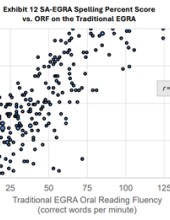
Report of Self-Administered EGRA/EGMA Pilot (Ghana, English)

Submitted by admin on
Description/Abstract
This report summarizes the findings of an effort to develop and validate tablet-based, self-administered assessments of English-language foundational literacy and numeracy in the early grades. The tools described in the report were developed at the request of Imagine Worldwide with the support of the Jacobs Foundation. RTI carried out field testing and a pilot study to assess the tools' internal consistency, test-retest reliability, and concurrent validity with respect to "traditional" EGRA and EGMA. RTI International developed the two assessments, known respectively as the Self-Administered Early Grade Reading Assessment (SA-EGRA) and the Self-Administered Early Grade Mathematics Assessment (SA-EGMA), with the support and at the direction of Imagine Worldwide. The assessments are deemed “self-administered,” because children complete the assessments independently in response to instructions and stimuli imbedded in the tablet-based software. However, adults typically supervise the organization and conduct of the assessment as well as the collection of individual data from the tablets for analysis. The tools have been developed under an open-source license. The code can be viewed and downloaded for reuse or modification at https://github.com/ICTatRTI/SE-tools/blob/main/README.md. Users of RTI's Tangerine software may request that the SA-EGRA and SA-EGMA tools be added to their Tangerine groups via https://www.tangerinecentral.org/contact

Assoc. Photo (Port.)
SA EGRA.png
Resource (File)
Country
Resource Type
Resource Language
Month and Year
Publisher Or Client
RTI International

Return to Learning Cambodia Case Study [CIES 2022 Presentation]

Submitted by admin on
Author
Description/Abstract
The All Children Reading–Asia (ACR–Asia) Return to Learning Cambodia Case Study was designed to research the Cambodia Ministry of Education, Youth, and Sport’s (MoEYS’s) response to the disruption in learning created by the COVID-19 pandemic during different phases of school closure and reopening in the 2019–2020 and 2021 school years. The study used qualitative interview methods to study the education system’s response, from the central ministry level down, to how school directors and teachers implemented expectations communicated to them. Forty-four participants were interviewed, including central MoEYS personnel, school directors, teachers, and caregivers. Participants were asked about the phases of MoEYS response to the pandemic and what procedures, implementations, and subsequent outcomes occurred The presenter will present findings that positive changes were implemented in the participating schools. Many stakeholders within the education system and its stakeholders act and react to an education crisis in ways that would not be typical of the system functions and individual behaviors experienced in a regular school year. Fundamentally, the education system and its actors showed that during COVID-19, they could carry out a set of core functions (RTI International, 2018). These core systems functions were to set and communicate expectations, monitor progress, provide targeted support to facilitate students’ access to continued education during school closures, and make stakeholders accountable for meeting the expectations.

Assoc. Photo (Port.)
Screenshot 2022-05-04 145128.png
Resource (File)
Country
Resource Type
Featured projects
Resource Language
Month and Year

Early Grade Reading Assessment 2018, Chichewa National Results for Standards 1 and 3

Submitted by admin on
Description/Abstract
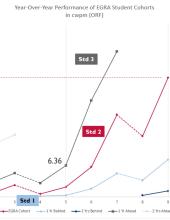
This report presents key findings of the 2018 national assessment of early grade reading skills in Chichewa, a core language for reading and language development in Malawi. This early grade reading assessment (EGRA) for Standards 1 and 3 was conducted in June 2018 in a nationally representative sample of 86 Ministry of Education, Science and Technology (MoEST) primary schools. The 1,720 tested students—860 Standard 1 and 860 Standard 3 learners, half boys and half girls in each standard from each school—were randomly selected during visits to each school. The results are nationally representative of Standard 1 and 3 learners of MoEST primary schools in Malawi.
Assoc. Photo (Port.)
Country
Resource Type
Month and Year
Publisher Or Client
USAID

Global Learning XPRIZE Data Summary

Submitted by admin on
Description/Abstract
This presentation was delivered to a team of researchers who participated in a "Data Deep Dive" convened by the XPRIZE Foundation after the announcement of the Global Learning XPRIZE award.
Assoc. Photo (Port.)
xprize img.jpeg
Resource Type
Resource Language
Month and Year
Publisher Or Client
XPRIZE Foundation

Cambodia, Student Performance in Early Literacy: Baseline Report

Submitted by admin on
Description/Abstract
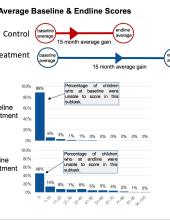
This report presents the results of a baseline assessment of upper preschool and grade 1 student performance in pre-literacy and early grade reading. The assessment included samples drawn from three provinces in Cambodia: Kampong Thom, Siem Reap, and Battambang (control). The results will serve as a baseline for comparing the impact of early grade reading interventions being implemented in Kampong Thom and Siem Reap. The data reveal lower than expected levels of oral language ability among students in upper pre-school, especially given that Khmer is the mother tongue for nearly all students in the areas covered. For example, students responded correctly to only 3 out of 5 questions concerning a short passage that had been read to them. And in terms of their pre-literacy skills, when shown the letters they were supposed to learn in upper pre-school, students identified them with only 28% accuracy. Performance of grade 1 students on early literacy skills was also much lower than should be expected for the period during which the test was administered. For example, grade 1 students who were almost three-quarters of the way through the school year could only correctly identify letters 34% of the time and were identifying fewer than 10 letters per minute. When simpler forms of consonants and vowels were tested separately, grade 1 students performed better, but still correctly identified letters with less than 50% accuracy. Reading of familiar words in isolation or reading of a short grade-level passage were essentially non-existent.
Assoc. Photo (Port.)
acr cambodia.jpg
Country
Resource Type
Resource Language
Month and Year
Publisher Or Client
USAID., All Children Reading-Cambodia

Is ‘summer’ reading loss universal? Using ongoing literacy assessment in Malawi to estimate the loss from grade-transition breaks

Submitted by admin on
Description/Abstract
Published abstract: "Summer learning loss – decreased academic performance following an extended school break, typically during the period after one grade ends and before another grade starts – is a well-documented phenomenon in North America, but poorly described in sub-Saharan African contexts. In this article, we use the term ‘grade-transition break’ loss in lieu of ‘summer’ loss to refer to the period after one grade ends and before another grade starts. This study analyses data from early grade reading assessments in Malawi, estimating statistically significant average reductions of 0.38 standard deviations (SD) across several measures of reading and pre-reading skills during two grade-transition breaks. The data show the loss in reading skills during the extended breaks between grades 1 and 2 and between grades 2 and 3 in two consecutive years. The study found no gender-based differences in loss. The findings suggest a need for early grade reading interventions to develop and evaluate mitigation strategies lest significant proportions of within-year performance gains be lost over the break between academic years."
Assoc. Photo (Port.)
malawi.jpg
Country
Resource Type
Resource Language
Month and Year

Measures of quality through classroom observation for the Sustainable Development Goals: Lessons from low-and-middle-income countries

Submitted by admin on
Description/Abstract
Background paper prepared for the 2016 Global Education Monitoring Report Education for people and planet: Creating sustainable futures for all With the adoption of the United Nations General Assembly’s Sustainable Development Goals (SDGs), global education agencies are grappling with how quality can and should be measured for global reporting purposes. Several factors at the education system, school, and classroom levels shape education quality, including the limited information available at the global level about what is happening in the classroom. Such information can only come through observation-based measures that record teacher practices, either through routine monitoring conducted by system actors or through surveys. Classroom observation is used extensively in not only teacher education and professional development, but also in evaluation studies. However, there are fewer cases where classroom observations are used for system monitoring purposes—particularly in low- and middle- income countries. This paper reviews what has been learned from observation instruments in low- and middle-income countries and what opportunities (i.e., scope) there are to systematize these countries to that they can monitor quality at both the school and system levels.
Assoc. Photo (Port.)
gmr.png
Resource (File)
Country
Resource Language
Month and Year
Publisher Or Client
UNESCO Global Monitoring Report