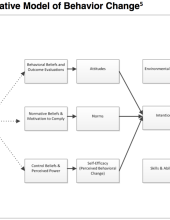
Senegal

Country Code
SEN

Instructional Support for Effective Large-Scale Reading Interventions (Learning at Scale)

Submitted by admin on
Description/Abstract
Learning outcomes are low and instruction is poor in many low- and middle-income countries (LMICs). These shortcomings are particularly concerning given the substantial learning loss due to COVID-19 from which many systems are suffering. The Learning at Scale study identified eight of the most effective large-scale education programs in LMICs and now is examining what factors contribute to successful improvements in learning outcomes at scale (see list of programs on last page of this brief). These programs were selected based on their demonstrated gains in reading outcomes at-scale, from either midline or endline impact evaluations. The study addresses three overarching research questions, focused on understanding (1) the components of instructional practices (Brief 1), (2) instructional supports (Brief 2), and (3) system supports (Brief 3) that lead to effective instruction. This brief focuses specifically on instructional supports. It addresses the following research question: What methods of training and support lead to teachers adopting effective classroom practices in successful, large-scale literacy programs?
Assoc. Photo (Port.)
Brief2.png
Resource (File)
Resource Type
Resource Language
Month and Year
Publisher Or Client
Center for Global Development, Bill and Melinda Gates Foundation

Instructional Practices for Effective Large-Scale Reading Interventions (Learning at Scale)

Submitted by admin on
Description/Abstract
The Learning at Scale study aimed to investigate factors contributing to successful improvements in learning outcomes at scale in eight of the most effective large-scale education programs in LMICs (see the map of programs on the last page of this brief). These programs were selected based on their demonstrated gains in reading outcomes at-scale, from either midline or endline impact evaluations. The study addressed three overarching research questions, focused on understanding the components of instructional practices (Brief 1), instructional supports (Brief 2), and system supports (Brief 3) that lead to effective instruction. This brief focuses specifically on instructional practices. It addresses the following research question: What classroom ingredients (e.g., teaching practices, classroom environment) lead to learning in programs that are effective at scale?
Assoc. Photo (Port.)
Brief1.png
Resource (File)
Resource Type
Resource Language
Month and Year
Publisher Or Client
Center for Global Development, Bill and Melinda Gates Foundation

Learning at Scale Interim Report

Submitted by admin on
Description/Abstract
The Learning at Scale study was designed to identify existing early grade reading programs with demonstrated impact on basic skills at scale and to conduct in-depth investigations of these programs to determine what makes them successful. After an extensive search, eight programs (spanning seven countries) were selected for inclusion in the study. Research on these programs has been conducted in order to answer the three overarching research questions, focused on understanding the components of instructional practices, instructional supports, and system supports that lead to effective instruction. Learning at Scale data collection activities for some of these programs were delayed due to COVID-19. However, with demand for information about how to implement effective interventions at large scale at an all-time high, we believe that the timely sharing of findings from Learning at Scale is essential. Accordingly, this interim report provides preliminary findings from our study to date, highlighting key high-level findings across all eight programs, as well as quantitative and qualitative findings from primary research for select programs. The Learning at Scale study is led by RTI International, as part of the Center for Global Development (CGD) education research consortium, funded by the Bill and Melinda Gates Foundation.
Assoc. Photo (Port.)
Screen Shot 2021-11-15 at 11.34.28 AM.png
Resource Type
Resource Language
Month and Year

Report on Language of Instruction in Senegal

Submitted by admin on
Description/Abstract
This report summarizes applicable research on education in multilingual contexts and on the use of L1-based, bilingual instruction in particular. It also briefly presents the education and sociolinguistic environment in Senegal, as well as a summary of relevant national language education programs in the country. Lastly, the report makes recommendations aimed at supporting a transition toward the use of national languages for instruction in primary schools.
Assoc. Photo (Port.)
Senegal.png
Resource (File)
Senegal LOI paper_FINAL.pdf
Country
Resource Language
Month and Year
Publisher Or Client
USAID

Senegal Social and Behavior Change Communications Research: Posters

Submitted by admin on
Description/Abstract
Under the Education Data for Decision Making (EdData II) task order titled “Measurement and Research Support to Education Strategy Goal 1,” RTI International implemented a three-month SBCC campaign in the Senegalese communities of Kaolack and Rufisque. This campaign included radio broadcasts, community meetings, community-theater, and posters reinforcing a common set of messages regarding what parents and family members could do to help their children learn to read. The objectives of the campaign were to enhance families’ perception of the value of reading, promote children’s reading and literacy as a pleasure and a shared responsibility, and strengthen parents’ confidence in their ability to improve their children’s success in reading. The campaign also helped overcome a lack of reading materials in the community by providing stocks of books that children and families could borrow.
Assoc. Photo (Port.)
senegal4.png
Country
Resource Type
Resource Language
Month and Year

Senegal Social and Behavior Change Communications Research: Poster Campaign Materials

Submitted by admin on
Description/Abstract
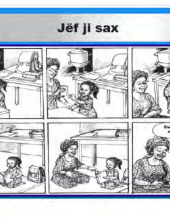
The following poster images were designed for the Social and Behavior Change Communications (SBCC) campaign in the Senegalese school communities of Kaolack and Rufisque. SBCC, a strategy originally used to support public health initiatives, utilizes a series of communication techniques to bring about changes in family members’ knowledge, attitudes, and behaviors related to their children learning to read. The five posters found in this document were placed in public spaces in Kaolack and Rufisque and served as one of the many forms of campaign material designed to influence families’ attitudes toward their children’s reading.
Assoc. Photo (Port.)
senegalSBCC_port.png
Country
Resource Type
Resource Language
Month and Year

Senegal Social and Behavior Change Communications Research: Memory Card Campaign Materials

Submitted by admin on
Description/Abstract
Under the Education Data for Decision Making (EdData II) task order titled “Measurement and Research Support to Education Strategy Goal 1,” RTI International implemented a three-month SBCC campaign in the Senegalese communities of Kaolack and Rufisque. This campaign included radio broadcasts, community meetings, community-theater, and posters reinforcing a common set of messages regarding what parents and family members could do to help their children learn to read. The objectives of the campaign were to enhance families’ perception of the value of reading, promote children’s reading and literacy as a pleasure and a shared responsibility, and strengthen parents’ confidence in their ability to improve their children’s success in reading. The campaign also helped overcome a lack of reading materials in the community by providing stocks of books that children and families could borrow.
Assoc. Photo (Port.)
senegal.png
Country
Resource Type
Month and Year

Results of Social and Behavior Change Communication Pilots in Senegal and Malawi

Submitted by admin on
Description/Abstract
Social and behavior change communication (SBCC) represents the culmination of decades of research and practice in the public health field, where communication has been a critical element of efforts to encourage positive health behaviors. A basic tenet of SBCC is that information is necessary but seldom sufficient to sustainably change behavior (C-Change, 2012). The methodology bridges the gap between awareness and action by influencing the beliefs that can block or enable needed behavior change.
Assoc. Photo (Port.)
senegalSBCC_port2.png
Resource (File)
Country
Resource Type
Month and Year

Senegal Behavior Change Communication Research Baseline Report

Submitted by admin on
Description/Abstract
To reinforce school-based education efforts, increased attention is being paid to what happens when children are not in school, especially when they are at home. This report presents the key findings from a survey conducted in two regions of Senegal in April 2015 to determine the reading support that children receive at home. The survey sample was drawn from schools in which the Associates in Research and Education for Development (ARED), a Senegalese nongovernmental organization (NGO), is implementing a bilingual (French/Wolof) curriculum in grade 1 (designated as “CI” in Senegal) and grade 3 (CE1). Schools were selected from two zones in Senegal: (1) Kaolack, which serves as the intervention area; and (2) Rufisque, which serves as the control area.

Assoc. Photo (Port.)
bcc.png
Resource (File)
pa00m27g.pdf
Country
Resource Type
Resource Language
Month and Year
Publisher Or Client
USAID

Survey of Children's Reading Materials in 11 African Countries: Suvey Instruments

Submitted by admin on
Description/Abstract
The attached survey instruments were used to analyze various learning materials as part of the Survey of Children's Reading Materials in African Languages in Eleven Countries (part of the DERP program).
Assoc. Photo (Port.)
Month and Year
Publisher Or Client
USAID