Reports | 24 February 2017
Malawi Social and Behavior Change Communications Pilot: Baseline Report
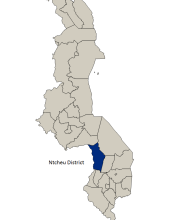
The USAID-funded Early Grade Reading Activity has been active in 11 districts in Malawi, one of which, Ntcheu, has been selected for implementation of this pilot SBCC campaign.
Reports | 24 February 2017
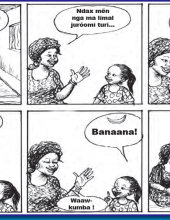
Malawi Social and Behavior Change Communications Pilot: Endline Report
With funding from the United States Agency for International Development’s (USAID’s) Office
for Economic Growth, Education, and the Environment (E3), the Education Data for Decision Making (EdData II) project has investigated how to employ social and behavior change communication (SBCC) strategies t

Briefs | 23 February 2017
Proposing Benchmarks for Early Grade Reading Skills in Liberia
Ministry of Education officials, district education officers, and a cross section of stakeholders attended this workshop over two days to begin Liberia’s first ever effort to define standards for student performance in key areas of reading skill development in grades 1, 2 and 3.

Briefs | 23 February 2017
Proposing Benchmarks for Early Grade Reading and Mathematics in Ghana
The results of the 2013 national study on early grade reading and early grade mathematics provided the evidence base for developing benchmarks for reading and mathematics that are appropriate for the current Ghanaian context.
Briefs | 23 February 2017
Benchmarks for Early Grade Reading Skills in Egypt
In spring 2013, USAID supported the MOE to conduct the first national baseline assessment of early grade reading skills. Findings of this national Grade 3 EGRA were presented to the MOE in June 2013 in a policy workshop.
Briefs | 23 February 2017
Setting and Using Benchmarks for Reading Performance
The spread of the Early Grade Reading Assessment (EGRA) has yielded a wealth of country-specific evidence on students’ literacy skills.
Reports | 23 February 2017
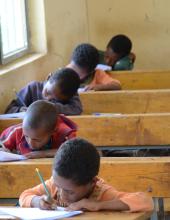
Lot Quality Assurance Sampling (LQAS) Pilot Activities in Amhara and Tigray, Ethiopia: Final Report
This report summarizes main findings and lessons learned from the piloting of the lot quality assurance sampling (LQAS) methodology in the education sector in Ethiopia. It also suggests next steps for applying the LQAS methodology more broadly for education program monitoring.
Reports | 23 February 2017
Development and Pilot Testing of Additional Subtasks for the Early Grade Reading Assessment: EGRA 2.0
In 2016, RTI International suggested piloting additional subtasks to enhance the Early Grade Reading Assessment instrument. Researchers from RTI collaborated with a team of researchers in Accra, Ghana, to adapt, refine and pilot four subtasks.
Briefs | 23 February 2017
Complements to the Early Grade Reading Assessment: Spelling, Reading Comprehension, and Oral Language Subtasks
The EGRA has been a useful tool to understand students’ progress toward fluent reading. However, users are often left wanting additional information about reading comprehension, writing, and language.
Briefs | 23 February 2017
Results of Social and Behavior Change Communication Pilots in Senegal and Malawi
Social and behavior change communication (SBCC) represents the culmination of decades of research and practice in the public health field, where communication has been a critical element of efforts to encourage positive health behaviors.
A basic tenet of SBCC is that information is necessary but sel