Information and Communication Technologies

MobiLiteracy Uganda (MLIT Uganda): Results of a controlled trial of an SMS-based literacy support program aimed at female caregivers

Submitted by admin on
Description/Abstract
This presentation, based on the Impact evaluation of the MobiLiteracy Uganda program, was delivered at the UNESCO Mobile Learning Week conference in Paris. The presentation highlights the evaluation methodology and raises some important conclusions about evaluating mobile learning programs.
Assoc. Photo (Port.)
mlit pres image.jpg
Resource (File)
MLW presentation 2015.pdf
Country
Resource Type
Resource Language
Month and Year
Publisher Or Client
RTI International

Tech’n Teachers: Assembling the jigsaw puzzle - but do we even know the picture?

Submitted by admin on
Author
Description/Abstract
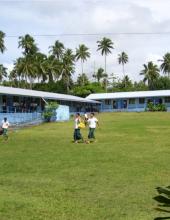
This presentation was given at the 2015 Game Change Summit of the United Methodist Church in Nashville, TN. The presentation takes the audience along a journey of 2 different technology initiatives that involve teachers in Samoa and Kenya and share with you some of the pieces we have found, and where we think some are still missing. While there are many more, the presentation focused on each initiative’s main puzzle pieces – the key design elements of education objective, content, technology, training, cost and scale, as well as monitoring and evaluation.
Assoc. Photo (Port.)
technteachers.jpg
Resource (File)
Country
Resource Type
Resource Language
Month and Year
Publisher Or Client
RTI International

MobiLiteracy-Uganda Program: Phase 1: Endline Report

Submitted by admin on
Description/Abstract
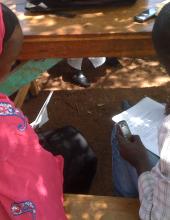
In 2012, Urban Planet Media and Entertainment Corporation/Urban Planet (UP) was awarded a grant through All Children Reading: A Grand Challenge for Development. The grant awarded to UP was used to develop, pilot test, and evaluate an early literacy product in Uganda that targets parents through their mobile phones and encourages them to engage their early primary- school aged children in literacy skills-building activities outside of school hours. The product delivered to caregivers multimedia (text plus audio, or SMS+audio) content in Luganda on a daily basis over period of 91 days. During this period, all of the letters of the Luganda alphabet were introduced as well as 10 key vocabulary words all related to a short story. The product was evaluated by RTI International using RCT methodology. This is the Endline report describing the findings using a product evaluation framework.
Assoc. Photo (Port.)
egra baselin Katakwi Akwooro March 2013 Ateso Moses.jpg
Country
Resource Type
Resource Language
Month and Year
Publisher Or Client
RTI International

MobiLiteracy-Uganda Program: Phase 1: Baseline Report

Submitted by admin on
Description/Abstract
In 2012, Urban Planet Media and Entertainment Corporation/Urban Planet (UP) was awarded a grant through All Children Reading: A Grand Challenge for Development. The grant awarded to UP was used to develop, pilot test, and evaluate an early literacy product in Uganda that targets parents through their mobile phones and encourages them to engage their early primary- school aged children in literacy skills-building activities outside of school hours. The product, which is delivered in the Luganda language, delivers multimedia (text plus audio, or SMS+audio) content on a daily basis over period of 91 days, during which all of the letters of the Luganda alphabet are introduced as well as 10 key vocabulary words all related to a short story. The product was evaluated by RTI International using RCT methodology. This is the baseline report describing the methodology and participant characteristics after pre-testing.

Assoc. Photo (Port.)
UPM data collection 014.jpg
Country
Resource Type
Resource Language
Month and Year
Publisher Or Client
RTI International

MOOCs and online education: Exploring the potential for international educational development

Submitted by admin on
Description/Abstract
Massive open online courses (MOOCs) are a relatively recent innovation with potential to provide access to relevant education and workforce training at scale. RTI previously studied MOOCs in the context of the US market, and determined that more efforts are needed to examine the prospect of MOOC use in developing economies. This paper defines MOOCs and contrasts MOOCs with previously established forms of online learning and open educational resources. It concludes that although MOOCs have potential for expanding access to important educational content and resources, currently they favor more privileged and educated individuals. Further evolution of ICT infrastructure, platforms and pedagogical models is needed before common MOOC models can meet the needs of the majority of learners in developing economies.
Assoc. Photo (Port.)
mooc image_0.jpeg
Country
Resource Type
Resource Language
Month and Year
Publisher Or Client
RTI Press

Turkey's FATIH project: A plan to conquer the digital divide or a technological leap of faith? [Arabic]

Submitted by admin on
Description/Abstract
Turkey is embarking on one of the world’s largest educational technology projects: putting tablet computers in the hands of every student from grade 5 to 12, and interactive whiteboards in every classroom. Though massive in its planned scope, the goals and approach of Turkey’s FATIH Project (The Movement to Enhance Opportunities and Improve Technology) are little understood. The objective of this brief is to analyze FATIH through the lens of ongoing and previous international, large-scale ICT in education experiences, and to use those experiences to suggest ways in which this important investment in educational technology can lead to the best possible learning outcomes for all students in Turkey.
Assoc. Photo (Port.)
fathi arabic.jpeg
Resource (File)
Country
Resource Language
Month and Year
Publisher Or Client
Education Reform Initiative (ERI)

Turkey's FATIH project: A plan to conquer the digital divide or a technological leap of faith? [English]

Submitted by admin on
Description/Abstract
Turkey is embarking on one of the world’s largest educational technology projects: putting tablet computers in the hands of every student from grade 5 to 12, and interactive whiteboards in every classroom. Though massive in its planned scope, the goals and approach of Turkey’s FATIH Project (The Movement to Enhance Opportunities and Improve Technology) are little understood. The objective of this brief is to analyze FATIH through the lens of ongoing and previous international, large-scale ICT in education experiences, and to use those experiences to suggest ways in which this important investment in educational technology can lead to the best possible learning outcomes for all students in Turkey.
Assoc. Photo (Port.)
fathi cover page (1).jpeg
Country
Resource Language
Month and Year
Publisher Or Client
Education Reform Initiative (ERI)