Early Grade Math Assessment (EGMA)

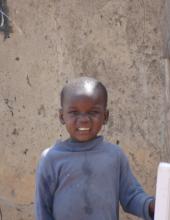
Examining teacher support and play-based practice in Kenya, Rwanda and Ghana [CIES 2023 Presentation]

Submitted by admin on
Author
Description/Abstract
While there is growing evidence of the impact of learning through play (LtP) on student outcomes in high-income countries, there is little research linking LtP to learning outcomes in low-and middle-income contexts in primary schools. This presentation focuses on the midline evaluation findings from an education improvement initiative that is seeking to expand playful pedagogies into primary schools in five low and middle-income countries (LMICs). In this presentation, we examine the different approaches taken by projects to support teachers to test, adapt, and adopt LtP in their classroom. We link these findings to classroom observation data on the frequency with which teachers employ more collaborative, interactive, creative, exploratory, and student-driven play-based approaches. We also discuss the impacts of these activities on student outcomes (EGRA, EGMA and SEL).
Assoc. Photo (Port.)
play based practice portrait.JPG
Resource (File)
Country
Resource Type
Month and Year

Mathematics Teacher Guide

Submitted by admin on
Description/Abstract
A teacher's guide for mathematics instruction in the context of Jordan, developed by the Jordanian Ministry of Education.
Assoc. Photo (Port.)
Capture.PNG
Resource (File)
غلاف خارجي.pdf
Country
Resource Type
Featured projects
Resource Language
Month and Year

Report of Self-Administered EGRA/EGMA Pilot (Ghana, English)

Submitted by admin on
Description/Abstract
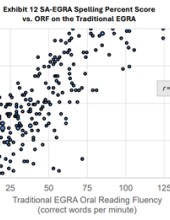
This report summarizes the findings of an effort to develop and validate tablet-based, self-administered assessments of English-language foundational literacy and numeracy in the early grades. The tools described in the report were developed at the request of Imagine Worldwide with the support of the Jacobs Foundation. RTI carried out field testing and a pilot study to assess the tools' internal consistency, test-retest reliability, and concurrent validity with respect to "traditional" EGRA and EGMA. RTI International developed the two assessments, known respectively as the Self-Administered Early Grade Reading Assessment (SA-EGRA) and the Self-Administered Early Grade Mathematics Assessment (SA-EGMA), with the support and at the direction of Imagine Worldwide. The assessments are deemed “self-administered,” because children complete the assessments independently in response to instructions and stimuli imbedded in the tablet-based software. However, adults typically supervise the organization and conduct of the assessment as well as the collection of individual data from the tablets for analysis. The tools have been developed under an open-source license. The code can be viewed and downloaded for reuse or modification at https://github.com/ICTatRTI/SE-tools/blob/main/README.md. Users of RTI's Tangerine software may request that the SA-EGRA and SA-EGMA tools be added to their Tangerine groups via https://www.tangerinecentral.org/contact
Assoc. Photo (Port.)
SA EGRA.png
Resource (File)
Country
Resource Type
Resource Language
Month and Year
Publisher Or Client
RTI International

Linking EGRA and GALA for Sustainable Benchmarking [CIES Presentation]

Submitted by admin on
Author
Description/Abstract
Prior Early Grade Reading Assessments (EGRA) have been used to set reading fluency benchmarks in Tanzania for USAID report and for the Government of Tanzania (GoT). Since the EGRA requires one-on-one administration with trained enumerators, tablets, it is currently too expensive to be sustainable within the government system. The Group Administered Literacy Assessment (GALA) is an inexpensive and sustainable way to collect information about students’ reading abilities; is it group administered, does not require intensive training to administer, and is collected on paper, which is then entered into a database. Unfortunately, the GALA does not contain a fluency measure, which is still used as the basis of USAID reporting. The Jifunze Uelewe team created a study in order to identify the reading fluency equivalent benchmarks for the GALA on a subsample of the total GALA respondents. The study is administering the both the EGRA’s reading passage and the GALA to a sample of grade 2 and grade 4 pupils attending public schools in Tanzania. Data collection occurred in October 2021. Data collection was happening during the submission of this abstract, so no results are available for the abstract. But we will report the results and will discuss how well the linking process worked.
Assoc. Photo (Port.)
DSC_0462.jpeg
Resource Type
Month and Year

Read Liberia Activity: Student Activity Book

Submitted by admin on
Description/Abstract
A Student Activity Book for grade 1 students in Liberia.

Assoc. Photo (Port.)
193588_RTI international _RLA_G1_SAB_Cover_8mm_Page_1.jpg
Country
Featured projects
Resource Language
Month and Year

ABE-ACR Tanzania National Early Grade Reading Assessment (EGRA) Final Report

Submitted by admin on
Description/Abstract
This final report describes the progress made from October 1, 2015 - December 31, 2018 under the Tanzania National Early Grade Reading Assessment activity. USAID/Tanzania contracted RTI International to conduct two rounds of student assessments in early grade reading.
Assoc. Photo (Port.)
TZ EGRA.PNG
Resource (File)
Resource Type
Resource Language
Month and Year

Jordan Early Grade Reading and Mathematics Initiative (RAMP) Endline Survey Report

Submitted by admin on
Description/Abstract
This report presents the findings of the Jordan Early Grade Reading and Mathematics Initiative (RAMP) endline survey conducted at the end of the 2018–2019 school year (in May 2019).
Assoc. Photo (Port.)
Capture_Jordan RAMP.PNG
Resource (File)
Country
Resource Type
Featured projects
Resource Language
Month and Year

Instructional Strategies for Mathematics in the Early Grades

Submitted by admin on
Author
Description/Abstract
This document is intended for program and curriculum experts interested in implementing evidence-based early grade mathematics programs. It was developed by the authors of this document, who are mathematics teaching and learning experts with extensive experience adapting evidence-based practices in low and middle-income contexts. Our collective field and research experience, combined with the existing evidence base, led us to focus on four instructional strategies that are key to effective mathematics instruction: 1. Respecting developmental progressions 2. Using mathematical models to represent abstract notions 3. Encouraging children to explain and justify their thinking 4. Making explicit connections for children between formal and informal math While these four instructional strategies are very important, they are not the only instructional strategies that can result in improved learning outcomes. Effective early grade mathematics teachers draw from an extensive repertoire of evidence-based instructional strategies and strive to create a learning environment the supports that development of positive mathematical identities.
Assoc. Photo (Port.)
Screen Shot 2019-11-12 at 9.51.44 AM.png
Resource (File)
Country
Resource Type
Resource Language
Month and Year
Publisher Or Client
Mathematics Working Group

EGMA Toolkit en Español

Submitted by admin on
Description/Abstract
La Evaluación de Matemáticas en los Primeros Grados (EGMA) Toolkit
Assoc. Photo (Port.)
EGMA spanish.jpeg
Resource (File)
Country
Resource Type
Resource Language
Month and Year
Publisher Or Client
RTI International