Reports

Report of Self-Administered EGRA/EGMA Pilot (Ghana, English)

Submitted by admin on
Description/Abstract
This report summarizes the findings of an effort to develop and validate tablet-based, self-administered assessments of English-language foundational literacy and numeracy in the early grades. The tools described in the report were developed at the request of Imagine Worldwide with the support of the Jacobs Foundation. RTI carried out field testing and a pilot study to assess the tools' internal consistency, test-retest reliability, and concurrent validity with respect to "traditional" EGRA and EGMA. RTI International developed the two assessments, known respectively as the Self-Administered Early Grade Reading Assessment (SA-EGRA) and the Self-Administered Early Grade Mathematics Assessment (SA-EGMA), with the support and at the direction of Imagine Worldwide. The assessments are deemed “self-administered,” because children complete the assessments independently in response to instructions and stimuli imbedded in the tablet-based software. However, adults typically supervise the organization and conduct of the assessment as well as the collection of individual data from the tablets for analysis. The tools have been developed under an open-source license. The code can be viewed and downloaded for reuse or modification at https://github.com/ICTatRTI/SE-tools/blob/main/README.md. Users of RTI's Tangerine software may request that the SA-EGRA and SA-EGMA tools be added to their Tangerine groups via https://www.tangerinecentral.org/contact
Assoc. Photo (Port.)
SA EGRA.png
Resource (File)
Country
Resource Type
Resource Language
Month and Year
Publisher Or Client
RTI International

Co-designing Prototypes for Future Learning Spaces: A Field Guide for Scaling Future Learning Spaces Innovation in the Philippines

Submitted by admin on
Description/Abstract
The purpose of this field guide is to introduce concepts, tools, and group activities that can be used to guide educators in co-creating locally defined prototypes of future learning spaces that will not only enhance social, emotional, and academic learning for all Filipino learners, but will ensure that learners flourish and develop a sense of agency, proactive citizenship, and work readiness for a successful future. The guide was created from selected content, exercises, and group processes that were introduced in the Leaders in Futures of Education (LIFE) course (June 20–July 19, 2022) and the Prototyping Future Learning Spaces Workshop (August 15–19 2022), which were attended by DepEd central office representatives, representatives from three regional offices (i.e., Region III: Central Luzan; Region VI: Central Visayas; and the Cordillera Administrative Region), and prototyping teams consisting of representatives from five SDOs—Tanauan City, Tuguegarao City, Pasig City, Caloocan City, and Quezon City—and at least one cooperating school in each SDO. This field guide provides a framework for DepEd partnerships across the country to begin their prototyping journey for co-designing future learning spaces for Filipino students.
Assoc. Photo (Port.)
EducFutures_guidebook_port.JPG
Resource (File)
Country
Resource Type
Featured projects
Resource Language
Month and Year
Publisher Or Client
RTI International

Computer-based Reading Assessment Pilot Report

Submitted by admin on
Author
Description/Abstract
In February 2022, ACR–Philippines initiated conversations with USAID and the Philippines Department of Education (DepEd) on developing a prototype technology to enable automated assessment and scoring of learners’ oral reading fluency, listening, and reading comprehension skills. The idea resonated with DepEd leadership for several reasons. During the school years of 2020-2022, the COVID-19 Pandemic made face-to-face assessments challenging, particularly in remote learning settings. Teachers were stretched in time and resources to assess learners one-on-one their reading skills against the most essential learning competencies. Further, other international assessments like PISA use a computerbased format, and this will be an opportunity to understand how well-prepared students are to take computer-based tests. In response, ACR-Philippines sought to produce a ‘proof of concept’ that explores the feasibility of a self-administered computer-based reading assessment (CoBRA) in English and Filipino for students in the Philippines. The technology would incorporate voicerecognition software to enable students to read directly into their device. The software would automate the score of the students’ reading scores through an artificial-intelligence (AI) algorithm designed to calculate words-per-minute (wpm) and reading accuracy rate. The platform will produce reports providing students, parents, and/or teachers immediate feedback on their performance. This is a report of that pilot experience.
Assoc. Photo (Port.)
cbra_port.JPG
Resource (File)
Country
Resource Type
Featured projects
Resource Language
Month and Year
Publisher Or Client
RTI International

Philippines Remote Learning Study Report

Submitted by admin on
Description/Abstract
In June 2020 the Philippines Department of Education (DepEd) adopted the Basic Education Learning Continuity Plan (BE-LCP), a framework to guide the 2020–2021 school year in light of school closures that started in March 2020, during the final weeks of the 2019–2020 school year. The plan introduced an adjusted and condensed curriculum, the Most Essential Learning Competencies, to support schools and teachers in delivering learning through alternative modalities in lieu of face to face classes. DepEd also modified the 2020–2021 school calendar to start October 5, 2020, and end in June 2021. The school year typically runs from June through March in the Philippines, but regions, divisions, and schools needed additional time to prepare and operationalize the BE-LCP. For example, regions were tasked with determining appropriate remote learning1 delivery modalities based on local context. Approaches were further adapted and defined at the individual school level as schools contextualized the learning continuity plan. Given DepEd’s decentralized approach to contextualizing and ensuring learning continuity for learners, it became clear that remote learning would look vastly different across regions, divisions, and within schools. Subsequently, this mixed-methods study was designed to take an in-depth look at schools and families across the country to understand their experiences with teaching and learning during school closures—and particularly to understand how early language and literacy learning can best be supported in the distance learning context.
Assoc. Photo (Port.)
rls portrait.jpeg
Resource (File)
RLS Final Report_18Aug.pdf
Country
Resource Type
Featured projects
Resource Language
Month and Year
Publisher Or Client
USAID

Strengthening institutional capacity to produce learning at scale: Case studies from Jordan, Malawi, Nepal, and Uganda

Submitted by admin on
Description/Abstract
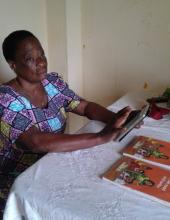
Case studies of RTI's work on strengthening institutional capacity in Nepal, Jordan, Malawi, and Uganda focusing on three core functions: (1) setting and communicating expectations; (2) monitoring against expectations; (3) providing targeted support to struggling schools.
Assoc. Photo (Port.)
bidemi cap assessment_port.jpg
Resource Type
Month and Year

Formative Evaluation of the DepEd Commons

Submitted by admin on
Description/Abstract
DepEd ICTS requested support from the USAID/All Children Reading Philippines activity for evaluating the recently-launched DepEd Commons online resource portal to ensure that it could live up to its potential as a key strategy for giving all Filipino learners access to educational resources. In response to this request, RTI in collaboration with the DepEd ICTS EdTech Unit, designed a process for reviewing the DepEd Commons to identify evidence-based recommendations for a fully sustainable and impactful DepEd Commons. Although we use the term ‘evaluation’, this is a formative exercise, recognizing that the platform is in a nascent stage and would benefit most from forward-looking and actionable recommendations for living up to its potential, not a backward-looking judgment of implementation quality or completeness at a certain point in time. In line with the approach stated above—that the evaluation of the DepEd Commons would be a formative exercise designed to provide actionable recommendations for improvement, given the early stage of development of the platform—we chose a SWOT analysis methodology to frame the exercise. SWOT analyses are conducted to identify strengths, weaknesses, opportunities, and threats. The study team carried out key informant interviews with stakeholders from the implementing department in DepEd and in other departments with similar systems; a quantitative analysis of platform statistics containing usage data; and a self-administered survey focusing on usage and usability of the platform.
Assoc. Photo (Port.)
OER report.jpeg
Resource (File)
Country
Resource Type
Featured projects
Resource Language
Month and Year
Publisher Or Client
RTI International

MEL-Tech Case Studies: Lessons Learned from Technology-Supported Remote Trainings in Five Countries During the Pandemic

Submitted by admin on
Description/Abstract
This report presents case studies of five remote training activities conducted by USAID-funded and RTI-implemented programs: the Advancing Basic Education Project (ABC+) in the Philippines, the Malawi Early Grade Reading Improvement Activity (MERIT), Read Liberia, Okuu Keremet! in the Kyrgyz Republic, and the Uganda Literacy Achievement and Retention Activity (LARA). The case studies seek to apply a more process-based and learning-oriented approach, drawing from the MEL-Tech Framework, to understand technology-supported remote teacher training introduced in response to COVID-19.
Assoc. Photo (Port.)
photo credit- Uganda SHRP_4.JPG
Resource (File)
Resource Type
Featured projects
Resource Language
Month and Year
Publisher Or Client
RTI International

Online Training on Formative Assessment for Early Language, Literacy, and Numeracy (ELLN) in the Philippines

Submitted by admin on
Description/Abstract
This report describes findings and lessons learned from an online teacher training course in the Philippines. "Becoming a Learning Detective" is a 5-day online course that focuses on the design and use of formative assessment to improve literacy and numeracy outcomes in Kindergarten to Grade 3 (K–3) classrooms. The emphasis is on classroom-based assessment strategies that are embedded within daily teaching and learning experiences, involving an active partnership between teacher and students. The course brings together asynchronous and synchronous elements, as well as whole group, small group, and individual learning experiences. The course was implemented for the first time among a small cohort of participants across 17 regions in the Philippines. Findings and recommendations of this initial training are being applied toward strengthening the course prior to offering it at a larger scale in the Philippines.
Assoc. Photo (Port.)
ACER 1.jpeg
Country
Resource Type
Featured projects
Month and Year
Publisher Or Client
USAID

Learning at Scale Interim Report

Submitted by admin on
Description/Abstract
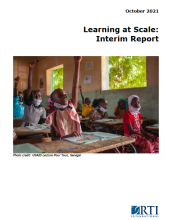
The Learning at Scale study was designed to identify existing early grade reading programs with demonstrated impact on basic skills at scale and to conduct in-depth investigations of these programs to determine what makes them successful. After an extensive search, eight programs (spanning seven countries) were selected for inclusion in the study. Research on these programs has been conducted in order to answer the three overarching research questions, focused on understanding the components of instructional practices, instructional supports, and system supports that lead to effective instruction. Learning at Scale data collection activities for some of these programs were delayed due to COVID-19. However, with demand for information about how to implement effective interventions at large scale at an all-time high, we believe that the timely sharing of findings from Learning at Scale is essential. Accordingly, this interim report provides preliminary findings from our study to date, highlighting key high-level findings across all eight programs, as well as quantitative and qualitative findings from primary research for select programs. The Learning at Scale study is led by RTI International, as part of the Center for Global Development (CGD) education research consortium, funded by the Bill and Melinda Gates Foundation.
Assoc. Photo (Port.)
Screen Shot 2021-11-15 at 11.34.28 AM.png
Resource Type
Resource Language
Month and Year

Governments' Organizational Responses to COVID-19 - Igniting Interest and Institutional Capacity in EdTech - Study Report

Submitted by admin on
Description/Abstract
Led by the Basic Education Coalition (BEC), the Governments' Organizational Responses to COVID-19 - Igniting Interest and Institutional Capacity in EdTech study sought to understand what governments, specifically Ministries of Education (MoE), had to do organizationally to implement these programs, such as forging new partnerships, organizing and capacity building of personnel, developing or revising distance learning policies, and so on. The information shared in this report stems from a global survey implemented across 12 countries in Asia, Africa, the Caribbean and South America with 23 responses from key MoE staff, including several department directors. In doing so, the study fills a knowledge gap for the international basic education sector and provides valuable insights to inform future education systems' capacity building programming. Insights and learnings surfaced from this study provide critical data on MoE capacity, technology investment, and other emerging structural shifts and strategies to support large-scale Education Technology (EdTech) programming and digital transformation of key activities.
Assoc. Photo (Port.)
BEC_EdTechSurveyCover.png
Resource (File)
Country
Resource Type
Month and Year
Publisher Or Client
Basic Education Coalition