Randolph, E.

Supporting SEL in Uganda Primary Schools: What have we learned after one year.

Submitted by admin on
Description/Abstract
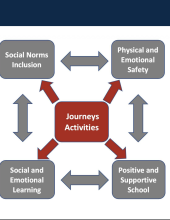
This presentation summarizes the findings from Occasion 2 of the Uganda/Literacy Achievement and Retention Activity longitudinal study of the impact of the Journeys intervention that aims to reduce SRGBV, strengthen student's SEL, and improve school climate. The presentation focuses on qualitative findings. According to these findings, both teacher and pupil social and emotional competencies are strengthened in schools participating in Journeys. Teachers interact with their peers more often than in the past and their relationships with their pupils are more welcoming and positive. The prevalence of corporal punishment has declined. Pupils are free to open up to their teachers, report issues they encounter in school and express themselves more in the classroom. Pupil relationships have improved, resulting in less bullying and fighting on the school grounds.
Assoc. Photo (Port.)
Screen Shot 2020-06-01 at 2.50.45 PM.png
Resource (File)
Country
Resource Type
Month and Year

The central role of school culture and climate in fostering social and emotional learning: Evidence from Malawi and Uganda

Submitted by admin on
Description/Abstract
The central role that the school and classroom environment or ‘school climate’ plays in social and emotional learning (SEL) is well documented, albeit mostly from US-based studies. RTI International sought to understand how schools in Malawi and Uganda organized themselves to provide positive and supportive places for children to learn and to develop socially and emotionally. The narratives captured in this study help explain how teacher behaviors and school culture serve to nurture social and emotional (SE) skills. Teachers, students, parents, and school management committee (SMC) members discussed the importance of teacher encouragement, friendliness and approachability, appreciation, understanding of and listening to student viewpoints, and modeling of cooperative teacher–teacher interactions to support SEL. School qualities identified as important for SEL included cooperation, student clubs and sports, a violence-free environment, freedom of expression, and commitment to equality. The findings yield insights into what schools can do to develop a culture of SEL, in and outside the classroom.

Assoc. Photo (Port.)
8 randolph portrait.png
Country
Resource Type
Resource Language
Month and Year
Publisher Or Client
NISSEM Global Briefs

School Culture and Climate (and Love) Matter: Voices from Malawi and Uganda [CIES 2019 Presentation]

Submitted by admin on
Description/Abstract
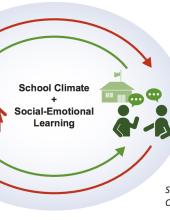
This study sought to identify the factors in the organizational culture and environment of a small sample primary schools in Malawi and Uganda that make them more (or less) conducive to children’s social and emotional development. The research team postulated that social and emotional learning are not products of the implementation of an “SEL” curriculum, but rather are inherently dependent on and result from the nature of the school climate.
Assoc. Photo (Port.)
GWU presentation front cover.JPG
Resource (File)
Country
Sub-topic
Resource Type
Month and Year

What's Positive About Positive Schools: Lessons from Malawi and Uganda [CIES 2019 Presentation]

Submitted by admin on
Description/Abstract
RTI conducted a small pilot study in Malawi and Uganda to identify the factors in the organizational culture and environment of primary schools that make them more (or less) conducive to children’s social and emotional development. The research team postulated that social and emotional learning are not products of the implementation of an “SEL” curriculum, but rather are inherently dependent on and result from the nature of the school climate.

Assoc. Photo (Port.)
norman.jpeg
Resource (File)
Country
Resource Type
Month and Year

Ghana 2013 National Education Assessment-Technical Report

Submitted by admin on
Description/Abstract
This report presents the findings from the 2013 administration of the Ghana National Education Assessment (NEA), carried out by the Assessment Services Unit (ASU) within the Ghana Education Service (GES). In addition to the performance results, this volume offers a substantial amount of contextual background and technical detail regarding the methodology for the 2013 NEA test development, sampling, data collection, and data analysis. Available separately is a brief document titled Ghana 2013 National Education Assessment: Summary of Results, which focuses more narrowly on the findings. The summary version is intended for use in discussions of policies and recommendations around instruction and educational assessments in Ghana.
Assoc. Photo (Port.)
Resource (File)
Country
Resource Type
Resource Language
Month and Year
Publisher Or Client
USAID