Reports | 29 November 2023
How Teacher Social Networks Might be Leveraged to Enhance Diffusion and Implementation of New Pedagogies
The conventional ways that new pedagogies are taught and supported in low- and middle-income countries rarely leverage the social networks and relationships that are paramount for individuals to shift their beliefs and make positive decisions about adopting new methodologies, and for them to sustain
Presentations | 24 February 2023
Measuring support for children’s engagement in learning: psychometric properties of the PLAY toolkit [CIES 2023 Presentation]
Despite the growing interest in supporting learning through play across many low and middle-income countries, measures of how contexts can support learning through play are lacking.
Reports | 12 September 2022
Philippines Remote Learning Study Report
In June 2020 the Philippines Department of Education (DepEd) adopted the Basic Education Learning Continuity Plan (BE-LCP), a framework to guide the 2020–2021 school year in light of school closures that started in March 2020, during the final weeks of the 2019–2020 school year.
Presentations | 6 May 2022
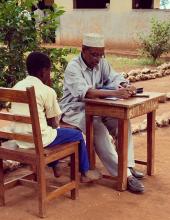
Building an Assessment of Community Defined Social-Emotional Competencies from the Ground Up - A Tanzanian Example
Most of the research that informs our understanding of children’s social-emotional learning (SEL) comes from Western, Educated, Industrialized, Rich, Democratic (WEIRD) societies where behavior is guided by a view of the self as autonomous, acting on individual preferences.
Presentations | 28 April 2022
PLAY overview CIES (Dubeck et al., 2022)
Play has the potential to transform the global learning crisis. In infancy and early childhood, play builds a strong foundation for later learning by improving brain development and growth (Goldstein, 2012).
Briefs | 23 November 2021
Remote Learning in the Philippines During COVID [Briefs Series]
The Remote Learning Study was conducted during the 2020–2021 school year to investigate how mother-tongue-based multilingual education reading instruction proceeded in 20 schools around the country while classrooms were closed.
1. Strategies for Assisting HLPs_FINAL.pdf (PDF, 406.1 KB)
,
2. Teaching and Learning Materials_FINAL_0.pdf (PDF, 325.87 KB)
,
3. Use of Technology_FINAL_0.pdf (PDF, 214.77 KB)
,
4. Student Engagement_FINAL_0.pdf (PDF, 654.74 KB)
,
5. Challenges and Solutions to Learning Remotely_FINAL_0.pdf (PDF, 205.72 KB)
,
6. School Leadership_FINAL_0.pdf (PDF, 275.46 KB)
,
7. Literacy Instructional Practice_FINAL_0.pdf (PDF, 1.37 MB)
Reports | 28 May 2020
2019 Regional Early Grade Reading Assessment (EGRA): Bahasa Sug, Chavacano, Magindanawn, and Mëranaw
This study measured students’ reading ability and gathered basic demographic information from children and teachers. Some standard context information was also gathered from children about their exposure to reading in the home.
Reports | 26 February 2020
Evaluación de Lectura Inicial en El Salvador: Informe Final
La Agencia de los Estados Unidos para el Desarrollo Internacional (USAID) decidió financiar este estudio para proporcionar información actual al Ministerio de Educación (MINED) y al Gobierno El Salvador sobre el desempeño en lectura de los estudiantes de segundo y tercer grado a nivel nacional y,
Occasional Papers | 22 June 2018
Effectiveness of Teachers’ Guides in the Global South: Scripting, Learning Outcomes, and Classroom Utilization
This report presents the results of RTI International Education’s study on teachers' guides across 13 countries and 19 projects.
Reports | 23 February 2017
Lot Quality Assurance Sampling (LQAS) Pilot Activities in Amhara and Tigray, Ethiopia: Final Report
This report summarizes main findings and lessons learned from the piloting of the lot quality assurance sampling (LQAS) methodology in the education sector in Ethiopia. It also suggests next steps for applying the LQAS methodology more broadly for education program monitoring.