
Presentations | 19 March 2024
Public libraries are centers for the development of literate modern citizens[ CIES 2024 Presentation]
The USDA-funded “McGovern-Dole International Food for Education and Child Nutrition Program (FFE)” implemented by Mercy Corps (MC) in partnership with Research Triangle Institute (RTI) and the Borlaug Institute (BI) is a five-year project that is aimed at improving the literacy of school-age childre
Presentations | 19 March 2024
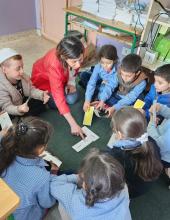
Peer-to-Peer Learning: The Power of Social Networks in Adoption of New Pedagogies [CIES 2024 Presentation]
Too often, teachers are subject to top-down policies, procedures, and pedagogies that either bear little resemblance to their day-to-day experience or are so numerous as to be overwhelming in the face of their other responsibilities.
Presentations | 19 March 2024
Uncovering Risks During Compounded Crises [CIES 2024]
The presentation summarizes findings from the Rapid Education Risk Analysis for Lebanon
Presentations | 18 March 2024
The Ant and the Grasshopper: Lessons for Collaborative Planning in a Changing World [CIES 2024 Presentation]
As economies in the global-South mature and calls for decolonizing international assistance become louder, it becomes increasingly important to reimagine the design, planning and implementation of international assistance.
Presentations | 18 March 2024
Data-driven decentralized school support: the use of student learning data to direct management support in Tanzania [CIES 2024 Presentation]
On mainland Tanzania, most resource allocation decisions are centralized. The President’s Office - Regional Administration and Local Government (PO-RALG) recruits and assigns teachers, supplies teaching and learning materials and funds capital construction projects.
Presentations | 18 March 2024
Jordan - Arriving at a National Scale CPD Program [CIES 2024 Presentation]
It was only over a decade ago that data on dismal learning outcomes in low- and middle-income countries (LMICs) shook the international education field out of its complacency with rising enrollment rates.
Presentations | 18 March 2024
Implementing a new teacher professional development system in Tanzania: old habits die hard [CIES 2024 Presentation]
In Tanzania, learning outcomes in early grades have remained stubbornly below expectations. Over a decade ago, the Tanzanian Institute for Education recognized that the curriculum for foundational learning needed to change.
Presentations | 18 March 2024
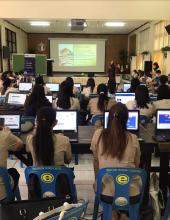
Instructional design of a blended teacher professional development (TPD) course in the Philippines [CIES 2024 Presentation]
This presentation features the instructional design of a blended learning online course on formative assessment developed at the request of the Philippine Department of Education (DepEd), under the USAID/Philippines All Children Reading task order.
Toolkits and Manuals | 15 March 2024
Teacher’s Guide for Remote Learning During School Closures and Beyond (Filipino)
Over 91% of the total student population worldwide has been affected due to school closures caused by COVID-19, according to UNESCO. How can the system ensure education of the country that every student has equal access to quality education during the crisis? Important role of teachers.

Reports | 15 March 2024
Characteristics of Select Philippine Mother Tongue Languages Used in Basic Education Teaching and Learning (USAID ACR Asia)
This reference document is a companion to the Language Complexity Study conducted by RTI International under the All Children Reading–Philippines project in 2020.