Sample Teacher and Pupil Materials | 9 March 2018
Malawi National Reading Programme: Teacher's Guide in English Standard 3
The United States Agency for International Development, the Department for International Development and the government of Malawi, through the MoEST, are collaborating to implement a National Reading Programme (NRP). This reading programme aims to improve early grade learners' literacy skills.
Sample Teacher and Pupil Materials | 9 March 2018
Malawi National Reading Programme: Teacher's Guide in English Standard 2
The United States Agency for International Development, the Department for International Development and the government of Malawi, through the MoEST, are collaborating to implement a National Reading Programme (NRP). This reading programme aims to improve early grade learners' literacy skills.
Publications | 8 March 2018
Worldwide Inequality and Poverty in Cognitive Results: Cross-sectional Evidence and Time-based Trends
The Sustainable Development Goals (SDGs) for education represent a major departure from the Millennium Development Goals (MDGs) - at least if educational leaders act seriously in their pursuit - in at least two important respects.
First, the goals now pertain to learning outcomes.
Presentations | 8 March 2018
Introducing EF Touch (Presentation)
Executive Function (EF) refers to a range of cognitive skills that are key to problem solving and a child's ability to “learn how to learn.” These skills experience an important growth period during early childhood; thus, between 2005 and 2010, researches at the University of North Carolina designed
Briefs | 25 February 2018
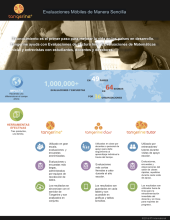
Tangerine: Evaluaciones Móbiles de Manera Sencilla
Tangerine overview in Spanish
Reports | 23 February 2018
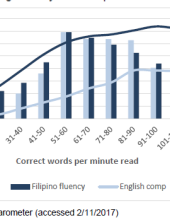
ACR-Asia: Research Report: Investing in Early Grade Reading in Lower and Middle-income Countries in Asia
USAID/Washington, via the All Children Reading (ACR)—Asia task order, commissioned RTI International to conduct research on whether lower and middle-income countries in Asia should invest in early grade reading.
Reports | 23 February 2018
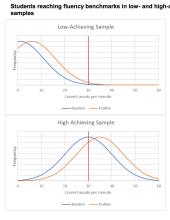
All Children Reading-Asia: EGRA Benchmarks and Standards Research Report
The Early Grade Reading Assessment (EGRA) is widely used to assess reading proficiency in developing countries. Benchmarks were introduced to simplify EGRA results into a single indicator against which countries could measure their children’s reading progress.
Publications | 17 February 2018
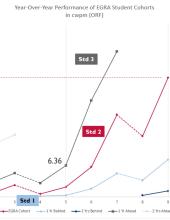
Is ‘summer’ reading loss universal? Using ongoing literacy assessment in Malawi to estimate the loss from grade-transition breaks
Published abstract: "Summer learning loss – decreased academic performance following an extended school break, typically during the period after one grade ends and before another grade starts – is a well-documented phenomenon in North America, but poorly described in sub-Saharan African contexts.
Instruments and Questionnaires | 8 February 2018
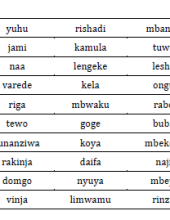
2017 Tanzania National EGRA, EGMA, SSME, and Life Skills Instruments
Final, validated instruments used in the 2017 Tanzania National EGRA. The EGRA and SSME were made possible with funding from USAID. The EGMA component was made possible by funding from Global Affairs Canada. The Life Skills component was funded by UNICEF Tanzania.
Literature Reviews and Desk Studies | 1 February 2018
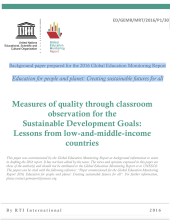
Measures of quality through classroom observation for the Sustainable Development Goals: Lessons from low-and-middle-income countries
Background paper prepared for the 2016 Global Education Monitoring Report Education for people and planet: Creating sustainable futures for all
With the adoption of the United Nations General Assembly’s Sustainable Development Goals (SDGs), global education agencies are grappling with how quality c